

Globo tests DTV+ in São Paulo featuring 4K and MPEG-H audio
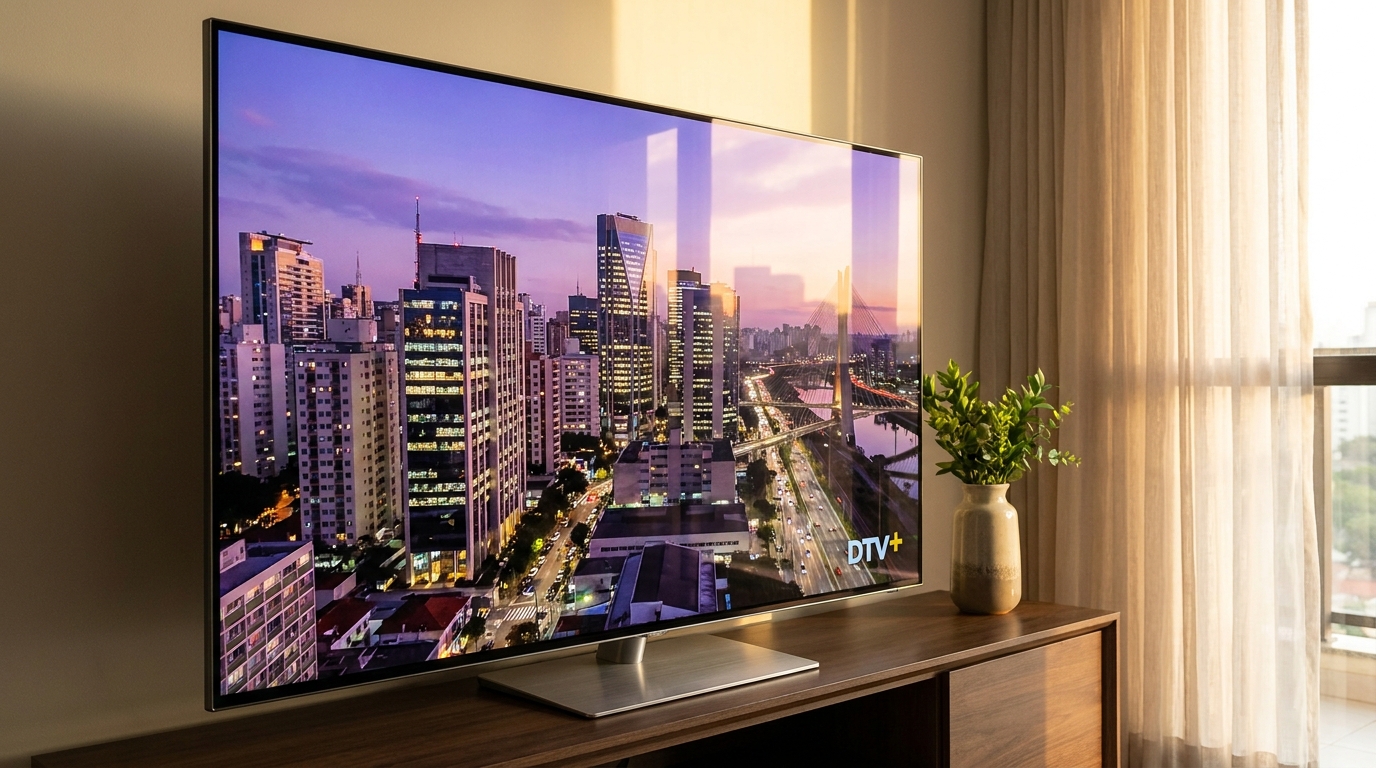
Brazilian broadcaster Globo is conducting technical trials of the DTV+ digital television standard in São Paulo. The tests demonstrate support for 4K video resolution, MPEG-H audio, and interactive features like shoppable advertisements.
Key Takeaways
- Test signal in São Paulo delivers native 4K resolution via the DTV+ standard.
- MPEG-H audio support allows for personalized commentary and accessibility features like dialogue enhancement.
- Integrated interactive layer supports shoppable advertisements and viewer engagement directly on-screen.
- DTV+ receivers display real-time signal metrics including frequency, power, and quality for technical monitoring.
Why It Matters
The successful trial of DTV+ in Brazil’s largest market signals the readiness of the TV 3.0 standard for commercial scaling. By integrating 4K video and MPEG-H audio into a terrestrial signal, Globo is bridging the technical gap between linear broadcasting and high-end streaming services. This hybrid approach allows broadcasters to retain one-to-many delivery efficiency while adopting the personalization and shoppable monetization models previously exclusive to OTT platforms. For the global ecosystem, Brazil’s large-scale adoption of ATSC 3.0-based technologies provides a critical test case for next-generation terrestrial broadcasting. Watch for the availability of mass-market DTV+ compatible television sets in the Brazilian retail market throughout 2026.
Additional Context
The DTV+ standard, commercially known as TV 3.0, is a major pillar of Brazil’s broadcasting strategy to remain competitive against global streaming platforms. Per the SBTVD Forum and government reports from August 2025, the standard was formally adopted via presidential decree to establish a common IP-based architecture. This transition is expected to reach commercial maturity by the 2026 FIFA World Cup, with Globo serving as the primary technical lead. The system utilizes ATSC 3.0 technologies for its physical layer, which the SBTVD Forum noted outperformed other international standards in spectral efficiency and mobile reception during field tests. In addition to the São Paulo trials, Globo launched a pilot station in Rio de Janeiro in April 2025 to test 1080p and 2160p services using VVC and MPEG-5 LCEVC video coding, according to Informitv. These tests specifically focus on the mandatory MPEG-H audio system, developed by Fraunhofer IIS, which enables immersive 5.1+4H soundscapes. The inclusion of LCEVC technology, pioneered by V-Nova, allows Globo to deliver high-quality 4K signals within a limited 6 MHz channel bandwidth, a critical requirement for maintaining high-density terrestrial services. From a regulatory and economic perspective, Brazil’s move toward TV 3.0 is intended to create a unified broadcasting standard across the Americas. Per the U.S. Department of Commerce in August 2025, the adoption of ATSC 3.0 technologies by a market of over 70 million TV households is expected to drive significant economies of scale for hardware vendors. While the commercial deadline for full implementation has been extended by regulators to late 2027 to allow for consumer electronics manufacturing cycles, major broadcasters are accelerating infrastructure upgrades to meet the 2026 World Cup showcase window.
Read full article at youtube.com
Get this in your inbox → Subscribe
Enjoy our coverage?
Add StreamingMeme as a preferred source on Google to see more of our streaming news at the top of your Search results.
Add as preferred source