

Kioxia debuts PCIe 6.0 SSDs optimized for AI inference and caching
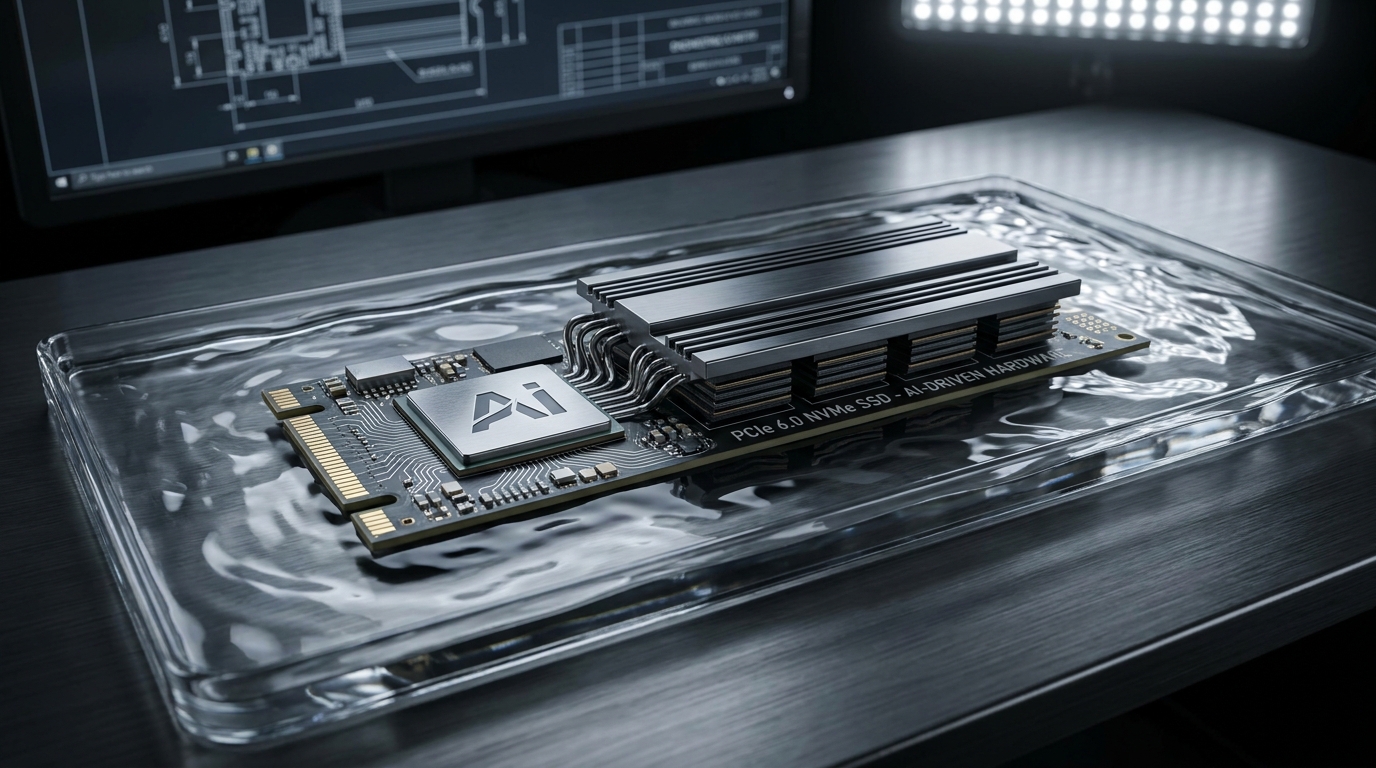
Kioxia has announced its CM10 Series enterprise SSDs, the company's first PCIe 6.0 storage solution featuring 10th generation BiCS FLASH. The drives are designed for data-intensive AI infrastructure and include support for Nvidia's CMX context memory storage solution.
Key Takeaways
- CM10 Series utilizes 332-layer BiCS FLASH generation 10 memory to improve power efficiency and performance.
- Storage capacities range from 1.60 TB to 61.44 TB with E3.S and E1.S form factors supporting liquid cooling.
- Supports Nvidia CMX to extend GPU memory via a shared, pod-level context tier for ephemeral KV cache.
- Performance gains include an 85% increase in random read speeds compared to the Kioxia CM9 series.
Why It Matters
The transition to PCIe 6.0 is critical for streaming infrastructure providers managing massive AI-driven workloads and real-time metadata processing. By integrating with Nvidia’s CMX architecture, these SSDs effectively treat flash storage as an extension of GPU memory, reducing latency for large-scale inference. For the streaming ecosystem, this facilitates faster content personalization and more efficient server-side processing as models scale toward trillions of parameters. Watch for adoption rates among Tier-1 cloud providers to see if PCIe 6.0 becomes the baseline for 2027 data center refreshes.
Additional Context
The push for PCIe 6.0 and advanced 3D NAND comes as data center operators face a looming memory wall. Per TrendForce in June 2026, the demand for enterprise SSDs is projected to grow by 25% annually through 2028, driven largely by the shift from traditional general-purpose servers to AI clusters that prioritize high-speed I/O. Competitors like Samsung and SK Hynix have similarly focused on increasing layer counts, with SK Hynix announcing its own 321-layer NAND production timeline in early 2026 to stay competitive in the high-density storage market. Hardware thermal management is becoming a central design constraint for next-generation streaming and AI infrastructure. As reported by Data Center Dynamics in May 2026, roughly 35% of new large-scale data center builds now incorporate liquid-to-chip cooling designs to handle the heat density of high-performance SSDs and H100/B200 GPU clusters. Kioxia’s inclusion of direct-cold-plate liquid cooling support in the E3.S form factor aligns with this trend toward specialized cooling for sustained high-throughput environments. Furthermore, the integration of Nvidia CMX signals a tightening relationship between storage vendors and chipmakers. According to a July 2026 analysis from IDC, the ability to offload KV cache—essentially the 'short-term memory' of large language models—to ultra-fast SSDs is a primary strategy for reducing the total cost of ownership in AI clusters. This architectural shift allows operators to run larger context windows without the prohibitive cost of massive HBM (High Bandwidth Memory) arrays, a dynamic that directly impacts the scalability of agentic AI features in streaming platforms.
Read full article at aol.ca
Get this in your inbox → Subscribe
Enjoy our coverage?
Add StreamingMeme as a preferred source on Google to see more of our streaming news at the top of your Search results.
Add as preferred source