
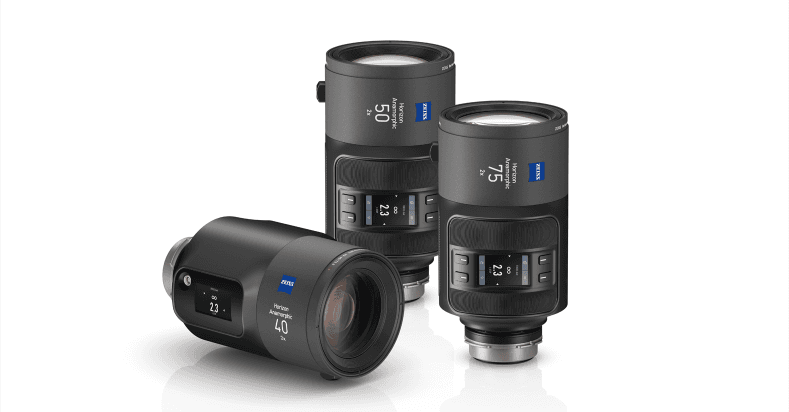
ZEISS unveiled its new Horizon Anamorphic series of full-frame 2x cinema lenses, ranging from 35mm to 200mm. These lenses integrate motorized systems and a proprietary look-tuning back element for versatile cinematic aesthetics and offer seamless integration with existing production workflows. The series aims to enhance professional video production with capabilities like low distortion and consistent color for VFX-intensive works.
The Horizon series indicates a pivot toward automated, data-rich hardware that reduces the physical footprint of camera rigs. By embedding motors and metadata storage directly in the lens body, ZEISS eliminates external components that often fail or require re-calibration during high-pressure shoots. For the streaming ecosystem, this precision is vital for virtual production and high-volume VFX, where accurate lens metadata significantly reduces post-production compositing time. As competitors like Atlas and Cooke expand their anamorphic offerings, ZEISS is betting that workflow efficiency—rather than just a signature 'look'—will secure its position in high-end streaming service productions. Watch for whether rival manufacturers adopt similar LBUS-native integrated motors in their 2027 product roadmaps.
ZEISS positioned the Horizon Anamorphic series within a rapidly expanding market for full-frame 2x anamorphic cinema lenses. The company's decision to integrate motorized focus and iris systems directly into the lens body reflects a broader push among premium optics manufacturers to reduce reliance on external motor accessories that add weight and calibration complexity on set. ZEISS announced the Horizon series alongside its existing Supreme Prime and CP.3 XD lines at Cine Gear Expo 2026, signaling that the company views integrated metadata and automation as a differentiator for virtual production and VFX-heavy workflows rather than a niche add-on.
The competitive landscape for anamorphic cinema lenses has intensified over the past year. Cooke Optics offers eight focal lengths in its Anamorphic/i Full Frame Plus range from 32mm to 180mm with a 1.8x squeeze factor, targeting the same high-end streaming and theatrical productions that ZEISS is courting with the Horizon series. Cooke's lenses use the company's /i Technology metadata protocol, which stores focal length, focus distance, and T-stop data directly in the lens, creating a direct comparison with ZEISS's LBUS-based metadata approach. Both systems aim to give VFX supervisors and virtual production teams reliable per-frame lens data without external encoders.
Atlas Lens Co. has also moved aggressively into the anamorphic space at a different price tier. Atlas offers its Orion Series 2x anamorphic primes in twelve focal lengths from 18mm to 200mm starting at $17,995 per set, positioning the lenses as an accessible option for independent productions and mid-budget streaming content. The Orion series uses a true front-anamorphic group design with a Super 35 image circle, contrasting with the full-frame coverage of both ZEISS Horizon and Cooke Anamorphic/i FF. The presence of three or more manufacturers competing on integrated metadata, motorization, and optical character in the anamorphic category suggests that streaming platforms' demand for consistent, VFX-ready lens data is reshaping how cinematographers and rental houses evaluate lens purchases.
Add StreamingMeme as a preferred source on Google to see more of our streaming news at the top of your Search results.
Add as preferred source