

Violet Audio adds MCP server to dMix 128 for voice-controlled routing
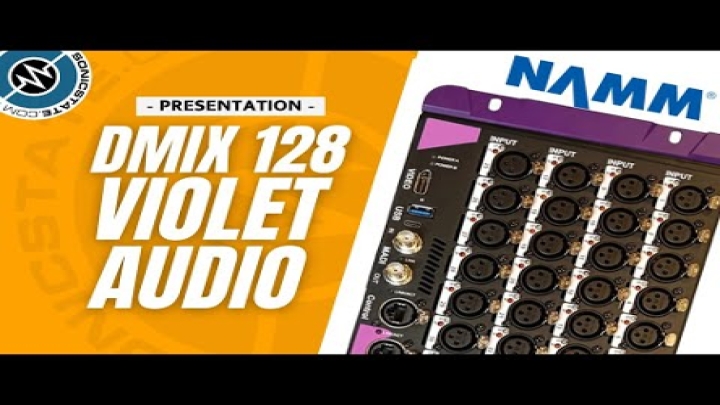
Violet Audio has updated its dMix 128 digital mixer with a built-in Model Context Protocol (MCP) server to support voice-controlled routing and workflow automation. The update enhances the device’s integration capabilities within broadcast and streaming environments that utilize SMPTE ST 2110-30, AES67, and NMOS standards.
Key Takeaways
- Integrated MCP server allows context-aware control from external AI applications without requiring additional middleware.
- Engineers can execute multi-step sequences like virtual soundchecks or room prep via human-readable voice commands.
- System retains professional control standards including OSC, QRC/JSON, and NMOS discovery alongside the new AI interface.
- Hardware-level processing keeps all audio signals inside the mixer during AI-triggered routing or parameter changes.
- The dMix 128 system starts at $5,995, targeting broadcast, esports, and enterprise AV installations.
Why It Matters
This update signals the transition of AI from a generative creative tool to a functional interface for live production hardware. By adopting the Model Context Protocol, Violet Audio enables lower-skilled operators to manage complex routing via natural language, potentially reducing the specialized headcount required for basic broadcast tasks. For the streaming ecosystem, this facilitates faster setup times in multi-use facilities and tighter integration between software-based control layers and hardware DSP. Watch for whether other SMPTE-compliant hardware manufacturers adopt MCP to standardize how Large Language Models interact with professional signal chains.
Additional Context
The Model Context Protocol, initially introduced by Anthropic in November 2024, has rapidly gained traction as an open standard for connecting AI assistants to data sources and hardware tools. Per TechCrunch (November 2024), the protocol was designed to replace fragmented integrations with a unified interface, allowing AI models to retrieve information or execute actions across different environments. Violet Audio’s implementation represents a significant move to bring this standard into the rack-mounted hardware space, where proprietary APIs have historically limited cross-vendor automation. This follows a broader industry trend toward software-defined production as organizations seek to maximize hardware utility through flexible control layers. In the professional audio and broadcast sector, the move toward AI-driven interfaces aligns with recent developments from competitors like Solid State Logic and Waves. Per TV Tech (April 2026), several manufacturers showcased AI-assisted mixing features at the 2026 NAB Show, though many rely on cloud-based processing rather than the on-device MCP server approach used by Violet Audio. The integration of SMPTE ST 2110-30 and AES67 ensures that these new AI control methods remain compatible with existing IP-based infrastructure, which Omdia reported in early 2026 has reached a 65% adoption rate among tier-one North American broadcasters. broadcast facilities. This shift suggests that the next phase of infrastructure innovation will focus less on the transport of bits and more on the abstraction of control for the end user interface.
Read full article at sonicstate.com
Get this in your inbox → Subscribe
Enjoy our coverage?
Add StreamingMeme as a preferred source on Google to see more of our streaming news at the top of your Search results.
Add as preferred source