

Blackmagic Design details GPU optimization protocols for DaVinci Resolve workflows
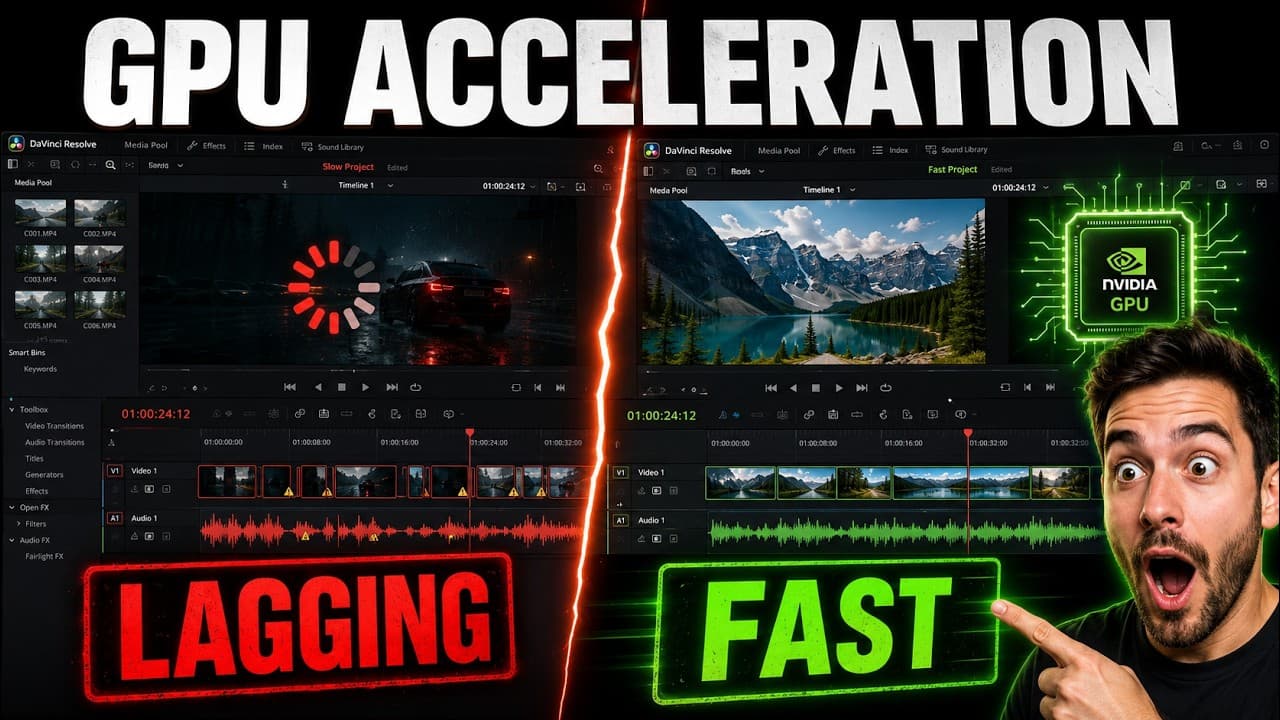
Blackmagic Design released a tutorial detailing GPU acceleration configurations in DaVinci Resolve. The resource provides guidance on selecting appropriate hardware for decoding H.264 and H.265 files and optimizing encoding performance for editorial workflows.
Key Takeaways
- Hardware acceleration for H.264 and H.265 decoding is managed independently from general GPU image processing settings.
- Integrated GPUs with Intel Quick Sync can be utilized for background decoding while a dedicated NVIDIA or AMD card handles effects and color grading.
- Export performance on the Deliver page is contingent on selecting specific hardware encoders (NVENC, AMF, or Quick Sync) relative to the installed GPU.
- Higher-tier features like noise reduction and Fusion effects may still require Timeline Proxy Resolution if GPU memory capacity is exceeded.
Why It Matters
Optimizing GPU utilization is critical for maintaining real-time playback as streaming bitrates and resolutions scale. By formalizing the hybrid use of integrated and discrete graphics, Blackmagic acknowledges that raw GPU power alone is insufficient for modern high-efficiency video coding (HEVC) timelines. For the ecosystem, this guidance aligns software efficiency with the rising VRAM demands of AI-driven production tools. Stakeholders should monitor if future Resolve updates expand support for emerging AV1 hardware encoders, which could further reduce cloud rendering costs and local delivery times for high-density streaming assets.
Additional Context
Additional context. In the months surrounding these technical updates, the production hardware landscape has shifted toward high-bandwidth IP workflows. Per RedShark News (April 2026), Blackmagic Design launched a native 100G SMPTE-2110 ecosystem at NAB 2026, including the URSA Cine 12K LF camera and the ATEM 4 M/E Constellation IP switcher. These hardware releases necessitate tighter software-hardware integration to handle the massive data rates associated with 12K and high-frame-rate cinematic production.
Simultaneously, the industry has seen a push toward AI-optimized hardware. Per HostRunway (April 2026), the release of the NVIDIA RTX 50-series GPUs introduced the NVFP4 format, which reportedly reduces VRAM requirements for AI features like Magic Mask by up to 55% while maintaining real-time playback. As DaVinci Resolve 21 expands its neural engine capabilities, the synergy between Blackmagic’s software optimization and manufacturer-specific acceleration (such as CUDA 12.8) becomes the primary bottleneck for professional colorists and editors.
Competitively, the market is moving beyond standard GPU acceleration toward specialized silicon. Per NETINT (July 2026), adoption of Video Processing Units (VPUs) and ASICs has reached 32% as firms seek to lower the power consumption costs associated with traditional GPU-based transcoding. This trend suggests that while Blackmagic currently prioritizes GPU flexibility for desktop workflows, the broader industry is evaluating dedicated hardware to manage the scale of global streaming delivery.
Read full article at youtube.com
Enjoy our coverage?
Add StreamingMeme as a preferred source on Google to see more of our streaming news at the top of your Search results.
Add as preferred source