

Seeed Studio launches reCamera Pro with 3 TOPS on-device AI
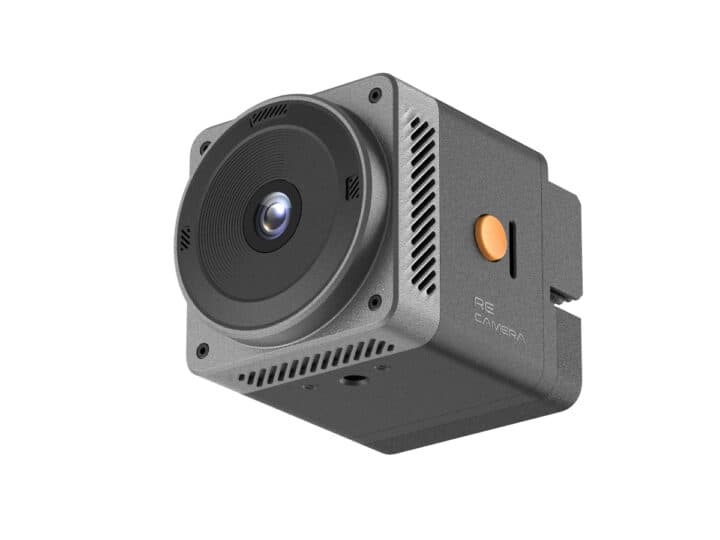
Seeed Studio has launched the reCamera Pro, an AI-powered modular camera featuring a Rockchip SoC with a 3 TOPS NPU for on-device computer vision and generative AI workloads. The device supports 4K video encoding, RTSP, and ONVIF protocols for integration into IoT and industrial video intelligence systems.
Key Takeaways
- Equipped with 3 TOPS NPU supporting INT8/INT4/FP16 models across TensorFlow, PyTorch, and ONNX frameworks.
- Integrated 8MP sensor delivers 4K video at 30 FPS with starlight-level low-light performance.
- Benchmarked performance includes YOLO11 at 43 FPS and Qwen2 0.5B LLM at 13.63 tokens per second.
- Industrial-ready connectivity featuring Gigabit Ethernet with PoE, dual-band WiFi 5, and CAN bus expansion.
- Managed via a code-free web interface for real-time inference monitoring and AI model conversion.
Why It Matters
The reCamera Pro represents a significant shift toward localized, multi-modal intelligence in edge video hardware. By packing 3 TOPS of NPU performance into a compact, modular form factor, Seeed Studio allows developers to deploy not just computer vision, but also lightweight language and vision-language models without cloud dependency. This reduces latency and data transit costs, which is critical for industrial automation and real-time surveillance. As the industry moves away from centralized processing, hardware that balances power efficiency with the ability to run 2B-parameter models locally will define the next generation of 'smart' endpoints. The primary signal to watch is the 4GB RAM variant launch in Q4 2026, which will likely broaden the range of supported multimodal models.
Additional Context
The launch of the reCamera Pro aligns with a massive expansion in the edge AI market, which SNS Insider valued at $17.52 billion in 2025 and projects to reach $120.60 billion by 2035. This growth is driven by a shift toward decentralized computing where real-time analytics are performed on-site to ensure system stability and data privacy. Per Grand View Research in June 2026, the hardware segment currently accounts for over 51% of edge AI revenue, as enterprises prioritize specialized AI accelerators like the NPUs found in Rockchip and NVIDIA Jetson modules to handle high-resolution video streams under strict power constraints.
Technological trends in 2026 are increasingly favoring the integration of Vision Transformers (ViTs) alongside traditional Convolutional Neural Networks (CNNs). According to reports from Averroes.ai in March 2026, ViTs are increasingly outperforming CNNs in complex industrial tasks because they can capture global spatial relationships in cluttered scenes better than their predecessors. The RV1126B chip used in the reCamera Pro specifically includes Transformer optimization technology, a response to this shift that enables even entry-level edge devices to process sophisticated multimodal models with parameter scales under 2B.
Furthermore, the competitive landscape for edge AI SoCs is diversifying. While Rockchip remains a dominant choice for cost-effective mass production—typically 30% cheaper than industrial competitors like NXP per reports from May 2025—the rise of RISC-V is challenging ARM-based dominance. Organizations like the RISC-V International forum noted in March 2026 that the architecture is transitioning from an experimental alternative to a production-ready default for embedded systems, particularly in automotive and industrial robotics where modularity and open standards are highly valued.
Read full article at cnx-software.com
Enjoy our coverage?
Add StreamingMeme as a preferred source on Google to see more of our streaming news at the top of your Search results.
Add as preferred source