

Qualcomm Eyes ByteDance for Custom Video Chips Amid Data Center Pivot
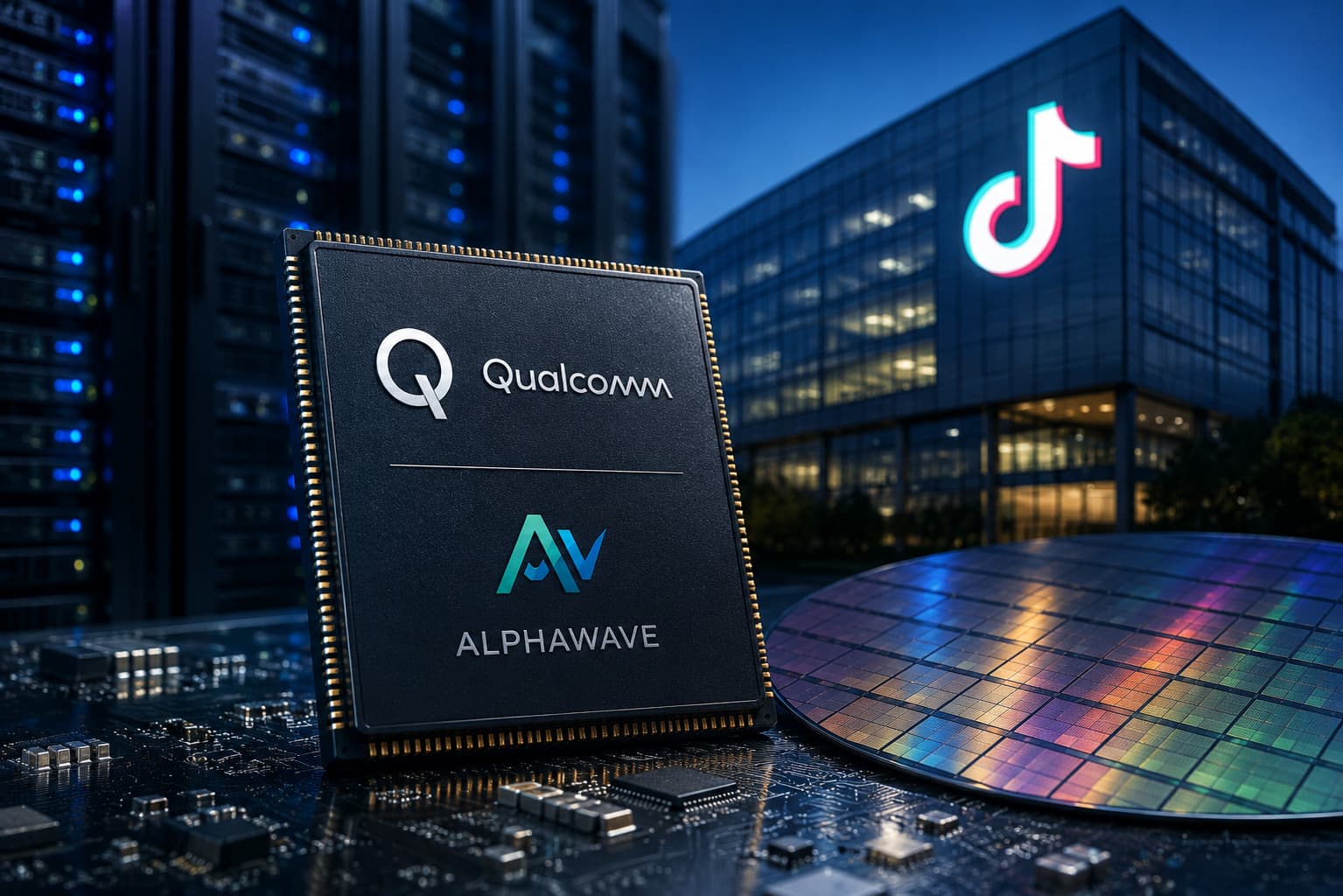
Qualcomm is reportedly in talks with ByteDance to design custom chips, possibly leveraging Alphawave technology for video processing units (VPUs). The discussions, which remain unconfirmed, would mark a significant entry for Qualcomm into the custom-silicon market for data centers. The article highlights the potential for specialized hardware to improve video encoding and AI inference efficiency at scale.
Key Takeaways
- Qualcomm completed its $2.4B acquisition of Alphawave Semi on December 18, 2025, gaining SerDes, chiplet, and custom-silicon IP critical for large data-center chip design.
- One source mentions Video Processing Units (VPUs) as a possible chip type, with mass production targeted by end of 2026.
- A May 26 Bloomberg report claimed a deal for millions of custom AI ASICs was already reached; Reuters' June 24 report explicitly contradicts this, calling negotiations uncertain.
- ByteDance is simultaneously developing its own Arm- and RISC-V-based server CPUs and evaluating inference accelerators from domestic Chinese suppliers including Biren, MetaX, Iluvatar CoreX, Moore Threads, and Enflame.
- Qualcomm faces established custom-ASIC competitors Broadcom and Marvell, which have years of experience bringing large designs to mass production for hyperscalers.
Why It Matters
Qualcomm's talks with ByteDance represent the first potential marquee customer for its custom-silicon business unit, built on the Alphawave acquisition — the proof point Qualcomm needs to compete with Broadcom and Marvell in the custom-ASIC market. For streaming video, specialized VPUs could reduce encoding, decoding, and image-processing costs across ByteDance's massive TikTok and Douyin infrastructure, where even small per-video efficiency gains compound across millions of parallel operations. Watch whether either company confirms an agreement publicly, and whether the chip scope is limited to video processing or extends to AI inference — the distinction determines whether US export controls become a complicating factor.
Additional Context
On the same day as the Reuters report, June 24, 2026, Qualcomm held its Investor Day in New York and unveiled the "Dragonfly" data center platform, led by Tony Pialis — the former Alphawave Semi CEO who now serves as Qualcomm's EVP and GM of Data Center (per The Register, June 2026). The platform includes the C1000 CPU, based on Qualcomm's custom Oryon architecture with more than 250 cores in a chiplet design, targeting production in the second half of 2028. Qualcomm also announced partnerships with Microsoft, which plans to use Qualcomm's HBC-based AI accelerators, and Meta, which committed to deploying Dragonfly C1000 CPUs under a multi-generation agreement. Qualcomm raised its fiscal 2029 non-handset revenue target to $40 billion, with data center AI infrastructure alone targeted at more than $15 billion (per Qualcomm Investor Day press release, June 24, 2026).
ByteDance's chip ambitions extend well beyond Qualcomm. Reuters reported on May 28, 2026 that ByteDance is developing its own server CPUs on both Arm and RISC-V architectures, motivated by Intel and AMD raising server processor prices 10–35% quarter-over-quarter amid six-month delivery delays. Separately, Reuters reported on June 15, 2026 that ByteDance is in talks to purchase at least 50,000 AI inference chips from Shanghai-based Iluvatar CoreX, and is also evaluating Baidu's Kunlunxin chips — adding to existing supply relationships with Huawei and Cambricon. This multi-supplier strategy means Qualcomm would join a crowded, deliberately diversified roster rather than serving as a sole provider.
The broader custom-silicon trend continues to accelerate. On June 24, 2026, OpenAI unveiled a custom chip designed with Broadcom for its AI infrastructure (per The Standard HK, June 2026), and Qualcomm separately announced an agreement to acquire Modular, an AI software stack company, to complement its Dragonfly hardware portfolio (per The Register, June 2026). Both moves underscore how the custom-ASIC market — once dominated by Broadcom and Marvell — is rapidly drawing new entrants targeting hyperscaler workloads.
Read full article at igorslab.de
Enjoy our coverage?
Add StreamingMeme as a preferred source on Google to see more of our streaming news at the top of your Search results.
Add as preferred source