

Overclocked Intel B70 hits 3.1 GHz, nearing high-end Nvidia performance
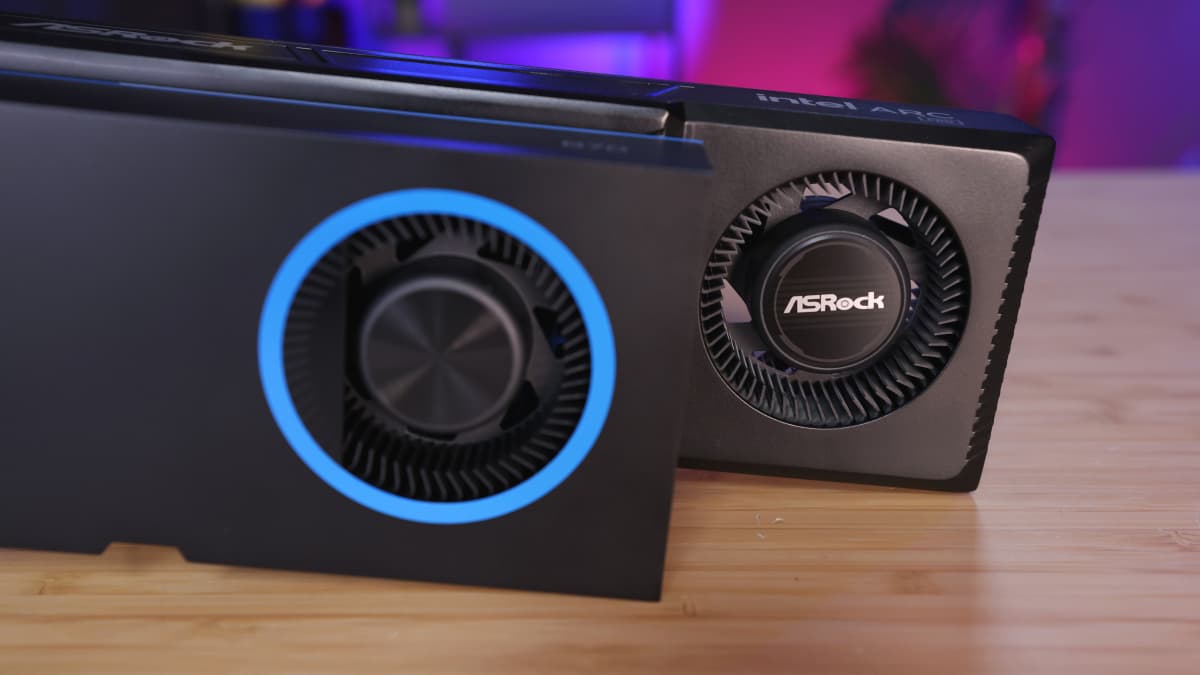
Intel's Arc Pro B70 graphics card, specifically an Asrock Creator model, was successfully overclocked by 21% to 3.1 GHz at 330 watts. This pushes its performance closer to high-end Nvidia and AMD GPUs, highlighting its potential for high-performance applications, including video processing, given its video encoding/decoding capabilities.
Key Takeaways
- Asrock Arc Pro B70 Creator achieved a 21% clock speed increase to 3.1 GHz over the 2.56 GHz reference average.
- Power consumption was pushed to 330 watts, a 100-watt increase over the Intel reference card's 230-watt sweet spot.
- Hardware features 32GB of GDDR6 VRAM and 32 Xe2 cores, retaining professional workstation specs in an enthusiast configuration.
- System stability remains a challenge, as Arc software lacks profile saving and frequently requires full resets after overclocking crashes.
- Video processing capabilities include full hardware-accelerated decoding and encoding for VP9, H.264, H.265, and AV1.
Why It Matters
This technical milestone demonstrates the latent power of Intel’s Battlemage architecture when freed from efficiency-optimized thermal envelopes. For the streaming ecosystem, this confirms that Intel's high-memory professional silicone can compete with Nvidia's mid-to-high-end Blackwell cards in raw compute, provided software stability improves. However, the requirement for 330 watts of power to match consumer-grade rivals suggests Intel still faces a significant performance-per-watt disadvantage against the latest 4N and N4P nodes from Nvidia and AMD. Watch for whether Intel integrates these unlocked tuning capabilities into official driver updates to attract more professional video engineers.
Additional Context
The Arc Pro B70 launch in early 2026 marked a strategic pivot for Intel, moving away from high-end consumer gaming toward the professional workstation and AI inference markets. Per TechPowerUp and VideoCardz in March 2026, the Asrock Arc Pro B70 Creator 32GB debuted with an MSRP of approximately $999, featuring a blower-style cooling system and Honeywell PTM7950 phase-change material to manage thermal loads in workstation environments. This hardware is built on the BMG-G31 'Big Battlemage' die, manufactured using TSMC’s N5 process, which contains roughly 27.7 billion transistors.
Simultaneous to Intel's shift, the competitive landscape narrowed as Nvidia and AMD launched their respective Blackwell and RDNA 4 mid-range flagships. Per Gamer’s Nexus and Hardware Unboxed (March and May 2025), the Radeon RX 9070 launched with a focus on power efficiency and native 1440p performance, while Nvidia’s RTX 5070 utilized GDDR7 memory to maintain a lead in ray-traced workloads and DLSS 4 frame generation. The overclocked B70 represents an attempt to reclaim the 'Big Battlemage' potential originally rumored for a now-canceled consumer B770 gaming card.
Industry reporting from Jon Peddie Research in May 2026 indicates that Intel’s GPU division has increasingly prioritized integrated graphics and high-margin data center solutions. This is underscored by the reported cancellation of the Xe3 Celestial discrete gaming architecture, leaving the Arc Pro B-series as the primary showcase for Intel’s high-VRAM discrete hardware. In production environments, the B70's 32GB of ECC-supported memory gives it a significant advantage in large-scale video rendering and AI workloads over the 12GB or 16GB buffers found on standard consumer cards from Nvidia and AMD.
Read full article at pcgameshardware.de
Enjoy our coverage?
Add StreamingMeme as a preferred source on Google to see more of our streaming news at the top of your Search results.
Add as preferred source