

Meta launches conversational AI assistant and expands Reels translation reach
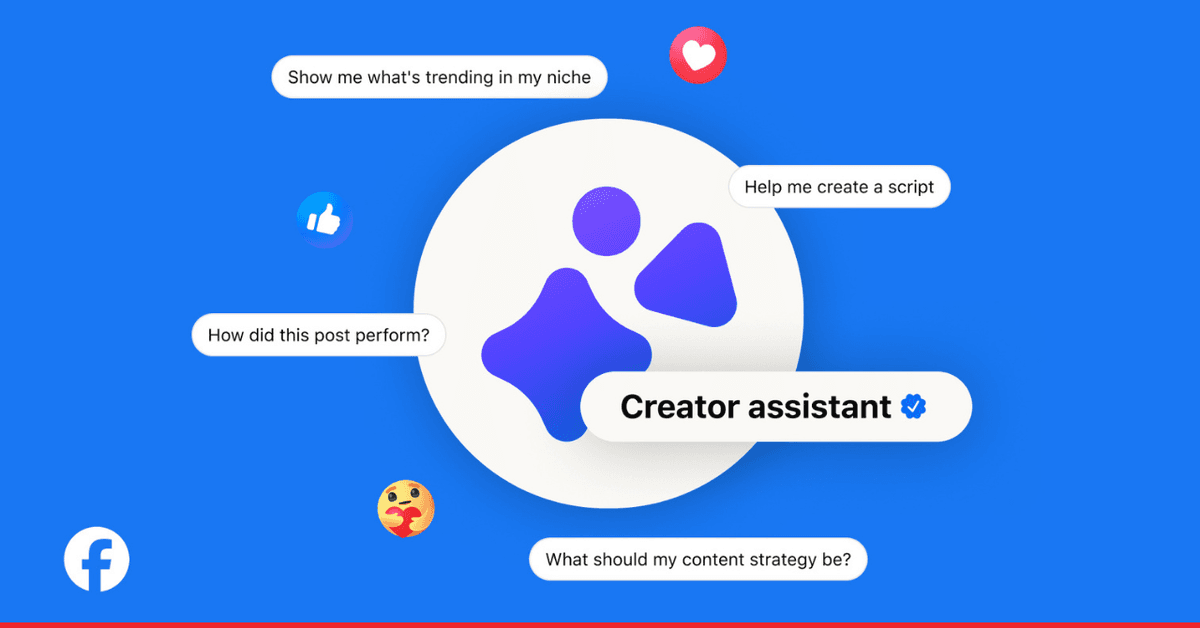
Meta introduced the AI-powered Creator Assistant on Facebook to help creators analyze performance, understand audiences, and generate content ideas. The company is also expanding AI-powered translation capabilities for Reels to additional languages, enabling creators to reach global audiences and enhancing productivity. This move aims to embed AI throughout the creator lifecycle, making Facebook a more active participant in content creation and distribution.
Key Takeaways
- Creator Assistant provides conversational analysis to explain why specific Reels perform well rather than just reporting the numbers.
- AI translation support added for Arabic, Bahasa Indonesian, French, Thai, and Vietnamese, expanding beyond 9 existing languages.
- Over 500 million Facebook users currently watch AI-translated videos on the platform every week.
- The translation system simulates the creator's original voice tone and offers optional AI-powered lip-syncing for more natural viewing.
- Creator Assistant is rolling out to eligible creators in the United States, Canada, and India via the Facebook Professional Dashboard.
Why It Matters
Meta is shifting from a passive distribution hub to an active creative partner by embedding AI directly into the operational workflow. By simplifying data interpretation and automating cross-border localization, Meta lowers the barrier for creators to manage global careers without large support teams. This strategy directly counters the rise of standalone AI editing platforms by integrating these features into the core dashboard. In an increasingly fragmented attention market, the platform that best reduces production friction while maximizing reach through translation will hold the advantage. Watch for engagement lift metrics in non-English markets to see if automated translation effectively retains high-quality creators at the expense of local-language competitors.
Additional Context
The launch of Creator Assistant and expanded translation tools follows a massive spending cycle for Meta's creator ecosystem. In 2025, according to The Next Web, Meta paid out nearly $3 billion to Facebook creators, with 60% of those funds attributed to Reels content. To deepen its talent pool, Meta also launched the 'Creator Fast Track' program in early 2026, offering cash incentives to established creators from YouTube and TikTok to migrate their audiences to Facebook. These efforts occur as the competitive landscape for short-form video reaches a peak; YouTube reported revenues of $62 billion in June 2026, surpassing legacy media giants like Disney and signaling its dominance as a primary media infrastructure.
Beyond basic translation, Meta's expansion focuses on the 'Digital Village' concept, where AI eliminates language barriers in real-time. Per The Express Tribune in May 2026, Meta’s technology has reduced the latency for lip-synced translations to under two seconds, making it technically feasible for live broadcasts and real-time social interaction. This technical leap is critical as industry data from early 2026 suggests over 80% of online video content will soon be consumed in a language other than its original recording. Meta faces stiff competition from standalone AI tools like HeyGen and CapCut, the latter of which remains popular for its beginner-friendly conversational editing path. However, Meta's advantage lies in its massive user base; social media analytics from early 2026 indicate that organizations adopting generative AI workflows have seen a 400% increase in content volume compared to those relying on manual production and translation.
Read full article at ciol.com
Enjoy our coverage?
Add StreamingMeme as a preferred source on Google to see more of our streaming news at the top of your Search results.
Add as preferred source