

Meta expands Instagram Reels AI dubbing to Japanese and European markets
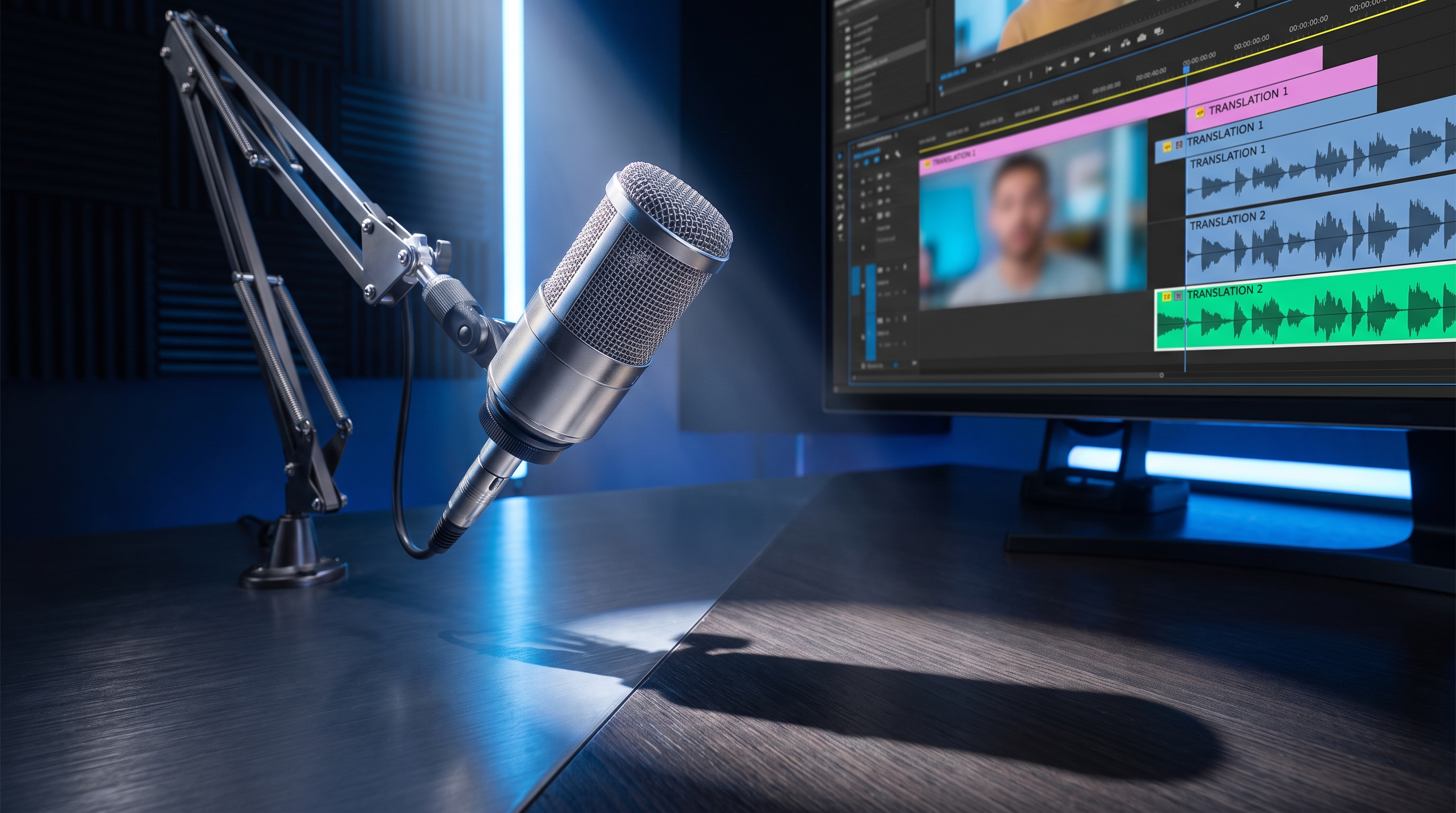
Meta has expanded its Instagram Reels AI translation feature to include Japanese, Korean, and several European languages, providing automated dubbing and lip-sync capabilities for public accounts. The update aims to lower language barriers for global creator reach, though the release coincides with Meta's decision to roll back a controversial image-tagging feature following ethical concerns regarding synthetic imaging.
Key Takeaways
- Japanese, Korean, and three European languages now support the full AI auto-dubbing, voice-cloning, and lip-sync suite.
- Creators must manually enable 'Translate Reel' and 'Approve Translation' to trigger the AI-generated audio overlay.
- Translated videos are explicitly tagged 'Translated by AI' to distinguish them from authentic or deepfake content.
- The rollout occurred alongside the discontinuation of Meta's Muse Image 'tagging' tool after SAG-AFTRA and privacy backlash.
Why It Matters
The addition of Japanese and Korean support signals Meta's intent to aggressively challenge TikTok and YouTube Shorts in key Asian markets where local language content is dominant. By offering voice-matched dubbing for free to all public accounts, Meta is attempting to lower the barrier for global content discovery and increase Reels' cross-border watch time. For the broader ecosystem, this normalized synthesis of voice and lip movements creates a persistent friction between utility and deepfake risks. Industry observers should monitor whether these automated localized tracks drive a measurable increase in non-native follower growth compared to traditional subtitled content.
Additional Context
The expansion puts Meta in direct competition with YouTube, which moved its own AI auto-dubbing tool into general availability for millions of creators in September 2025. Per Medium (December 2025), YouTube’s approach—which now supports over 30 languages—initially focused on scale over voice identity, while Meta has prioritized preserving the original creator’s vocal timbre through generative cloning. Recent data from YouTube Product Head Buddhika Kottahachchi indicates that autodubbed content maintains roughly 75% of the average view duration of original-language videos, proving strong audience retention for synthetic audio (per Slator, February 2026). In the short-form space, TikTok has largely focused on automated captions and third-party integrations like CapCut, which supports AI voices in 70+ languages but lacks the native, seamless voice-cloning integration now seen on Instagram (per Morphed, April 2026). Meta's decision to clearly label these Reels as 'Translated by AI' is partly a response to tightening industry standards regarding synthetic transparency. In fact, unlabeled AI content on several major platforms now faces auto-detection and removal as of mid-2026. Meta’s cautious deployment of specific AI features follows the rapid rollback of its 'Muse Image' tool in early July 2026. According to The Guardian (July 2026), that feature allowed users to insert any public account holder into AI-generated images by default. The swift backlash from SAG-AFTRA—who labeled the tool an 'unwise' facilitation of non-consensual digital replicas—has forced Meta and its peers to pivot toward strictly opt-in, creator-driven AI utilities. This tension highlights a critical shift in the streaming and social ecosystem, where platform-wide AI capabilities are being gated by ethical safeguards and union pressure.
Read full article at finance.biggo.com
Get this in your inbox → Subscribe
Enjoy our coverage?
Add StreamingMeme as a preferred source on Google to see more of our streaming news at the top of your Search results.
Add as preferred source