

Magnific shifts AI from generation to orchestrating full creative workflows
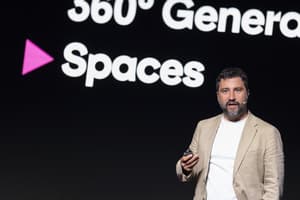
At the Upscale Conference, Magnific launched new products, including Agents, Flows, and Magnific Model Context Protocol, shifting AI's focus from content generation to workflow management in creative processes. The company emphasized AI's role as a collaborator that augments human creativity by managing projects and coordinating workflows, rather than replacing human input. This development reflects an industry trend towards AI systems that provide transparency and control, allowing creators to intervene in the AI-powered process.
Key Takeaways
- Launched 'Agents' to handle multi-step tasks like organizing project folders, analyzing scripts, and assembling video sequences.
- Introduced 'Flows' to allow teams to build, save, and share reusable AI-powered workflows across organizations via API.
- Integrated the Model Context Protocol (MCP) to provide transparent, two-way connections between AI agents and external data sources.
- Shifted product focus toward 'collaborative memory' where AI retains project context and histories for team-wide use.
Why It Matters
This move signals a pivot from AI as a high-speed 'content vending machine' to a governed infrastructure layer for enterprise video production. By prioritizing transparency and 'human-in-the-loop' intervention, Magnific addresses the primary hurdle to studio adoption: the 'black box' nature of generative outputs that often ignore specific creative direction. As systems transition from simple prompting to agentic workflow management, the competitive battle shifts from model performance to the depth of integration into existing professional tech stacks. Watch the adoption rate of MCP-based servers among major creative suites, which serves as a proxy for how quickly fragmented AI tools are becoming a unified 'creative OS.'
Additional Context
The push toward agentic workflows reflects a broader 2026 industry trend where content generation is treated as a commodity while process orchestration becomes the core value proposition. Per Forbes in June 2026, the industry is witnessing a shift from 'make me a thing' to 'help me run the system that makes things,' with Gartner projecting that 40% of enterprise applications will include task-specific AI agents by the end of 2026. This maturation follows a period of 'AI bottlenecking' in 2025, where standalone chat interfaces failed to deliver meaningful ROI because they could not effectively communicate with existing business data or workflows.
Magnific’s adoption of the Model Context Protocol (MCP) aligns with a cross-industry standardization effort originally led by Anthropic. According to reports from Digital Applied in May 2026, the official MCP registry now exceeds 10,000 active public servers, providing a standardized JSON-based communication layer that allows AI agents to interact directly with internal databases and third-party tools like Slack or Google Drive. Major vendors including OpenAI and Adobe have also moved toward 'agentic content supply chains' to connect planning, creation, and reporting into single, interoperable environments.
In the creative sector specifically, companies like WPP have launched internal libraries like 'Agent Hub' as of early 2026 to package agency-specific knowledge into reusable digital helpers. Research from Figma and Canva in late 2025 suggested that while 85% of designers see AI as essential, only 18% of businesses reported a reduced need for human staff, reinforcing the 'collaborator' narrative championed at the Upscale Conference. The focus for high-end production has shifted toward ensuring character and style consistency across thousands of assets, a task now being delegated to these coordinated agent fleets rather than manual prompting.
Read full article at koreaherald.com
Enjoy our coverage?
Add StreamingMeme as a preferred source on Google to see more of our streaming news at the top of your Search results.
Add as preferred source