

Magna Systems to showcase hybrid SDI-to-IP broadcast workflows at ABE 2026
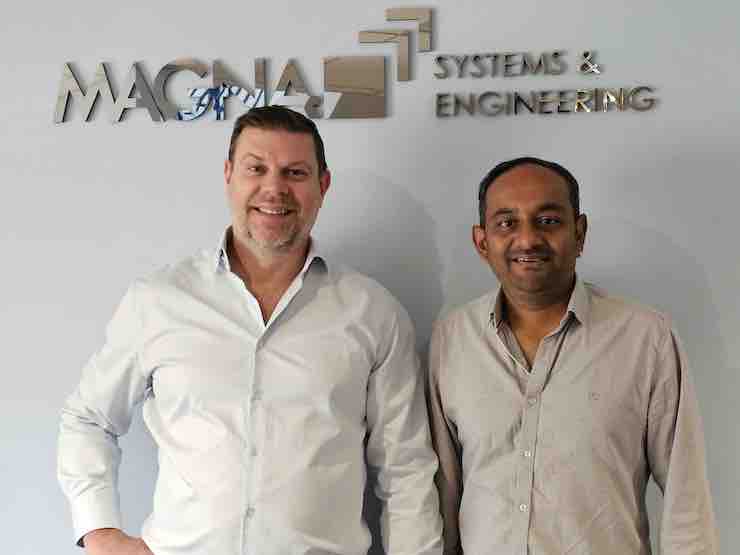
Magna Systems and Engineering announced that it will showcase an integrated broadcast technology ecosystem at the ABE Show 2026 in Sydney. The demonstration will feature collaborative workflows from partners including Arkona, TAG Video Systems, and EditShare to address SDI-to-IP migration and low-latency production challenges for broadcasters.
Key Takeaways
- Arkona’s platform, managed via the Blade Planner interface, will perform dense SDI-to-IP conversion using JPEG XS encoding.
- Manifold is delivering sub-frame-latency processing through FPGA-accelerated commercial off-the-shelf (COTS) hardware.
- TAG Video Systems will demonstrate 360-degree software-defined monitoring across uncompressed, compressed, and OTT streams.
- The RTS RVOC hybrid cloud intercom platform will be shown connecting distributed teams via encrypted WebRTC.
- Open Broadcast Systems (OBE) will showcase native ST 2110 and ST 2022-6 support for low-latency edge contribution.
Why It Matters
The transition from SDI to IP remains a primary technical hurdle for regional broadcasters balancing legacy reliability with modern scalability requirements. By consolidating multiple vendors into a single live signal path, Magna is addressing the operational fragility often found in multi-vendor IP environments. This integration is critical as the industry shifts toward remote production and hybrid infrastructures where software-defined monitoring must replace dedicated hardware. For the A/NZ market, this provides a blueprint for migrating infrastructure without proprietary lock-in. Watch for specific performance metrics on sub-frame latency during the live sports production demos, which serve as a benchmark for real-time IP viability.
Additional Context
The emphasis on interoperability at ABE 2026 reflects a broader industry urgency to manage the complexity of hybrid broadcast environments. According to Haivision’s 2026 Broadcast Transformation Report, while 82% of broadcast professionals still leverage SDI, 39% now cite the transition to IP as their top technical priority. However, the move is often hampered by a global shortage in IT networking talent specifically trained for high-bandwidth media protocols. Per Technology Decisions (January 2026), Australian and New Zealand organizations are on the front lines of this skills gap, leading to increased demand for more intuitive configuration tools like the Arkona Blade Planner, which abstracts low-level parameters into a graphical interface.
Simultaneously, the monitoring landscape is shifting from simple alarms to deep data observability to support distributed teams. Per TAG Video Systems (February 2026), modern broadcast operations now manage thousands of parameters across hybrid paths. Tools like the newly released 'Lens' visualization interface are designed to reduce the mean time to repair (MTTR) by organizing video streams into hierarchical groups—such as by data center or content type—allowing engineers to pinpoint systemic failures in seconds. This shift is vital as New Zealand’s TV industry, in particular, has seen significant contraction, with revenue falling 8.7% in the current year according to IBISWorld (July 2026), necessitating deeper operational efficiencies and cost cuts through automated, software-native workflows.
Read full article at google.com
Enjoy our coverage?
Add StreamingMeme as a preferred source on Google to see more of our streaming news at the top of your Search results.
Add as preferred source