
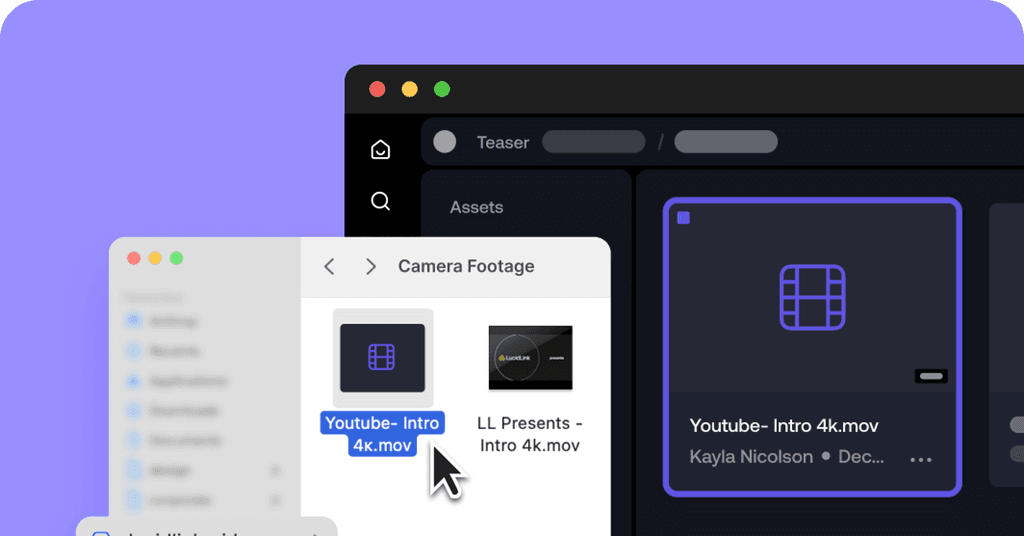
LucidLink has launched a new integration with Adobe Frame.io via its LucidLink Connect tool to create a unified filespace for production media. The integration allows editors to access Frame.io assets alongside cloud-stored media from providers like Amazon S3 and Google Drive without requiring manual file exports or duplication.
This integration addresses the persistent bottleneck of data silos in high-resolution video production. By creating a collaborative filespace that bridges review tools like Frame.io with broader cloud storage, LucidLink reduces the administrative overhead of file duplication and manual handoffs. For the streaming ecosystem, this facilitates faster content turnarounds and remote collaboration, which is increasingly critical as production volumes scale. The industry is moving away from application-specific storage toward a persistent, neutral storage layer that serves the entire toolchain simultaneously. Watch for adoption rates among major studios as they attempt to centralize global production assets into single 'sources of truth' to lower egress costs.
The integration arrives as the cloud storage market experiences significant expansion, projected to reach over $639 billion by 2032 with a 21.7% CAGR, per pCloud and Market Mania (July 2025). This growth is largely driven by massive data generation—estimated at 463 exabytes daily by 2025—and the increasing reliance of large enterprises on scalable object storage like Amazon S3, which accounted for 42.5% of market revenue in 2024 (Data Bridge Market Research). For media and entertainment specifically, the shift toward software-defined media architectures is no longer experimental; it is a strategic necessity for broadcasters targeting multi-platform delivery, according to the Journal of Media Services and Research (February 2026).
LucidLink has solidified its position in this landscape after securing $75 million in Series C funding led by Brighton Park Capital in late 2023, bringing its total funding to approximately $115 million, per PitchBook. The company, which manages over 90 petabytes of data for 4,000 businesses, was awarded a 2025 Engineering Emmy for its role in transforming television workflows (Peony.ink, March 2026). This financial and technical momentum coincides with Adobe’s broader overhaul of the Frame.io platform. In October 2024, Adobe released Frame.io V4, featuring a completely redesigned metadata model and 'Collections' to handle complex production assets at scale.
Simultaneously, the competitive landscape for video platform software grew 11.6% in 2024 to $3.17 billion, with Microsoft and AWS leading through unified cloud and AI capabilities, per IDC (August 2025). As 65% of enterprises express concern over public cloud egress fees, tools like LucidLink Connect that allow streaming directly from existing buckets without migration are becoming critical for cost governance (IDC, August 2023). This trend toward 'interwoven' IT architectures suggests that location-agnostic workflows will be the standard for 30% of enterprises by 2027.
Add StreamingMeme as a preferred source on Google to see more of our streaming news at the top of your Search results.
Add as preferred source