

Inside the Dystopian Refresh: Hulu’s Technical Workflow for The Testaments
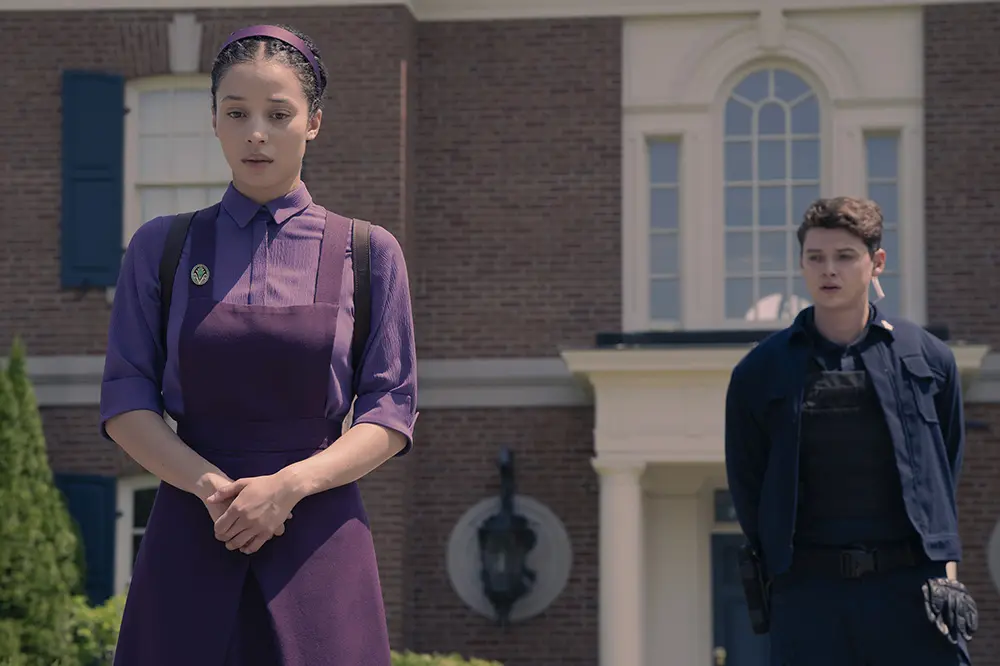
Producer and director Shana Stein discusses the technical production workflow for Hulu's 'The Testaments', highlighting the use of ARRI Alexa 35 cameras and remote collaboration via Evercast. The production utilized Take 5 for post-production, Mavericks for 600 VFX shots, and Company 3 for grading to establish a new visual aesthetic.
Key Takeaways
- Production utilized ARRI Alexa 35 cameras with custom-built Look Up Tables (LUTs) to create a muted, pastel aesthetic distinct from the original series.
- Editorial and post-production were conducted remotely via Evercast, connecting Los Angeles-based directors with Take 5 and Company 3 in Toronto.
- The 10-episode first season featured approximately 600 VFX shots handled by Mavericks, emphasizing organic, ‘handmade’ digital integration.
- A new episodic labor model provided directors an additional two days for notes after the initial 24-hour turnaround, facilitating deeper collaboration with editors.
- Location filming accounted for roughly 30% of the five-month shoot in Toronto, with the remaining 70% captured on sound stages.
Why It Matters
The Testaments demonstrates a shift toward high-efficiency remote workflows that prioritize creative continuity over physical presence. By leveraging low-latency review tools like Evercast, Hulu successfully decentralized a major franchise production across international borders while maintaining tight turnaround cycles. Concretely, this signals that premium streamers now view a 70/30 stage-to-location split and remote finishing as the baseline for scaling complex IP. For the broader ecosystem, it validates the maturity of cloud-connected post-pipelines in handling high-volume VFX demands. Watch for whether upcoming Disney-led production consolidations in 2026 further standardize these remote labor models across the Hulu and Disney+ portfolios.
Additional Context
The technical evolution of The Testaments aligns with broader industry shifts as major streamers pivot toward hybrid production models. Per WhatsOnDisneyPlus in September 2024, the parent series, The Handmaid’s Tale, entered production for its final season with a planned Spring 2025 release, effectively passing the baton to the sequel’s newer technical stack. This transition occurs as the virtual production market is projected to reach $2.1 billion by late 2025, according to Marketsandmarkets, driven by the increasing adoption of cloud-based workflows and real-time rendering engines like those used in the sequence pre-visualization described by Stein.
Remote collaboration platforms have seen a significant transformation since the pandemic. Evercast reportedly grew its enterprise client base by 38% between 2020 and 2021, according to company data, and by late 2025, tools for real-time 4K session streaming became standard for distributed teams. This maturation of the technology has addressed long-standing creative challenges; per Evercast in November 2025, high-speed file transfer services and low-latency audio are now critical for maintaining the 'director-editor spark' that was historically limited to in-person suites.
Furthermore, the hardware choice in The Testaments underscores a strategic shift by ARRI. In early 2025, ARRI introduced new flexible licensing options and multicam variants for the Alexa 35, aimed at making cinematic quality more accessible for high-volume streaming and live environments (per ARRI, January 2025). This hardware strategy complements the streaming industry's move toward faster, eight-to-nine-day episodic schedules while maintaining 4K HDR delivery standards as OTT platforms continue to merge and optimize their infrastructure ahead of mid-2026 market consolidations.
Read full article at postperspective.com
Enjoy our coverage?
Add StreamingMeme as a preferred source on Google to see more of our streaming news at the top of your Search results.
Add as preferred source