

Generative AI saves $500,000 on Spanish-Portuguese historical drama La Marquise
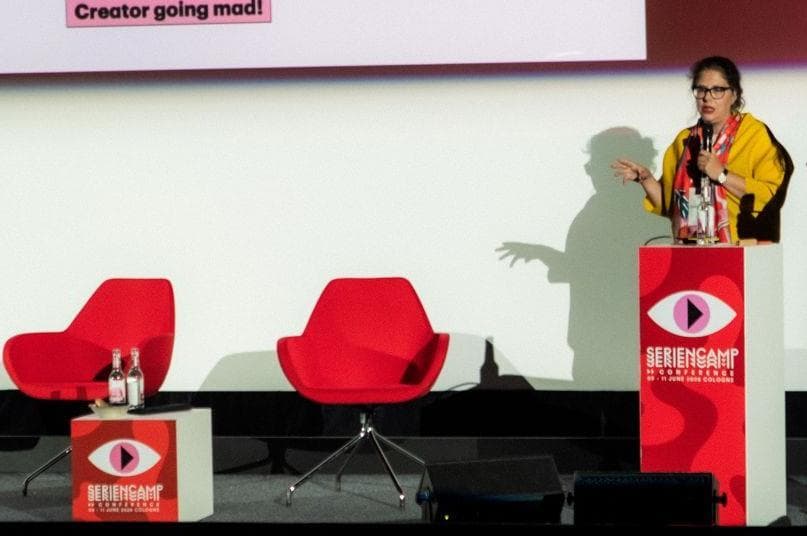
The upcoming Spanish-Portuguese drama series 'La Marquise' utilized generative AI to reconstruct historical locations and visual effects, saving an estimated $500,000 across its six-episode run. Speaking at the Plot Next conference, creator Pandora da Cunha Telles shared that while AI enabled high production values on a restricted budget, it also led to reduced staffing in pre- and post-production. The case study highlights the practical financial and workflow trade-offs of integrating generative AI into traditional TV production.
Key Takeaways
- AI-generated content represented only 5% of on-screen imagery but delivered $500,000 in budget savings.
- The technology enabled the reconstruction of extinct historical locations, dream sequences, and complex VFX like fireworks.
- Production efficiency reduced staffing requirements in pre-production and post-production and lowered on-set crew counts.
- Mediapro is handling global distribution for the series, which is a co-production between Ukbar Filmes, Tornasol Film, and RTP.
Why It Matters
This case study demonstrates that even minimal integration of generative AI—just 5% of screen time—can significantly shift the economics of mid-market scripted drama. By replacing expensive physical reconstructions with AI-generated environments, regional co-productions can now compete with the visual scale of high-budget global streamers. However, the associated reduction in pre- and post-production personnel signals a structural shift in the industry labor market as automated workflows replace traditional technical roles. Watch for whether Mediapro utilizes similar AI-driven cost-reduction models across its broader international production slate to offset rising content costs.
Additional Context
The financial impact of AI on the European production market comes as major studios globally seek to optimize budgets. Per Reuters in late 2025, companies like Klarna and Mondelez have already reported 30% to 50% reductions in content production costs through generative AI integration. Within the film and television sector, a recent study by Bain & Co. (January 2025) suggests that AI could eventually shave 15% to 20% off the total costs of blockbuster productions by streamlining labor-intensive VFX and pre-production scheduling.
Industry leaders are increasingly vocal about this shift in production reality. Sony Pictures Entertainment CEO Tony Vinciquerra recently noted that the company is actively exploring AI to reduce costs in TV and film production, while former Disney executive Jeffrey Katzenberg predicted that AI will reduce the cost of world-class animated films by as much as 90% in the coming years (January 2025). This aligns with data from Omdia indicating that while creative enthusiasm for AI-generated scripts remains low, the demand for AI-driven technical efficiency in VFX and dubbing is accelerating.
Technological barriers to entry are also falling. OpenAI’s Sora and Google’s Veo are moving closer to professional-grade output, though experts like Paul Trillo suggest high-end drama currently requires human directors to 'break down' and refine AI shots to maintain stylistic consistency (June 2024). According to a report from Artlist in late 2025, 87% of creative professionals now use at least one AI tool in their video workflow, effectively democratizing high-end visual styles that were previously gatekept by massive studio budgets.
Read full article at broadcastnow.co.uk
Enjoy our coverage?
Add StreamingMeme as a preferred source on Google to see more of our streaming news at the top of your Search results.
Add as preferred source