

AMD launches MI400 GPUs as New York freezes hyperscale data centers
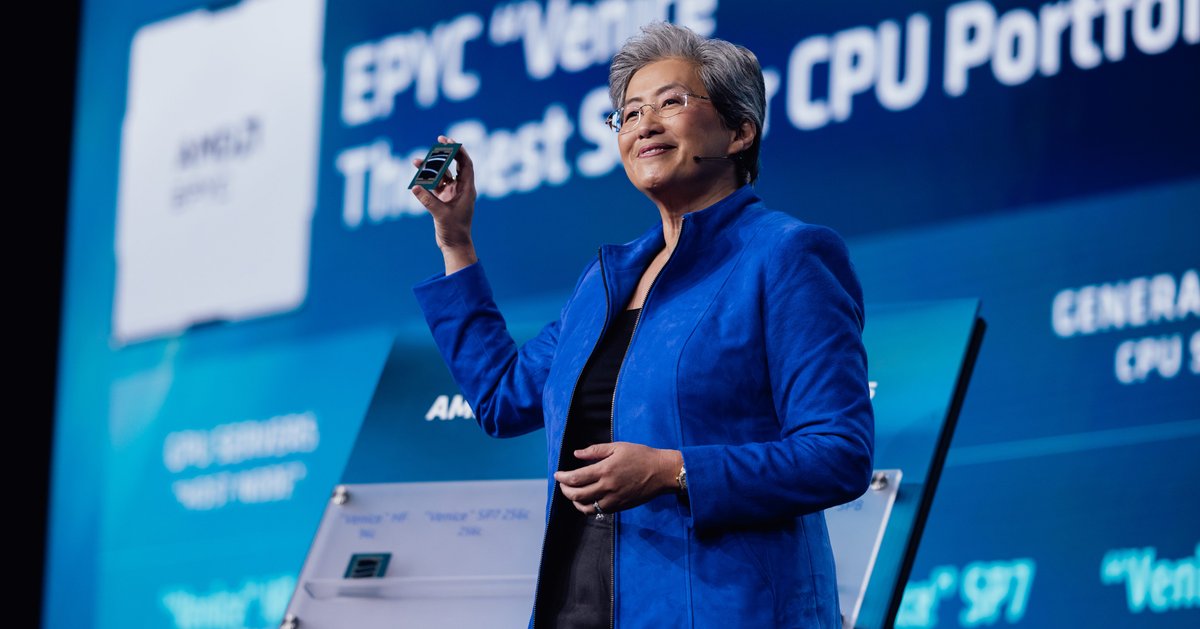
AMD has released its sixth-generation EPYC processors and Instinct MI400 GPUs to address growing compute demands for AI inference workloads. Additionally, New York state has imposed a one-year moratorium on data centers consuming 50MW or more of power, signaling potential infrastructure bottlenecks for compute-intensive sectors including video and AI.
Key Takeaways
- AMD Instinct MI400 GPUs and Zen 6-based EPYC CPUs target 'agentic AI' tasks, which now account for 60% of industry compute capacity.
- New York’s Executive Order #62 halts discretionary environmental permits for facilities exceeding 50MW through July 2027.
- Scale Computing integrated AMD EPYC and Ryzen support into its SC//HyperCore suite to decentralize AI processing at the edge.
- UK Prime Minister Andy Burnham disbanded the Department for Science, Innovation and Technology (DSIT), merging its remit into a new business department.
Why It Matters
AMD’s hardware push addresses a critical shift where inference, rather than training, dominates data center demand. For the streaming industry, these high-density CPUs are vital for orchestrating complex AI-driven metadata and personalization agents. However, New York’s moratorium signals a rising regulatory wall for the physical infrastructure required to power these advancements. If other regions follow this precedent, the industry may face higher localized compute costs and a forced migration toward edge-based architectures to bypass hyperscale power bottlenecks. Watch for upcoming Q2 earnings on August 4, 2026, for further guidance on AMD's AI revenue projections.
Additional Context
At the Advancing AI 2026 event, AMD revealed its high-density 6th Gen EPYC 'Venice' processors, which utilize a 2nm process to deliver up to 256 cores, per technical reporting from Fierce Network in July 2026. This hardware is part of the new AMD Helios rack-scale system, which integrates 72 Instinct MI455X GPUs. During the keynote, executives from OpenAI and Meta confirmed they have been testing Helios for GPT-class workloads, with OpenAI expecting massive-scale deployments to begin in late 2026 and accelerate through 2027. AMD CEO Lisa Su projected the server CPU market would reach $200 billion by 2030, driven largely by the transition to agent-based AI architectures. The regulatory landscape is tightening concurrently with these hardware gains. Following New York’s 50MW freeze, legal analysts at Davis Wright Tremaine noted in July 2026 that the order targets over 12 gigawatts of pending interconnection requests. While the moratorium exempts manufacturing and research facilities, it captures most commercial hyperscale projects planned for the state. This move reflects a growing global friction between AI compute requirements and aging electrical grids, a challenge also acknowledged by AMD executives during an investor roundtable where they cited power and manufacturing capacity as primary limits on near-term growth. In the UK, the restructuring of the tech department under Prime Minister Andy Burnham has drawn criticism from industry groups. Per Computer Weekly in July 2026, techUK and the Startup Coalition expressed concerns that disbanding DSIT could disrupt momentum for established initiatives like the AI Safety Institute and the Sovereign AI Fund. Despite the merger into the Department for Business, Innovation, Science and Trade (DBIST), the administration appointed Kanishka Narayan as a dedicated Minister for Artificial Intelligence to maintain cabinet-level focus on the sector.
Read full article at technologymagazine.com
Get this in your inbox → Subscribe
Enjoy our coverage?
Add StreamingMeme as a preferred source on Google to see more of our streaming news at the top of your Search results.
Add as preferred source