

AgileTV cuts origin hits below 10% via intelligent edge steering
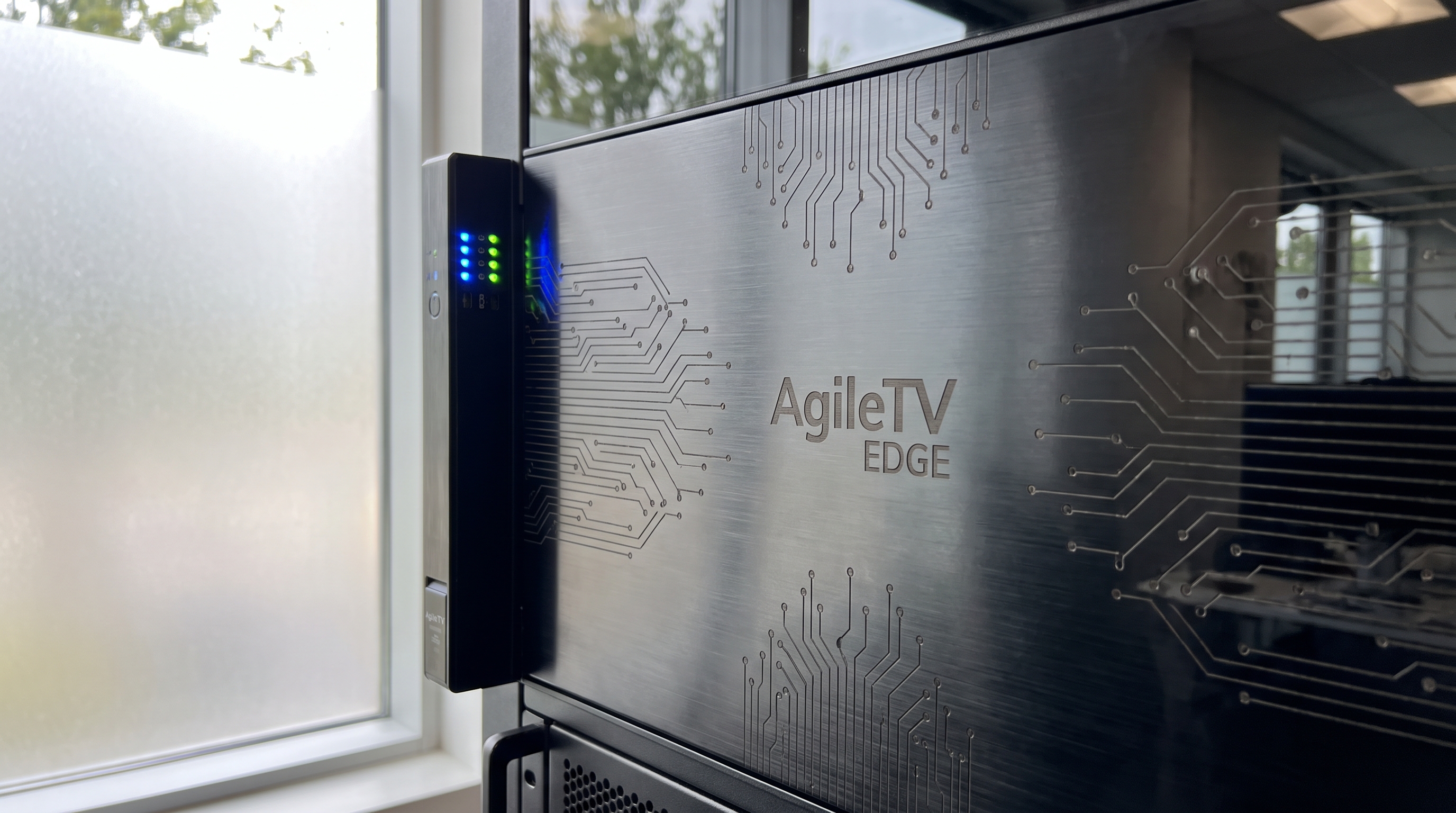
AgileTV, in collaboration with Google Cloud and Cloudflare, highlights how advanced edge caching, traffic steering, and integrated security measures can reduce origin server requests to under 10% of total delivery. These optimizations enable streaming operators to achieve significant cost savings on cloud bandwidth while maintaining quality of service for high-concurrency live events.
Key Takeaways
- Origin server offload achieved a 90% efficiency rate, with less than 10% of requests requiring a cache-fill from the source.
- Integrated security measures like token-based access and bot mitigation block unauthorized traffic at the edge to preserve bandwidth.
- The multi-CDN orchestration uses real-time telemetry and predictive load balancing to maintain stream quality during peak demand spikes.
- Cost savings are driven by reducing origin compute, storage access, and high-margin cloud egress fees through optimized cache-hit ratios.
Why It Matters
Operating costs for high-scale video are increasingly dominated by cloud egress, which often accounts for 50-70% of a streaming provider's infrastructure bill. By offloading 90% of traffic to the edge, AgileTV addresses a critical margin-killer, particularly as live sports audiences migrate to digital-only platforms. The shift toward intelligent, security-integrated CDNs suggests a move away from commoditized bandwidth toward high-logic edge services. Watch for whether niche CDN providers can maintain this efficiency advantage as hyperscalers like Google Cloud and Amazon CloudFront continue to embed cache nodes deeper into ISP networks to capture more of the premium media delivery market.
Additional Context
The push for origin offload comes as cloud egress fees face intensified scrutiny and regulatory pressure. Per ByteIota in December 2025, egress charges represent roughly $43 billion in global cloud spending annually. The EU Data Act, which took effect in September 2025, has already moved to mandate 'at cost' pricing for data transfers and a total abolition of switching fees by early 2027. This regulatory shift is forcing hyperscalers to reconsider their bandwidth margins, which Cloudflare previously estimated at 20-30% compared to single-digit margins for compute services. Simultaneously, the competitive landscape for delivery is consolidating around higher physical density. In early 2026, Amazon CloudFront surpassed 600 embedded PoPs inside ISP networks, a strategy aimed at reducing the physical distance between content and the end user to lower latency. This infrastructure race coincides with a surge in streaming piracy; per AgileTV reporting in July 2026, one major deployment blocked over 20 million unauthorized access attempts in a single month. For operators, the financial burden of piracy is twofold: lost revenue from viewers and the literal cost of the bandwidth consumed by illegal requests. Industry benchmarks in 2026 show that for video-heavy workloads, the metric for success has shifted from simple cache hit ratios to 'Origin Offload,' a measure of total byte-efficiency. Leading platforms now target 95% or higher offload to handle global events. For example, Akamai reportedly delivered 250 Tbps of peak traffic during a single 2026 sporting event. As bitrates climb with 4K and 8K adoption, the necessity of automated, real-time traffic steering becomes a baseline requirement for avoiding origin bottlenecks that can result in immediate subscriber churn.
Read full article at 4rfv.co.uk
Get this in your inbox → Subscribe
Enjoy our coverage?
Add StreamingMeme as a preferred source on Google to see more of our streaming news at the top of your Search results.
Add as preferred source