

6 GHz fixed wireless hits rural scale benchmarks for BEAD deployments
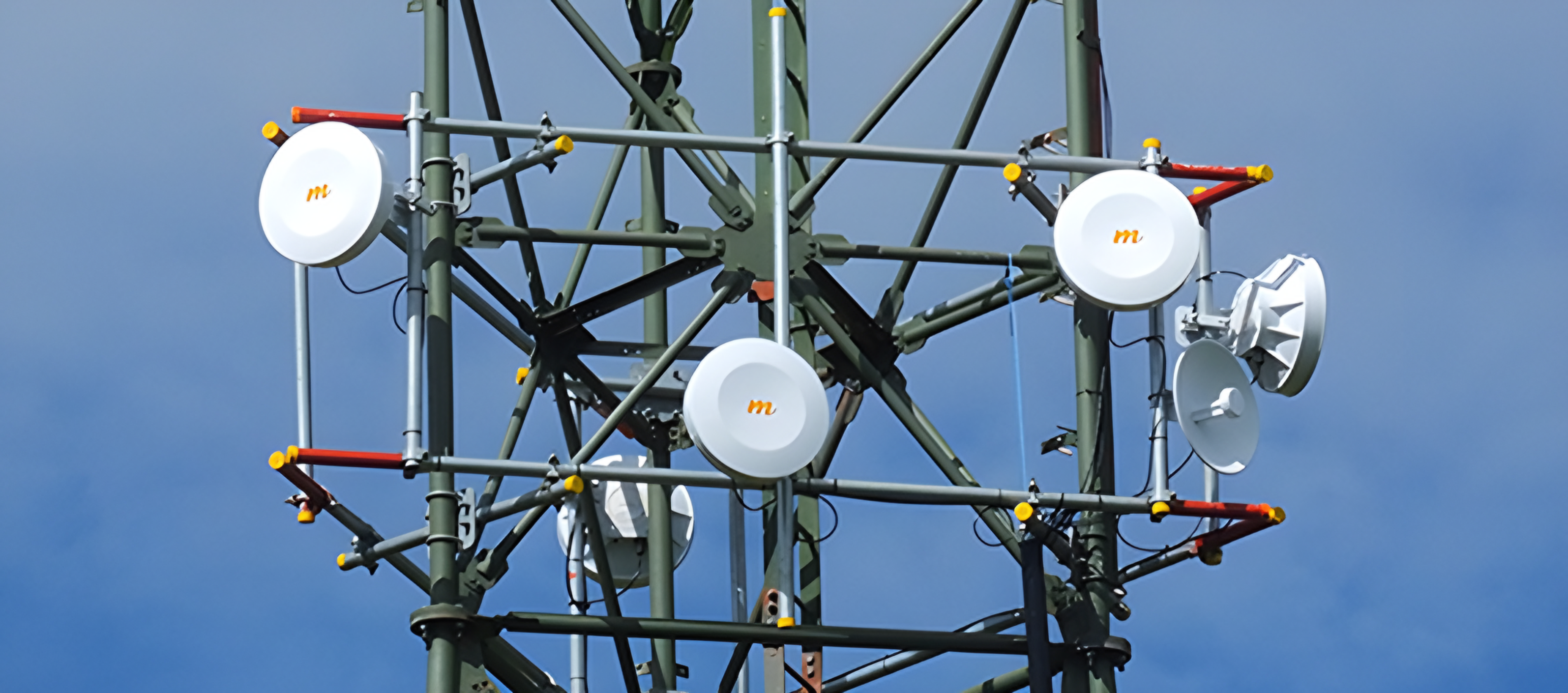
Mimosa Networks and Viaero Wireless have successfully validated the use of AFC-enabled 6 GHz fixed wireless to support 50 subscribers per sector over 9.8-mile distances. This development provides rural broadband carriers with a high-capacity, unlicensed alternative to fiber for infrastructure builds supported by federal BEAD grants.
Key Takeaways
- Mimosa’s A6 platform supported 50 active subscribers per sector, a density threshold required for sustainable rural tower economics
- Links reached nearly 10 miles in real-world conditions, including near-non-line-of-sight environments using active beamforming
- Automated Frequency Coordination (AFC) allowed standard-power operation to reach the 36 dBm EIRP limit on unlicensed 6 GHz spectrum
- Proprietary TDMA scheduling replaced standard Wi-Fi contention protocols to maintain stable throughput as subscriber counts increased
Why It Matters
The successful validation of 6 GHz unlicensed spectrum at such scale shifts the economic calculus for rural broadband buildouts. By proving that one tower sector can support 50 households across 10-mile spans, operators can potentially reduce the capital expenditure required to qualify for federal $42.45 billion BEAD grants. This performance creates a viable middle ground between expensive fiber-to-the-home and less reliable legacy wireless. It positions Mimosa as a major contender for rural infrastructure spend, particularly as the technology-neutral federal rules now favor the lowest-cost option that meets speed benchmarks. Watch for state broadband offices to re-evaluate their approved subgrantee lists following these real-world capacity results.
Additional Context
The timing of the Viaero deployment coincides with a major regulatory pivot by the National Telecommunications and Information Administration (NTIA). In June 2025, per TIA and Fierce Network reporting, the NTIA issued a Policy Notice that essentially rescinded previous fiber-first preferences for the $42.5 billion BEAD program. This restructuring, dubbed the "Benefit of the Bargain," forces states to prioritize technology-neutral solutions that offer the lowest cost per location, provided they meet 100/20 Mbps speed and 100ms latency benchmarks. This shift explicitly opened the door for unlicensed fixed wireless providers who were previously sidelined by rules favoring "reliable" licensed spectrum or end-to-end fiber. Mimosa Networks is leveraging global scale to meet this U.S. demand. Since its $60 million acquisition by Reliance Jio’s Radisys in late 2023, per India Times and RCR Wireless reporting, the company has grown into a primary hardware provider for Jio’s AirFiber service in India. That network connects millions of homes via unlicensed spectrum, serving as a high-volume testing ground for the TDMA and beamforming technologies now being deployed in the U.S. market. As of early 2026, Mimosa GM Jim Nevelle has characterized the demand for these unlicensed FWA solutions as a "rocket ship" for rural and urban coverage gaps. Technically, the 6 GHz band's utility depends on the continued rollout of AFC services. Per FCC and Mimosa announcements from late 2024 and early 2025, seven AFC database systems—including Comsearch and Federated Wireless—are now operational to manage spectrum and prevent interference with licensed incumbents. The FCC also expanded 6 GHz rules in early 2025 to include very low power devices and revised predictive propagation models. These regulatory updates provide a stable framework for operators like Viaero to invest in unlicensed hardware for long-term rural deployments.
Read full article at techtimes.com
Get this in your inbox → Subscribe
Enjoy our coverage?
Add StreamingMeme as a preferred source on Google to see more of our streaming news at the top of your Search results.
Add as preferred source