
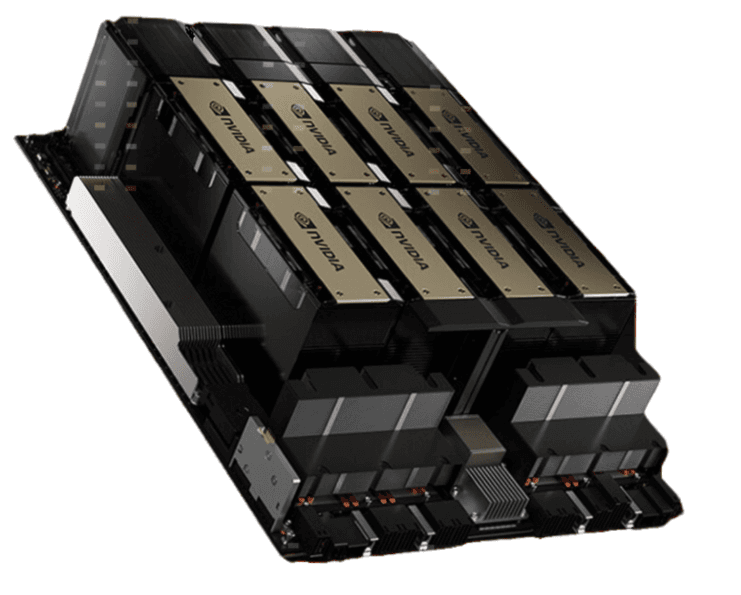
1Legion has announced the NVIDIA RTX Pro 6000 Blackwell as a full bare-metal server offering, specifically targeting media technology vendors, VFX studios, and broadcasters. This provides dedicated GPU resources, consistent throughput, and predictable costs, featuring eight RTX Pro 6000 Blackwell Max-Q GPUs per node with 96GB GDDR7 ECC VRAM per card. The setup is designed to support demanding production-grade GPU workloads like professional rendering and real-time transcoding.
Dedicated bare-metal access to Blackwell-class silicon addresses the 'VRAM ceiling' that frequently stalls professional VFX and broadcast pipelines. By bypassing hyperscaler variable performance and egress costs, 1Legion provides a predictable cost model for technical leads managing fixed production deadlines. This launch reflects a broader market shift where specialized GPU clouds are outcompeting generalist providers on specific high-throughput media workloads. As generative AI and high-polygon 3D scenes increase memory demands, watch for whether legacy cloud providers slash egress fees to retain studio clients migration toward dedicated hardware solutions.
1Legion's bare-metal offering is built on the NVIDIA RTX PRO 6000 Blackwell Max-Q, which NVIDIA positions as optimized for dense multi-GPU configurations of up to four GPUs per card slot, balancing performance and power efficiency for scalable workloads like distributed rendering and multi-instance AI training. The RTX PRO 6000 Blackwell series spans three variants, Server, Workstation, and Max-Q, all sharing 96GB of GDDR7 ECC memory but differing in power envelope and thermal design, with the Max-Q drawing 300W versus 600W for the full Workstation Edition. 1Legion's eight-GPU node configuration leverages the Max-Q variant's lower thermal profile to pack more GPUs into a single chassis without exceeding rack power budgets.
The Server Edition of the same chip is designed for passive-cooling data center deployments and targets enterprise workloads including inference, fine-tuning, and virtual workstations. NVIDIA describes the RTX PRO 6000 Blackwell Server Edition as delivering universal AI and visual computing performance for the data center, with the same 96GB GDDR7 memory and Blackwell architecture but in a 4.4-inch dual-slot form factor suitable for standard 2U server chassis. This distinction matters for 1Legion's positioning: the Max-Q variant sits between the workstation and server editions in power draw, offering a middle path for providers that need density without full passive-cooling infrastructure.
For studios evaluating 1Legion against alternatives, the RTX PRO 6000 Blackwell's video engine specifications are directly relevant to transcoding and rendering pipelines. The card includes four ninth-generation NVENC encoders and four sixth-generation NVDEC decoders with 4:2:2 chroma subsampling support, plus 1,792 GB/s of memory bandwidth, which together determine throughput for real-time encode and decode tasks common in broadcast and post-production workflows. The 4:2:2 support is particularly significant for broadcast applications where 4:2:0 consumer codecs are insufficient for professional contribution and mezzanine formats.
Add StreamingMeme as a preferred source on Google to see more of our streaming news at the top of your Search results.
Add as preferred source