StreamingMemeStreamingMemeBuyers Guide
AboutLeaderboardsEventsSubmit News
Subscribe

Daily Brief

The streaming industry in your inbox every morning.

Daily Brief

The streaming industry in your inbox every morning.

StreamingMemeStreamingMeme

The independent buyers guide and news aggregator for the streaming technology industry.

Explore

Buyers GuideLeaderboardsEventsSubmit News

Stay updated

Weekly digest of new companies and streaming news.

Categories

Encoding & SoftwareVideo Delivery & CDNStreaming PlatformsAI for VideoProduction HardwareBusiness NewsMonetization & Ad TechRegulatory & Policy

© 2026 StreamingMeme. All rights reserved.

AboutPrivacy PolicyTermsContact
EncodingCDNPlatformsAI & VideoHardwareBusinessAd TechPolicy
← Streaming Platforms
PlatformsTechnical DevelopmentJuly 1, 2026

Why treating live streaming as scaled-up VOD is a structural mistake
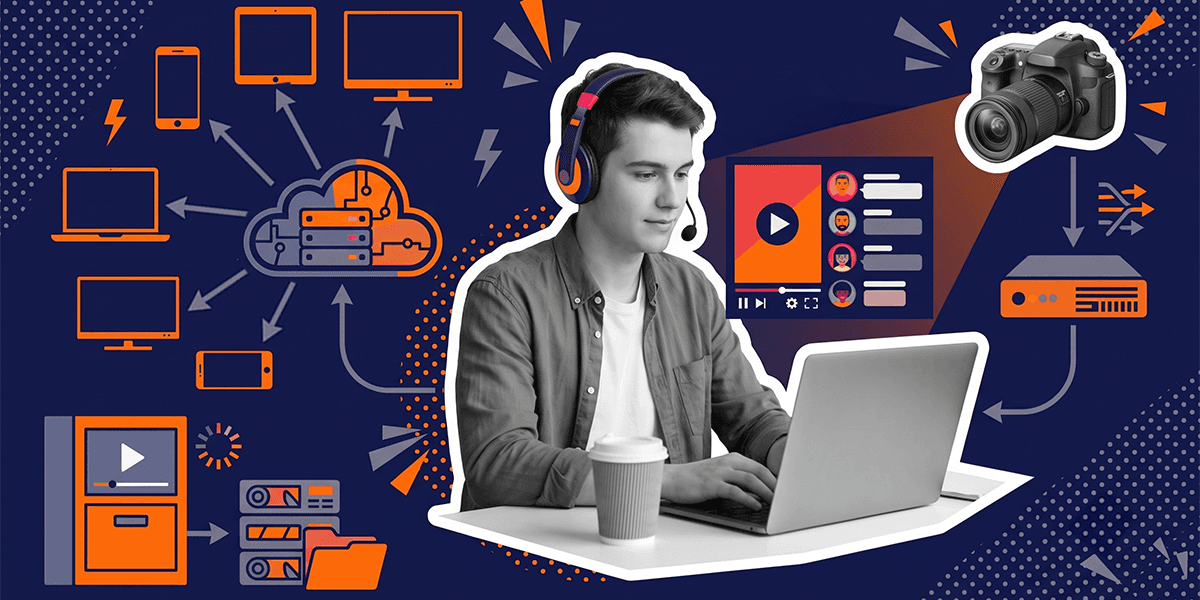
Why treating live streaming as scaled-up VOD is a structural mistake
Iterators

This article outlines the significant architectural differences between video-on-demand (VOD) and live streaming, specifically cautioning engineers against treating live broadcasting as a scaled-up VOD system. It highlights critical failure modes—such as manifest delivery issues and synchronization errors—that often undermine high-concurrency events like the Netflix Tyson vs. Paul broadcast.

Key Takeaways

  • VOD architecture relies on offline batch processing and pre-positioned CDN segments, whereas live architecture must ingest, encode, and distribute content that doesn't yet exist in real time.
  • RTMP remains the dominant ingest protocol for creator tools, but SRT is emerging as a preferred alternative for maintaining stability over packet-heavy connections like mobile hotspots.
  • Low-Latency HLS (LL-HLS) reduces glass-to-glass delay to 2–5 seconds via 200–300ms partial segments, but forces players onto shallow buffers that risk adaptive bitrate (ABR) oscillation.
  • Synchronization logic must be built-in to prevent WebSocket-based chat reactions from outrunning the 3–5 second video buffer, a misalignment that destroys interactive UX.

Why It Matters

Immediate technical failure in live streaming is often rooted in the 'manifest layer'—where players poll for updates—rather than segment delivery itself. For the broader ecosystem, the shift toward live sports by giants like Netflix and Amazon necessitates a move away from standard HTTP caching toward origin shielding and request collapsing. The immediate implication is that engineering teams must choose protocols based on interaction requirements rather than marketing: WebRTC for sub-second 1:1 sessions versus LL-HLS for massive one-to-many broadcasts. Watch for whether platforms adopt Media over QUIC (MoQ) to bridge the gap between WebRTC latency and broadcast-scale distribution.

Additional Context

The architectural risks detailed by Iterators were exemplified by Netflix’s November 2024 broadcast of the Mike Tyson vs. Jake Paul fight. Per the Los Angeles Times (November 2024), the event drew a peak of 65 million concurrent streams but was plagued by widespread buffering and synchronization failures. Netflix Co-CEO Ted Sarandos later noted at a December 2024 conference that the event 'stressed the limits of the internet itself,' forcing the company to establish a dedicated Silicon Valley control room to manage ISP capacity in real time. This technical stress test preceded Netflix’s major live expansions, including two NFL Christmas Day games and a $5 billion deal for WWE Raw. Simultaneously, competitors are doubling down on sports-specific features to justify high infrastructure costs. Amazon Prime Video, which plans to reach profitability in its streaming segment by 2025 according to The Information (January 2025), is leveraging its AWS-backed 'Prime Vision' for Thursday Night Football. Per Insider Sport (October 2025), this feature uses AI to layer tactical maps and real-time shot power data over the live feed, a capability requiring the frame-accurate synchronization Iterators describes. Industry adoption of ultra-low latency is also splitting by use case. Technavio data from early 2026 suggests the WebRTC market is expanding at a 62.6% compound annual growth rate, driven by a 2025 pivot where AI-driven noise suppression and real-time translation became standard for synchronous communications. However, for large-scale sports, LL-HLS remains the primary path for maintaining CDN edge absorption while targeting the 2-to-5-second latency window expected by modern mobile viewers.


Read full article at iteratorshq.com

Get this in your inbox → Subscribe

Enjoy our coverage?

Add StreamingMeme as a preferred source on Google to see more of our streaming news at the top of your Search results.

Add as preferred source

Related Articles

Tech Insider: Spree Casino implements WebRTC and WebSockets for sub-500ms social gaming
FaroPop: TV Globo launches native 4K DTV+ interactivity for Antena Paulista
SiliconANGLE: AWS updates EC2 compute for agentic AI and physical workloads

Newest

1 day ago
Barchart: Cerebras and AMD partner on low-latency AI inference architecture
1 day ago
Light Reading: Charter sidesteps Starlink partnership rumors as Q2 broadband losses widen
1 day ago
GuruFocus: Fastly joins Experian to secure autonomous commerce at the edge
1 day ago
Investing.com: TF1 Digital Revenues Jump 17% as Netflix Partnership Exceeds Growth Targets
1 day ago
The BIG Newsletter: Nexstar and TEGNA Accused of Violating Judicial Order in $6.2 Billion Merger
1 day ago
Vocal: TeqBlaze challenges Epom with modular full-stack white-label ad tech suite
1 day ago
Audio Chocolate: Merging Technologies debuts Anubis Premium SPS for mission-critical broadcast audio
1 day ago
daily.dev: AVIF achieves universal browser support as Edge and Safari close gaps
2 days ago
Ealing Times: YouTube debuts UK Shopping Affiliate Programme with M&S and Currys
2 days ago
Investing.com: AMD and Cerebras debut disaggregated architecture to slash AI inference latency
2 days ago
MediaPost: Sports leagues explore non-exclusive local rights as RSN model collapses
2 days ago
YouTube: Blackmagic Design details GPU optimization protocols for DaVinci Resolve workflows
2 days ago
Startup Fortune: AI data centers threaten US grid stability and freeze cloud pipelines
2 days ago
TechRadar: OpenAI joins coalition lobbying against strict open-weight AI model regulations
2 days ago
Startup Fortune: SPAN and Nvidia board residential homes with 16-GPU Blackwell compute nodes
2 days ago
Digital Applied: Google faces €890M EU fine as Digital Markets Act enforcement accelerates
2 days ago
iZOOlogic: Ultra Clean Android App Masquerades as Utility to Host Malware-Grade Adware
2 days ago
SiliconANGLE: HPE and AMD converge supercomputing and AI via liquid-cooled GX5000
2 days ago
MarketBeat: AMD data center revenue surges 38% to $10.25B on AI demand
2 days ago
PPC Land: Acast revenue per listen jumps 26% despite flat audience growth

Upcoming Events

Jul
29–30
Buffer-Free VideoSeattle
Aug
17–20
SET EXPOSao Paulo
Sep
11–14
IBCAmsterdam
Sep
13
SportsPro Streamtime Sports LiveAmsterdam
Sep
16–18
RTC.ONKrakow
View all events →

Top Sources

  1. 1.Sports Video Group104
  2. 2.SiliconANGLE91
  3. 3.Tech Times60
  4. 4.YouTube59
  5. 5.AdExchanger57
  6. 6.TechCrunch54
  7. 7.arXiv50
  8. 8.PPC Land48
Full leaderboards →

Newest

1 day ago
Barchart: Cerebras and AMD partner on low-latency AI inference architecture
1 day ago
Light Reading: Charter sidesteps Starlink partnership rumors as Q2 broadband losses widen
1 day ago
GuruFocus: Fastly joins Experian to secure autonomous commerce at the edge
1 day ago
Investing.com: TF1 Digital Revenues Jump 17% as Netflix Partnership Exceeds Growth Targets
1 day ago
The BIG Newsletter: Nexstar and TEGNA Accused of Violating Judicial Order in $6.2 Billion Merger
1 day ago
Vocal: TeqBlaze challenges Epom with modular full-stack white-label ad tech suite
1 day ago
Audio Chocolate: Merging Technologies debuts Anubis Premium SPS for mission-critical broadcast audio
1 day ago
daily.dev: AVIF achieves universal browser support as Edge and Safari close gaps
2 days ago
Ealing Times: YouTube debuts UK Shopping Affiliate Programme with M&S and Currys
2 days ago
Investing.com: AMD and Cerebras debut disaggregated architecture to slash AI inference latency
2 days ago
MediaPost: Sports leagues explore non-exclusive local rights as RSN model collapses
2 days ago
YouTube: Blackmagic Design details GPU optimization protocols for DaVinci Resolve workflows
2 days ago
Startup Fortune: AI data centers threaten US grid stability and freeze cloud pipelines
2 days ago
TechRadar: OpenAI joins coalition lobbying against strict open-weight AI model regulations
2 days ago
Startup Fortune: SPAN and Nvidia board residential homes with 16-GPU Blackwell compute nodes
2 days ago
Digital Applied: Google faces €890M EU fine as Digital Markets Act enforcement accelerates
2 days ago
iZOOlogic: Ultra Clean Android App Masquerades as Utility to Host Malware-Grade Adware
2 days ago
SiliconANGLE: HPE and AMD converge supercomputing and AI via liquid-cooled GX5000
2 days ago
MarketBeat: AMD data center revenue surges 38% to $10.25B on AI demand
2 days ago
PPC Land: Acast revenue per listen jumps 26% despite flat audience growth

Upcoming Events

Jul
29–30
Buffer-Free VideoSeattle
Aug
17–20
SET EXPOSao Paulo
Sep
11–14
IBCAmsterdam
Sep
13
SportsPro Streamtime Sports LiveAmsterdam
Sep
16–18
RTC.ONKrakow
View all events →

Top Sources

  1. 1.Sports Video Group104
  2. 2.SiliconANGLE91
  3. 3.Tech Times60
  4. 4.YouTube59
  5. 5.AdExchanger57
  6. 6.TechCrunch54
  7. 7.arXiv50
  8. 8.PPC Land48
Full leaderboards →