

WebAR vs Native AR: Solving computational lag through WebAssembly convergence
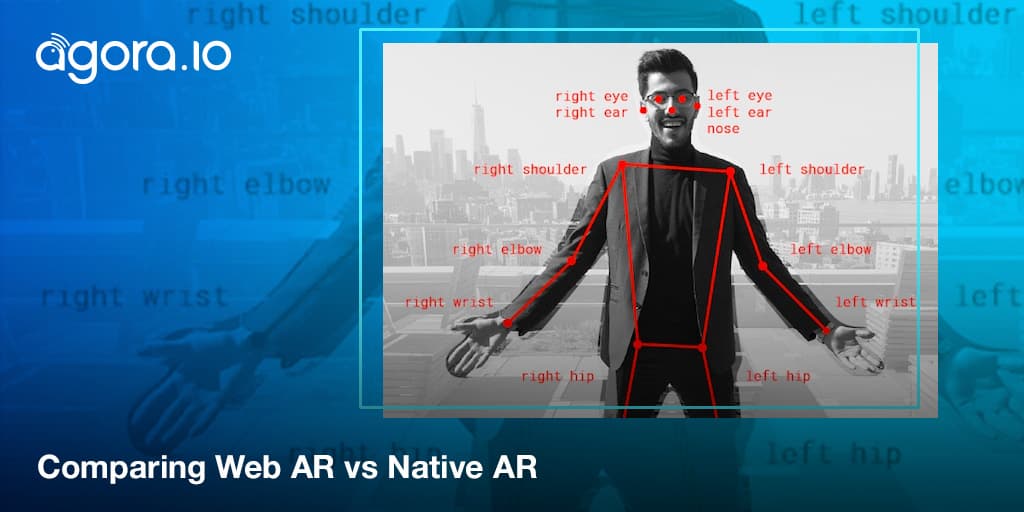
Agora's Developer Evangelist, Hermes Frangoudis, authored a detailed comparison of WebAR and native AR application development. The article discusses their technical implementations, user experience trade-offs, and market implications, highlighting how each approach uses JavaScript and addresses current limitations and future possibilities in augmented reality, including potential roles for cloud rendering and real-time networking in AR experiences.
Key Takeaways
- WebAssembly enables near-native AR performance by compiling C/C++ into .wasm files executed via vanilla JavaScript.
- Native AR apps currently retain a performance edge by handling heavy SLAM tracking at the OS level rather than competing for browser resources.
- The 50% load-time churn benchmark remains a critical threshold; Blippar data shows experiences taking over 30 seconds to initialize lose half their audience.
- Standardization remains fragmented between Apple's USDZ format and Google's support for open glTF/OBJ standards within the WebXR Device API.
Why It Matters
The choice between WebAR and native apps is shifting from a technical quality debate to an accessibility-focused marketing strategy. As browser support for the WebXR and Sensor APIs matures, the industry is prioritizing frictionless 'click-to-view' entry points to combat app fatigue and installation abandonment. For streaming platforms, this means AR is evolving into a secondary engagement layer that requires real-time network distribution to maintain shared, low-latency viewing. Watch for the emergence of a standardized Web API for direct ARCamera object access, which would allow browsers to leverage device-native ARKit or ARCore optimizations directly.
Additional Context
The push toward browser-based immersive content is accelerating as platform support stabilizes. Per vr.org in April 2026, WebXR adoption surged by 40% year-over-year as major vendors moved to eliminate onboarding friction. Chrome and Edge have established comprehensive WebXR support on both desktop and mobile, while Apple’s visionOS 2 enabled WebXR by default in 2026 to support gaze-and-pinch inputs for the Vision Pro Safari browser. This cross-platform movement allows a single codebase to target approximately 5 billion people who now have browser access to immersive content, effectively bypassing the 'walled garden' of traditional app stores.
Technical benchmarks are also closing the fidelity gap that historically favored native applications. According to Google Chromium reports from early 2026, optimizations in the V8 engine and WebAssembly SIMD instructions have improved JetStream 3 performance scores by 10%, directly accelerating browser-based AI and AR workloads. Furthermore, market data from Future Market Insights in February 2026 indicates that the mobile-native ad segment is expected to reach a value of $94.6 billion. Retailers are increasingly adopting WebAR to improve conversion metrics; per Cylindo, AR-integrated shopping can lead to a 75% increase in online revenue by reducing the 50-70% engagement drop-off typically seen in app-based sales funnels.
Read full article at prod.agora.io
Enjoy our coverage?
Add StreamingMeme as a preferred source on Google to see more of our streaming news at the top of your Search results.
Add as preferred source