

WebAR vs Native AR: Balancing frictionless access against computational performance
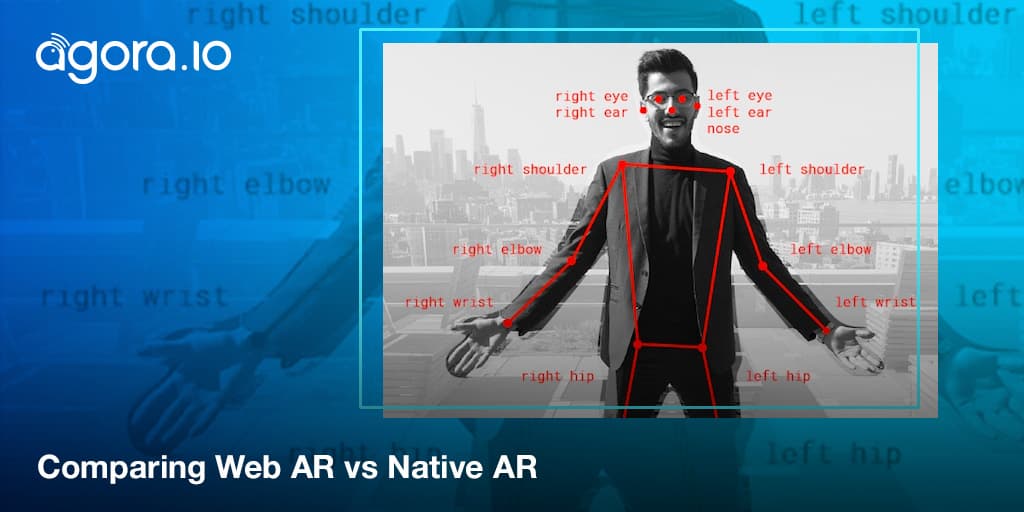
An Agora developer evangelist compares WebAR and native AR development, discussing JavaScript's role in both, and challenges such as browser support and computational lag. The article suggests that project needs determine the best solution, with cloud delivery and streaming being future considerations for AR experiences. Agora is positioned as a real-time-network vendor that could distribute data for production-ready AR apps.
Key Takeaways
- Blippar data shows a 50% drop-off for AR experiences taking over 30 seconds to load, with an additional 75% churn among those who wait.
- WebAssembly and WebGL allow browsers to execute C++ based computer vision code at near-native speeds using vanilla Javascript.
- Apple uses the .USDZ format for Safari integration, while Google adopts .obj and .glTF standards for its WebXR Device API.
- WebAR currently relies on QR codes for triggers, as visual search recognition typically requires the deep OS-level access of a native app.
- Agora positions real-time infrastructure as essential for AR streaming to ensure synchronized low-latency data for shared multi-user experiences.
Why It Matters
The choice between WebAR and native AR determines the critical ceiling for user acquisition versus immersion depth. Moving AR to the browser resolves the friction of app store downloads, which is vital for advertising and retail, but results in higher computational lag due to the lack of direct ARCamera abstraction. As web standards like the WebXR Hit Test API move from experimental to production builds, the performance delta between browser-based and native ARCore or ARKit experiences will narrow. Success hinges on cloud delivery and streaming synchronization; industry observers should monitor the adoption of standardized 3D file formats like .glTF to see if a unified web-based AR ecosystem can finally challenge proprietary native walled gardens.
Additional Context
The divide between web and native AR has intensified as major hardware players finalize their spatial computing roadmaps. Per The Verge in February 2026, Apple and Google have both accelerated contributions to the Khronos Group to align 3D asset interoperability, aiming to reduce the friction Frangoudis describes in converting intermediary formats. This push follows a 2025 report from Omdia indicating that mobile AR users prioritize instant access over high-fidelity rendering for 70% of non-gaming tasks, such as product visualization and navigational overlays. Research from Gartner in late 2025 further noted that B2B streaming infrastructure providers are increasingly integrating server-side rendering to offload the heavy lifting from mobile chipsets, directly addressing the 'punch in the gut' device-unsupported errors mentioned by Agora.
Technological convergence is also visible in the evolution of the WebXR Device API. According to a Chrome Developers update in April 2026, the implementation of more sophisticated depth-sensing APIs in mobile browsers has significantly reduced the 'computational lag' previously inherent to JS-based SLAM tracking. Meanwhile, per TechCrunch in March 2026, the rise of 'App Clips' on iOS and 'Instant Apps' on Android has attempted to bridge the gap by offering native performance without full installations, though these remain tethered to specific operating systems. These developments suggest the industry is moving toward a hybrid model where the distinction between a web page and a native application becomes nearly invisible to the end user at the point of interaction.
Read full article at prod.agora.io
Enjoy our coverage?
Add StreamingMeme as a preferred source on Google to see more of our streaming news at the top of your Search results.
Add as preferred source