

Vivensis launches first domestic TV 3.0 receivers for Brazilian market validation
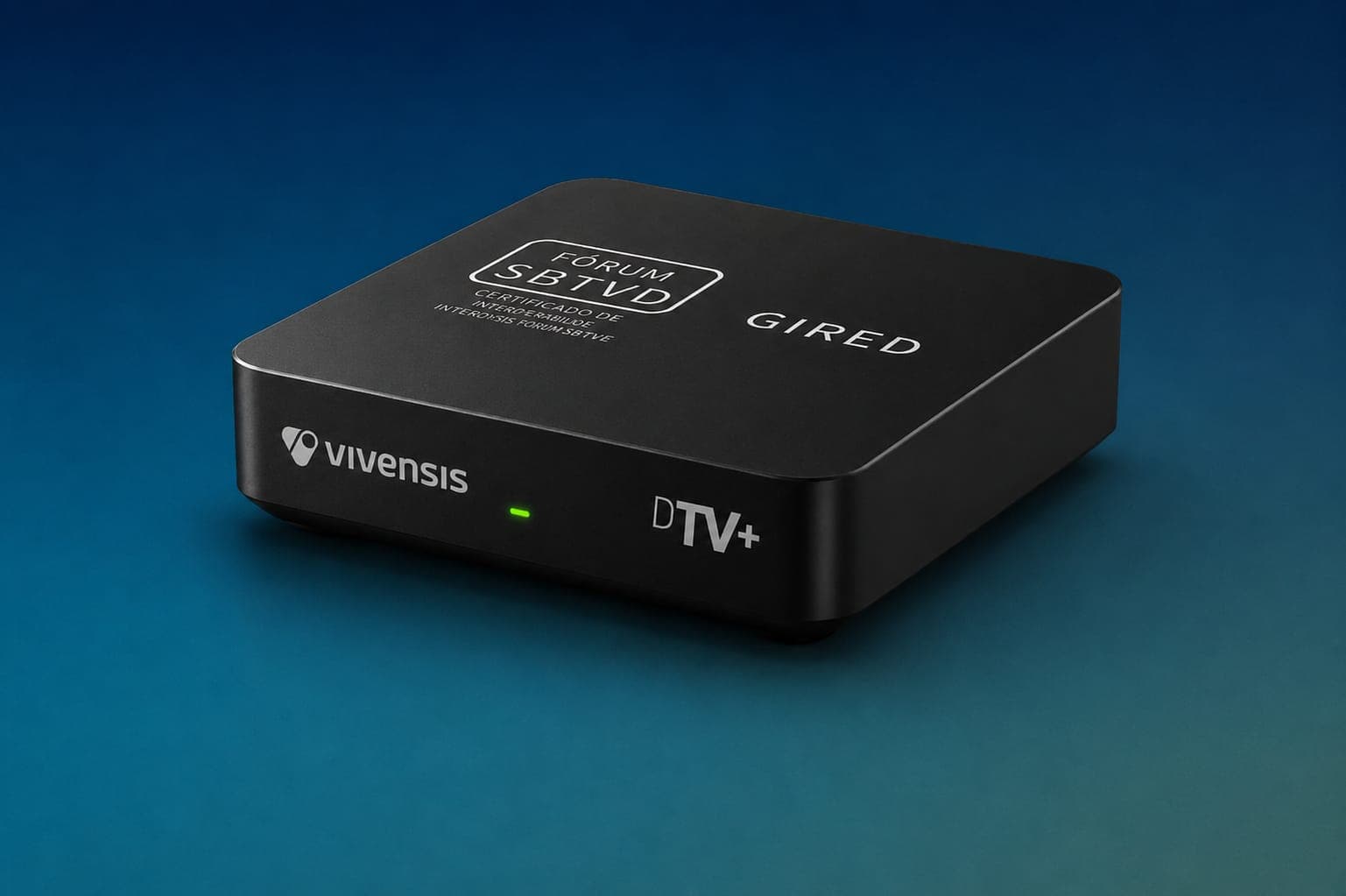
Brazilian manufacturer Vivensis has introduced the first locally developed TV 3.0 (DTV+) receivers for validation testing within the Brazilian market. These hardware units support the hybrid broadcast and broadband architecture of the new standard, including 4K resolution and immersive audio capabilities.
Key Takeaways
- Vivensis becomes the first Brazilian manufacturer to develop and produce hardware compatible with the national TV 3.0 standard.
- The new DTV+ receivers support 4K video resolution and immersive audio capabilities under the Brazilian digital TV evolution roadmap.
- Hardware architecture utilizes a hybrid model, integrating traditional over-the-air broadcasting with internet-delivered services and IP connectivity.
- Recipients of the initial batch include the SBTVD Forum for technical validation and interoperability testing of next-generation features.
- The project includes the development of domestic high-gain antennas specifically designed for the new TV 3.0 signal requirements.
Why It Matters
The arrival of domestic silicon and hardware marks a critical transition from theoretical standards to a commercially viable ecosystem in Brazil. By validating local production, the country reduces reliance on imported technology, ensuring a more cost-effective hardware pipeline for a market with over 200 million potential viewers. This deployment tests the real-world stability of a hybrid broadcast-broadband stack, which serves as a global benchmark for integrating targeted advertising and interactive apps into free-to-air television. Watching the SBTVD Forum’s validation results will signal whether the 2026 commercial rollout remains on track, potentially influencing standard adoption across other Latin American markets seeking to replicate this IP-integrated model.
Additional Context
The TV 3.0 standard, marketed as DTV+, represents a significant technological shift for Brazil, incorporating several international technologies. Per TV Technology (July 2024), the SBTVD Forum recommended the ATSC 3.0 physical layer for transmission, alongside MPEG-H audio and VVC (Versatile Video Coding) for video. A notable addition to the stack is V-Nova’s LCEVC (Low Complexity Enhancement Video Coding), which per v-nova.com (February 2025) was mandated to enable 4K HDR delivery at lower bitrates, improving spectrum efficiency for broadcasters while maintaining high picture quality.
Regulatory momentum accelerated in late 2025 when President Luiz Inácio Lula da Silva signed a Presidential Decree officially adopting TV 3.0 as the national standard. According to reporting from NAB (September 2025), the government’s objective is to initiate commercial services in major metropolitan areas in time for the 2026 FIFA World Cup. This move positions Brazil as a leader in terrestrial broadcast innovation, as it is one of the first nations to mandate a fully IP-native, hybrid system that supports advanced features like Broadcast Positioning Systems (BPS) and emergency alerting.
While initial pilot transmissions are underway in cities like Rio de Janeiro and São Paulo, the full transition will be gradual. Per CSI Magazine (March 2026), the government recently extended the final deployment deadline to the end of 2027 to allow the consumer electronics and broadcasting sectors more time to scale production and infrastructure. This extension ensures that late-stage technical standardizations—including the receiver profiles currently being tested by companies like Vivensis—are fully mature before a nationwide commercial launch.
Read full article at set.org.br
Enjoy our coverage?
Add StreamingMeme as a preferred source on Google to see more of our streaming news at the top of your Search results.
Add as preferred source