StreamingMemeStreamingMemeBuyers Guide
AboutLeaderboardsEventsSubmit News
Subscribe

Daily Brief

The streaming industry in your inbox every morning.

Daily Brief

The streaming industry in your inbox every morning.

StreamingMemeStreamingMeme

The independent buyers guide and news aggregator for the streaming technology industry.

Explore

Buyers GuideLeaderboardsEventsSubmit News

Stay updated

Weekly digest of new companies and streaming news.

Categories

Encoding & SoftwareVideo Delivery & CDNStreaming PlatformsAI for VideoProduction HardwareBusiness NewsMonetization & Ad TechRegulatory & Policy

© 2026 StreamingMeme. All rights reserved.

AboutPrivacy PolicyTermsContact
EncodingCDNPlatformsAI & VideoHardwareBusinessAd TechPolicy
← AI for Video
AI & VideoIndustry TrendJune 5, 2026

Toronto Holocaust Museum 'hacks' YouTube algorithm to target hate speech
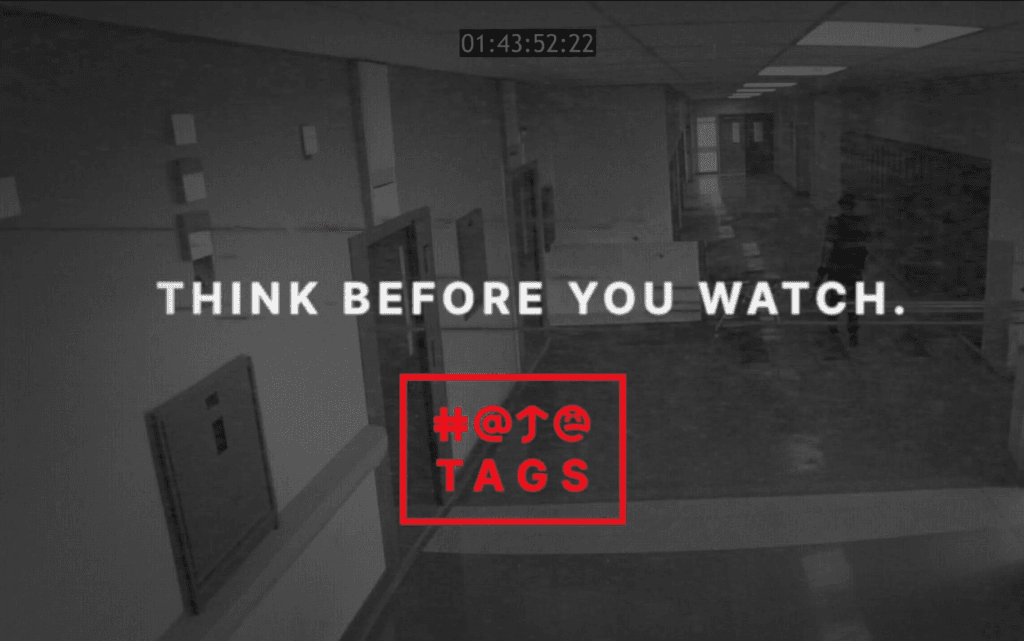
Toronto Holocaust Museum 'hacks' YouTube algorithm to target hate speech
The Canadian Jewish News

The Toronto Holocaust Museum launched "Hate Tags," a YouTube ad campaign, to combat online hate speech by placing warning ads before hateful content. The campaign utilizes AI-powered software from Silverpush, reverse-engineered by the ad firm Diamond, to contextually target specific types of objectionable videos based on visuals, audio, text, and metadata. The initiative aims to promote the labeling of online hate and engage young adults, having reached 1.78 million views with a goal of over seven million by campaign end.

Key Takeaways

  • Campaign uses Silverpush AI to target videos based on transcripts, audio signals, and metadata across the political spectrum.
  • Ads have generated 1.78 million views since May 12, with a target of seven million by the end of June 2026.
  • The 'Hate Tags' strategy specifically targets 18-to-24-year-olds to replicate cigarette-style warning labels for digital content.
  • Creative execution by ad firm Diamond monitors keywords like 'demographic replacement' and 'red pill' to identify objectionable content.

Why It Matters

This initiative represents a tactical shift in brand safety technology, repurposing defensive 'exclusion' tools into offensive 'intervention' instruments. For streaming platforms and the programmatic ecosystem, it highlights the growing sophistication of AI in fine-grained contextual analysis—capable of identifying nuance even in academic or non-explicit 'gray area' content. As social platforms face intensifying pressure to moderate without over-censoring, this third-party labeling model offers a middle path between total removal and passive hosting. Key signals to watch include whether YouTube formalizes this 'intercept ad' category and the impact of upcoming Canadian legislation on mandatory platform warning labels.

Additional Context

The 'Hate Tags' initiative arrives as the Canadian federal government moves to introduce the Digital Safety Act in June 2026. Per Global News and The Globe and Mail (June 2026), this sweeping legislation is expected to include a social media ban for users under 16 and establish a new Digital Safety Commission. The bill aims to mandate that platforms 'swiftly remove' harmful content, including child sexual abuse material and content encouraging self-harm, while potentially requiring rigorous age verification for all users. The Toronto Holocaust Museum's emphasis on warning labels aligns with broader public sentiment; a 2025 survey by the Dais think tank found 81% of Canadians support requiring platforms to remove hate speech and 78% favor independent fact-checkers placing warning labels on false information. Technologically, this approach leverages a shift in YouTube’s own infrastructure. According to Social Media Today (January 2026), YouTube recently updated its Advertiser Friendly Content Guidelines to allow broader monetization of dramatic or educational content covering sensitive topics like domestic abuse or self-harm, provided they are non-graphic. Meanwhile, the industry continues to navigate the void left by the Global Alliance for Responsible Media (GARM). Per Forbes and the WFA (August 2024), GARM was discontinued following an antitrust lawsuit from X (formerly Twitter). The group had established the 'Brand Safety Floor,' which successfully reduced the frequency of ads appearing next to inappropriate content from 6.1% in 2020 to 1.7% in 2023. These frameworks are now being replaced by more granular, AI-driven 'Brand Suitability' tools that go beyond simple keyword blocklists to understand emotional peaks and contextual relevance.


Read full article at thecjn.ca

Get this in your inbox → Subscribe

Enjoy our coverage?

Add StreamingMeme as a preferred source on Google to see more of our streaming news at the top of your Search results.

Add as preferred source

Related Articles

AOL: FBI figures show deepfake ad scams cost Americans $893 million
Futurism: Meta and TikTok face backlash over deceptive AI-generated health ads
AI Rights Brief: Google and Disney integrate AI provenance directly into programmatic ad workflows

Newest

2 days ago
Barchart: Cerebras and AMD partner on low-latency AI inference architecture
2 days ago
Light Reading: Charter sidesteps Starlink partnership rumors as Q2 broadband losses widen
2 days ago
GuruFocus: Fastly joins Experian to secure autonomous commerce at the edge
2 days ago
The BIG Newsletter: Nexstar and TEGNA Accused of Violating Judicial Order in $6.2 Billion Merger
2 days ago
Front Office Sports: World Cup afternoon ratings spark shift toward earlier U.S. game windows
2 days ago
Cord Cutters News: FCC chair signals scrutiny for potential streaming-exclusive 2030 World Cup rights
2 days ago
Cord Cutters News: Linear contraction accelerates as 14 cable networks vanish in five years
2 days ago
Los Angeles Times: Disney, Netflix, and Amazon recruit AI talent to automate production workflows
2 days ago
Callaba: Callaba standardizes remote production workflows via SRT and NDI integration
2 days ago
Wccftech: Qualcomm Adreno 850 GPU to debut AI Frame Fusion technology
2 days ago
AI Rights Brief: Google and Disney integrate AI provenance directly into programmatic ad workflows
2 days ago
Lib.rs: New zero-dependency Rust decoder vp9dec achieves bit-exact VP9 conformance
2 days ago
Futurism: Meta and TikTok face backlash over deceptive AI-generated health ads
2 days ago
Euronews: EU Expert Panel Backs Age Restrictions and Addictive Feature Bans
2 days ago
Audio Chocolate: Merging Technologies debuts Anubis Premium SPS for mission-critical broadcast audio
2 days ago
Vocal: TeqBlaze challenges Epom with modular full-stack white-label ad tech suite
2 days ago
IPWatchdog: EC mandates Google share search data and Android features under DMA
2 days ago
TechRadar: Weka's new WEKApod 3 uses Micron 245TB SSDs for exabyte-scale storage
2 days ago
Lib.rs: Moq-relay 0.3.1 adds mTLS and admission policies for production-grade QUIC streaming
2 days ago
Yahoo: LG mandates removal of residential proxy SDKs from webOS apps

Upcoming Events

Jul
29–30
Buffer-Free VideoSeattle
Aug
17–20
SET EXPOSao Paulo
Sep
11–14
IBCAmsterdam
Sep
13
SportsPro Streamtime Sports LiveAmsterdam
Sep
16–18
RTC.ONKrakow
View all events →

Top Sources

  1. 1.Sports Video Group104
  2. 2.SiliconANGLE91
  3. 3.YouTube63
  4. 4.Tech Times60
  5. 5.AdExchanger57
  6. 6.TechCrunch55
  7. 7.arXiv50
  8. 8.PPC Land48
Full leaderboards →

Newest

2 days ago
Barchart: Cerebras and AMD partner on low-latency AI inference architecture
2 days ago
Light Reading: Charter sidesteps Starlink partnership rumors as Q2 broadband losses widen
2 days ago
GuruFocus: Fastly joins Experian to secure autonomous commerce at the edge
2 days ago
The BIG Newsletter: Nexstar and TEGNA Accused of Violating Judicial Order in $6.2 Billion Merger
2 days ago
Front Office Sports: World Cup afternoon ratings spark shift toward earlier U.S. game windows
2 days ago
Cord Cutters News: FCC chair signals scrutiny for potential streaming-exclusive 2030 World Cup rights
2 days ago
Cord Cutters News: Linear contraction accelerates as 14 cable networks vanish in five years
2 days ago
Los Angeles Times: Disney, Netflix, and Amazon recruit AI talent to automate production workflows
2 days ago
Callaba: Callaba standardizes remote production workflows via SRT and NDI integration
2 days ago
Wccftech: Qualcomm Adreno 850 GPU to debut AI Frame Fusion technology
2 days ago
AI Rights Brief: Google and Disney integrate AI provenance directly into programmatic ad workflows
2 days ago
Lib.rs: New zero-dependency Rust decoder vp9dec achieves bit-exact VP9 conformance
2 days ago
Futurism: Meta and TikTok face backlash over deceptive AI-generated health ads
2 days ago
Euronews: EU Expert Panel Backs Age Restrictions and Addictive Feature Bans
2 days ago
Audio Chocolate: Merging Technologies debuts Anubis Premium SPS for mission-critical broadcast audio
2 days ago
Vocal: TeqBlaze challenges Epom with modular full-stack white-label ad tech suite
2 days ago
IPWatchdog: EC mandates Google share search data and Android features under DMA
2 days ago
TechRadar: Weka's new WEKApod 3 uses Micron 245TB SSDs for exabyte-scale storage
2 days ago
Lib.rs: Moq-relay 0.3.1 adds mTLS and admission policies for production-grade QUIC streaming
2 days ago
Yahoo: LG mandates removal of residential proxy SDKs from webOS apps

Upcoming Events

Jul
29–30
Buffer-Free VideoSeattle
Aug
17–20
SET EXPOSao Paulo
Sep
11–14
IBCAmsterdam
Sep
13
SportsPro Streamtime Sports LiveAmsterdam
Sep
16–18
RTC.ONKrakow
View all events →

Top Sources

  1. 1.Sports Video Group104
  2. 2.SiliconANGLE91
  3. 3.YouTube63
  4. 4.Tech Times60
  5. 5.AdExchanger57
  6. 6.TechCrunch55
  7. 7.arXiv50
  8. 8.PPC Land48
Full leaderboards →