

Telos Alliance CEO details radio’s strategic pivot to virtualized IP infrastructure
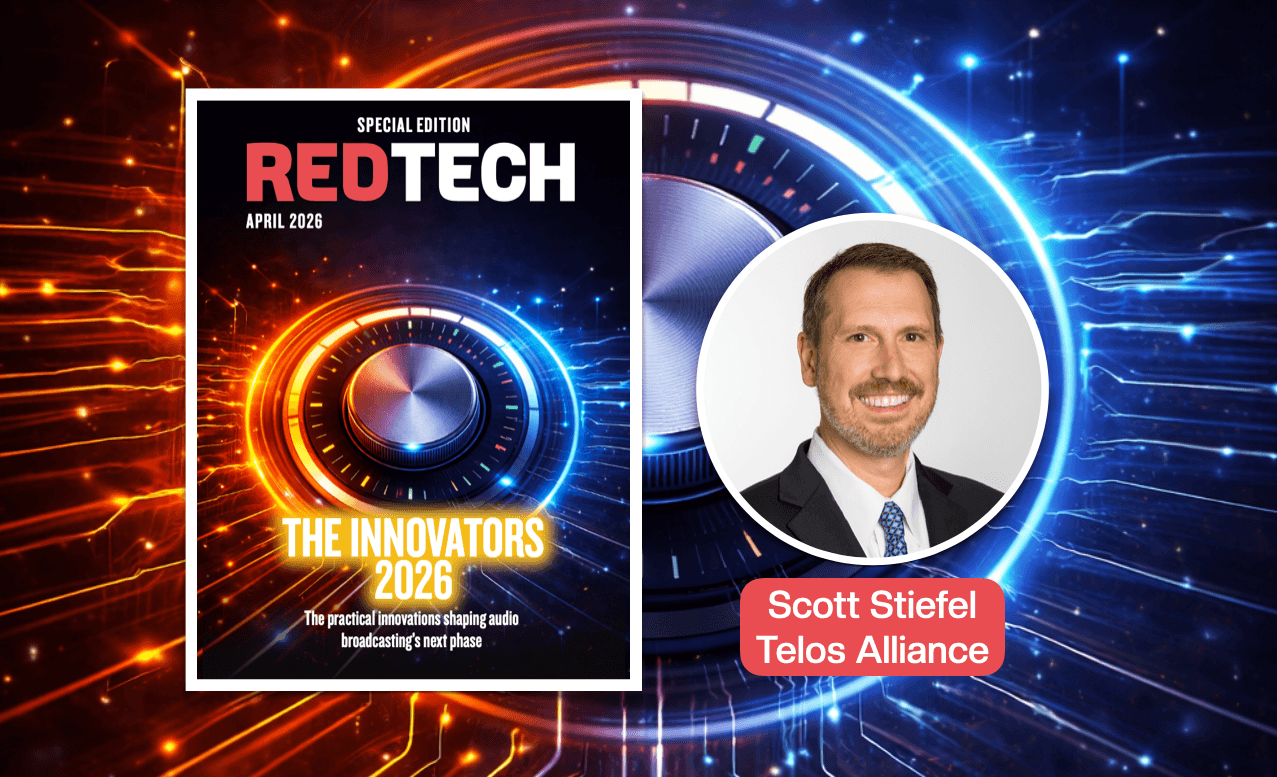
Telos Alliance CEO Scott Stiefel discusses the transition of broadcast infrastructure toward IP networking, virtualization, and cloud-based operations. The shift aims to help broadcasters repurpose content for digital and streaming platforms more efficiently while reducing dependence on fixed hardware.
Key Takeaways
- Telos Alliance launched Studio Essentials, a family of small-form-factor virtualized production tools built on AoIP infrastructure for remote and centralized control.
- Hardware-based signal chains are being replaced by COTS (commercial off-the-shelf) servers running software like Omnia Forza audio processors and Infinity VIP virtual intercoms.
- Metadata integration within the media processing chain is now critical for maintaining synchronization across concurrent over-the-air (OTA) and OTT streaming distribution.
- The primary barrier to modernization is identified as the talent gap in transitioning traditional broadcast engineering staff to IT-centric and software-defined workflow models.
Why It Matters
The transition to virtualized Audio-over-IP (AoIP) marks the end of the proprietary hardware era in radio, aligning broadcast production with the scalable software stacks utilized by pure-play streaming services. By decoupling production from physical studios, broadcasters can drastically lower operational overhead and rapidly spin up new digital-only channels. This infrastructure shift is essential for survival as the industry moves toward a hybrid model where OTA and streaming must be managed as a single, metadata-rich distribution environment. Watch for how quickly legacy engineers adopt IT-centric management tools, as the human capital transition remains the primary bottleneck for wide-scale architectural migration.
Additional Context
Additional context: The radio industry’s infrastructure pivot coincides with significant shifts in audience measurement and distribution platforms. Per Nielsen in March 2025, the firm introduced a 'three-minute rule' for its Portable People Meters (PPM), reducing the listening threshold for credit from five minutes to three. This change resulted in a nearly 14% year-over-year increase in reported audiences for some markets, highlighting a move to reward the 'snackable' listening behavior common in digital and mobile environments. Furthermore, Nielsen's 'The Record' report for Q1 2025 found that while radio still commands 66% of ad-supported audio time, podcasting’s share has grown to 19%, intensifying the pressure on broadcasters to use virtualized tools to repurpose live content across multiple on-demand platforms.
In the automotive sector, which remains radio's most critical environment, the push for standardized digital metadata is accelerating. Per Xperi in December 2025, over 12 million vehicles globally are now equipped with the DTS AutoStage platform, a hybrid radio system that blends over-the-air signals with internet-delivered visual metadata. Xperi reporting notes that 85% of ad-supported audio in cars is still AM/FM radio, but advertisers are increasingly demanding the same granular analytics for broadcast that they receive from digital streaming. Concurrently, Borrell Associates and the RAB reported in April 2025 that radio’s digital revenue grew 10% to reach $2.1 billion in 2024, with local advertisers six times more likely to purchase streaming video or digital ads than traditional spots. This financial trend validates the infrastructure shift toward software-defined systems that can efficiently serve both traditional and high-growth digital silos.
Read full article at redtech.pro
Enjoy our coverage?
Add StreamingMeme as a preferred source on Google to see more of our streaming news at the top of your Search results.
Add as preferred source