

Sennheiser Spectera Manages 60 Audio Channels Using 12 MHz Spectrum
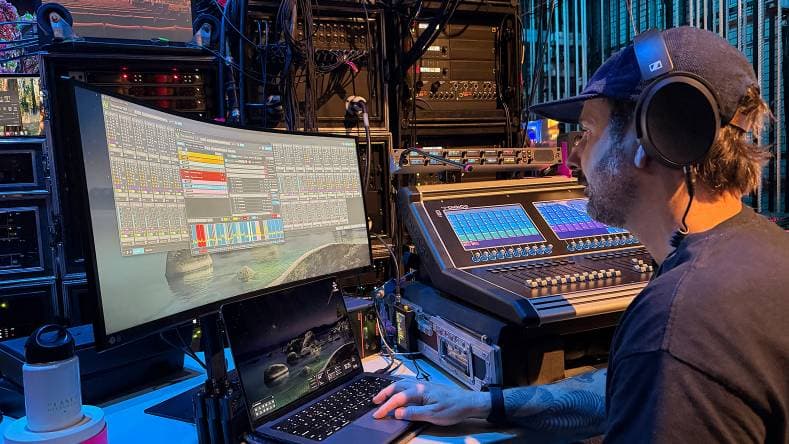
Firehouse Productions utilized Sennheiser’s Spectera bidirectional wideband ecosystem and SoundBase wireless management software to coordinate approximately 60 audio channels during the 79th Tony Awards. The deployment managed complex RF requirements across the Radio City Music Hall venue while enabling centralized monitoring for the production team.
Key Takeaways
- Spectera handled the equivalent of 60 audio channels using only 12 MHz of RF spectrum.
- Firehouse Productions utilized a single SEK bodypack for performers to manage both microphone transmission and stereo in-ear monitoring.
- The SoundBase Pro management platform enabled centralized monitoring via a Remote View feature for dashboards on mobile devices.
- The deployment supported a mix of handheld KK 204 capsules, headsets, lavaliers, and instrument wireless systems across the venue.
Why It Matters
Spectera’s ability to pack 60 channels into 12 MHz addresses the intensifying RF congestion in urban production hubs like New York. By moving toward bidirectional wideband standards, broadcasters can reduce the hardware footprint for talent while simplifying frequency coordination in crowded spectrum environments. This signifies a shift toward integrated digital workflows where audio return and transmission share a single carrier, improving operational efficiency for high-stakes live events. As the FCC continues to reallocate spectrum, spectral efficiency will become a top-tier technical requirement for live broadcast infrastructure. Watch for the commercial availability of the Spectera handheld microphone this fall to see if wideband adoption expands across regional touring and mid-market broadcast segments.
Additional Context
The transition to wideband digital wireless technology comes as the professional audio industry faces mounting pressure from shrinking UHF spectrum availability. Per TVBEurope, May 2026, the 600 MHz band auction leftovers and increasing 5G deployments have forced RF engineers to seek higher spectral efficiency in metropolitan areas. Sennheiser’s Spectera specifically targets this by utilizing a proprietary Wireless Multi-Channel Audio Link (WMAS) technology, which allows for significantly higher channel density than traditional narrowband systems. This move mirrors efforts by competitors like Shure, which has also focused on high-density modes to maximize channel counts in restricted bandwidth environments. Per Sound & Video Contractor, April 2026, the adoption of WMAS marks a pivot from FM-based systems to digital platforms capable of managing complex metadata alongside audio. In the broader ecosystem, this technical shift supports the rising demand for immersive audio and low-latency monitoring in live-to-air sports and entertainment. According to an NAB Show report from April 2026, broadcast engineers are increasingly prioritizing systems that can provide bidirectional data for remote gain control and battery monitoring, features that were previously difficult to implement at scale. The integration of SoundBase Pro’s remote monitoring reflects a wider industry trend toward software-defined production where hardware status is decoupled from physical racks. As live productions scale in complexity, centralized RF management is becoming a standard requirement rather than an optional luxury, helping production houses minimize technical failure points during high-visibility broadcasts.
Read full article at thebroadcastbridge.com
Enjoy our coverage?
Add StreamingMeme as a preferred source on Google to see more of our streaming news at the top of your Search results.
Add as preferred source