

ORF Deploys 24 ARRI Alexa Cameras for Cinematic Live Broadcast
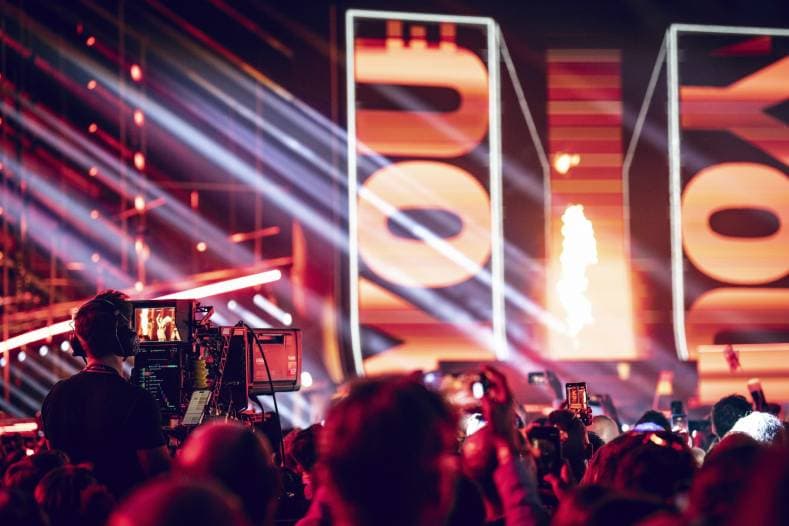
Broadcaster ORF utilized a high-end production infrastructure featuring 24 ARRI Alexa 35 Live cameras and Riedel’s DIVA+ network to deliver cinematic visuals for the Eurovision Song Contest. The setup integrated cinematic sensor technology into a standard OB workflow using NEP truck infrastructure and Riedel’s MediorNet backbone.
Key Takeaways
- ARRI Alexa 35 Live cameras served as the primary package for 24 camera positions, including cable cams and Steadicams.
- Riedel’s DIVA+ infrastructure integrated 60 MediorNet frames and 80 network switches to manage data, video, and audio signals.
- The communications layer supported 190 Bolero wireless beltpacks and 120 SmartPanels across more than 60 radio channels.
- NEP served as the OB integration partner, managing CCU and base station connectivity within their truck infrastructure.
Why It Matters
This deployment signals a shift toward high-dynamic-range cinematic aesthetics in large-scale live events, a space previously dominated by traditional broadcast sensors. By successfully integrating Arri’s cinema glass and sensors into a deterministic MediorNet backbone, ORF and Riedel have proven that the 'cinematic look' can meet the rigorous low-latency and shading requirements of global live streaming and broadcast. For the industry, this validates SMPTE ST 2110-based infrastructures as capable of handling mixed-vendor hardware at extreme scale. Watch for whether future ‘Tier 1’ sporting events adopt similar large-format sensor configurations to differentiate their visual premium in a crowded streaming market.
Additional Context
The trend toward 'cinematizing' live sports and entertainment has accelerated as broadcasters seek to mimic high-end serialized content. Per SVG (May 2026), the shift is driven by the maturation of shallow depth-of-field integration in live environments, which was previously limited by focus-tracking difficulties. ARRI’s entry into the live space with the Alexa 35 Live specifically targets this gap, competing with Sony’s HDC-F5500 and the Grass Valley LDX 135. These systems use Super 35mm sensors to provide the 17 stops of dynamic range typically reserved for feature films, while maintaining the tally and return-video workflows essential for live production directors.
Technological convergence is also visible in the networking layer. According to a June 2026 report from IABM, the transition to software-defined networking (SDN) like Riedel’s MediorNet and DIVA+ allows for the decoupling of physical hardware from logical signal routing. This was critical for the Eurovision deployment, where ORF had to manage localized technical demands alongside the requirements of 35 participating international territories. Similar hybrid approaches were noted by TV Technology (April 2026) during recent major European football league trials, where 5G slices were used to augment primary fiber backbones for remote wireless camera units.
Financial analysts at Omdia (March 2026) suggest that while cinematic gear increases initial CapEx by an estimated 15-20% compared to standard HD broadcast chains, the 'premium' visual output of such events justifies higher carriage fees from streaming platforms. As audience expectations for visual fidelity rise across 4K and HDR-enabled devices, technical reliability in high-pressure live environments remains the primary barrier to wider adoption. The Eurovision production serves as a high-profile benchmark for Riedel and ARRI as they attempt to displace established broadcast camera incumbents in the global events market.
Read full article at thebroadcastbridge.com
Enjoy our coverage?
Add StreamingMeme as a preferred source on Google to see more of our streaming news at the top of your Search results.
Add as preferred source