
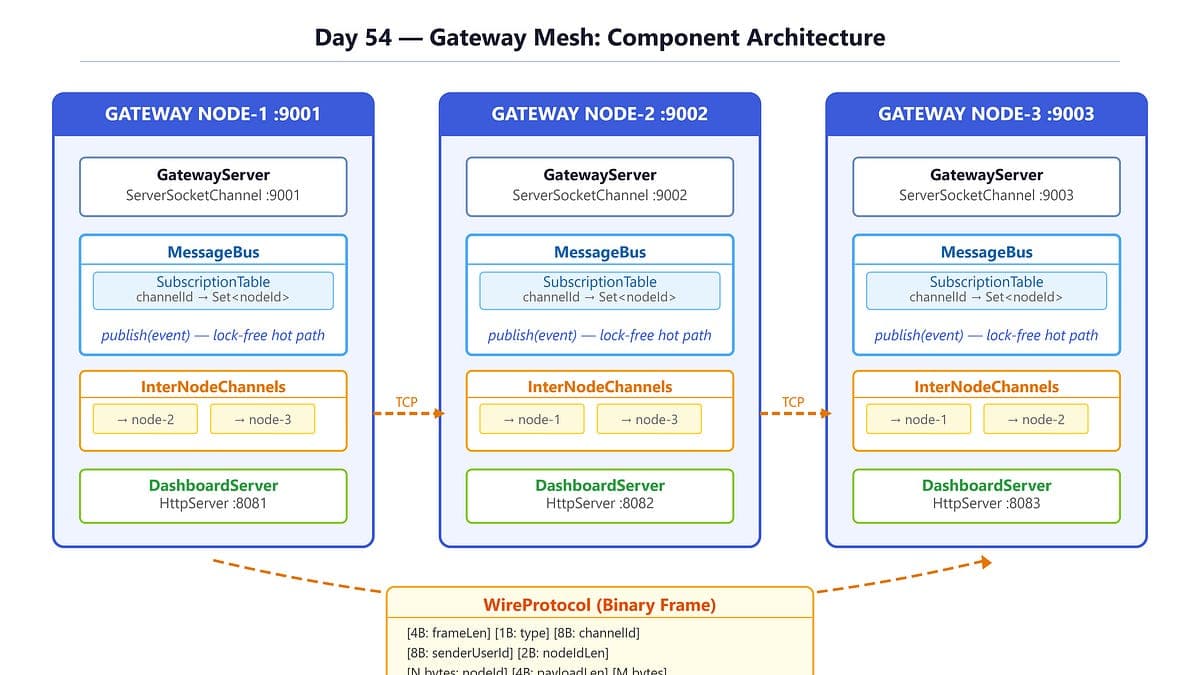
This technical tutorial examines architectural strategies for building high-throughput streaming gateways, specifically addressing backpressure management and memory allocation. It details how moving from JSON-based messaging to binary protocols and implementing virtual threads can optimize inter-node communication and prevent system-wide performance degradation.
The shift from high-level abstractions like Spring Cloud Bus to low-level binary protocols is becoming a requirement for platforms managing massive concurrency. As streaming services integrate more real-time social and interactive features, traditional JSON-over-TCP patterns introduce unacceptable garbage collection overhead and 'slow consumer' vulnerabilities. By adopting Discord’s architectural model of lazy subscriptions and virtual threads, infrastructure teams can maintain sub-millisecond delivery even during regional traffic surges. Watch for a broader industry move toward custom binary protocols as the limitations of standard REST and JSON serialization hit a ceiling in ultra-low latency environments.
The architectural pressure on streaming gateways mirrors wider industry shifts toward more efficient runtime environments. Per InfoQ in May 2024, the general availability of Project Loom's virtual threads in Java 21 has fundamentally changed how engineers handle persistent peer connections, allowing millions of concurrent tasks to run on a small number of carrier threads without the memory overhead of traditional OS-level threads. This technical evolution is critical as platforms move away from monolithic architectures toward highly distributed micro-gateways that must communicate with minimal overhead.
Related developments in the networking layer further emphasize the need for the binary protocols discussed. Per a Cloudflare technical blog from late 2023, large-scale platforms are increasingly moving toward protocol buffers and other binary formats to Reduce serialization costs, which often account for more than 30% of total CPU utilization in high-traffic clusters. Furthermore, the ‘slow consumer’ problem remains a primary cause of cascading failures in distributed systems; recent post-mortems from major streaming providers indicate that lack of explicit backpressure often leads to resource exhaustion that bypasses standard auto-scaling triggers. These findings underscore why manual control over memory allocation and thread management is replacing automated, ‘magic’ framework solutions in performance-critical paths.
Add StreamingMeme as a preferred source on Google to see more of our streaming news at the top of your Search results.
Add as preferred source