

Nvidia pivots to inference infrastructure as data center ratios shift
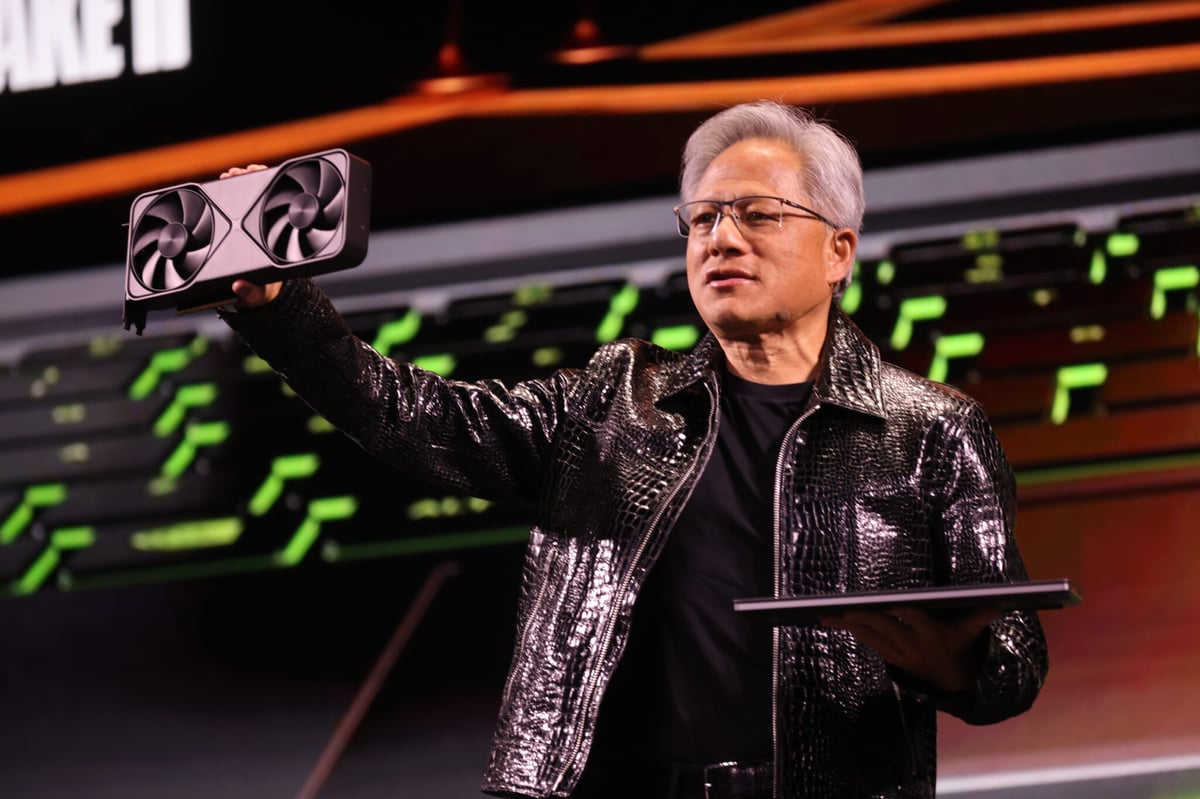
Nvidia is transitioning from a GPU-centric business model to a comprehensive AI infrastructure player, focusing on inference and agentic AI. The strategy includes the integration of ARM-based CPUs and the incorporation of specialized server hardware for inference workloads to support evolving data center requirements.
Key Takeaways
- Nvidia forecasts the data center CPU market will reach a $200 billion valuation within the next few years
- Acquisition of Groq assets enables a hybrid server architecture using GPUs for prompt prefilling and LPUs for response decoding
- Networking technology via the 2020 Mellanox acquisition has become the company's fastest-growing business segment
- Company valuation sits at 16 times projected fiscal 2028 earnings estimates despite rapid top-line growth
Why It Matters
This shift marks a critical evolution in the streaming and media technology stack, moving from the compute-heavy training of recommendation algorithms to the real-time execution of agentic AI. By controlling both the GPU and the ARM-based CPU, Nvidia aims to capture a larger share of the $200 billion data center market as inference workloads outpace model training. For streaming platforms, this hardware convergence promises lower latency for AI-driven metadata tagging and personalized content generation. Watch for the performance benchmarks of the unified GPU-LPU server architecture to see if it sets a new efficiency standard for real-time video processing.
Additional Context
The emphasis on inference aligns with a broader industry shift toward edge-based and real-time AI execution. According to a June 2026 report by Gartner, enterprise spending on inference hardware is projected to surpass training expenditures for the first time by year-end. This trend is driven heavily by the deployment of localized large language models (LLMs) and real-time transcription services within regional data centers. Furthermore, Bloomberg reported in May 2026 that hyperscalers like Amazon Web Services and Microsoft Azure are increasingly developing in-house silicon to reduce their reliance on Nvidia’s high-margin H100 and Blackwell architectures, exerting new pricing pressure on the market leader. In the competitive landscape, the integration of Groq’s language processing unit (LPU) technology is a direct response to the need for lower latency in generative AI applications. Per CNBC, July 2026, rivals such as AMD have recently expanded their ROCm software ecosystem to mirror the proprietary advantages Nvidia maintains with CUDA, specifically targeting the inference market. Additionally, The Wall Street Journal noted in late 2025 that the demand for low-power consumption in AI chips has forced a resurgence in ARM-based architecture, which Nvidia has now standardized across its Grace Blackwell Superchip line. As data centers face power constraints, the efficiency of these integrated CPU-GPU systems will dictate long-term adoption rates among streaming infrastructure providers.
Read full article at fool.com
Get this in your inbox → Subscribe
Enjoy our coverage?
Add StreamingMeme as a preferred source on Google to see more of our streaming news at the top of your Search results.
Add as preferred source