

Nvidia Blackwell GPU AI workloads shift toward high-performance gaming hardware
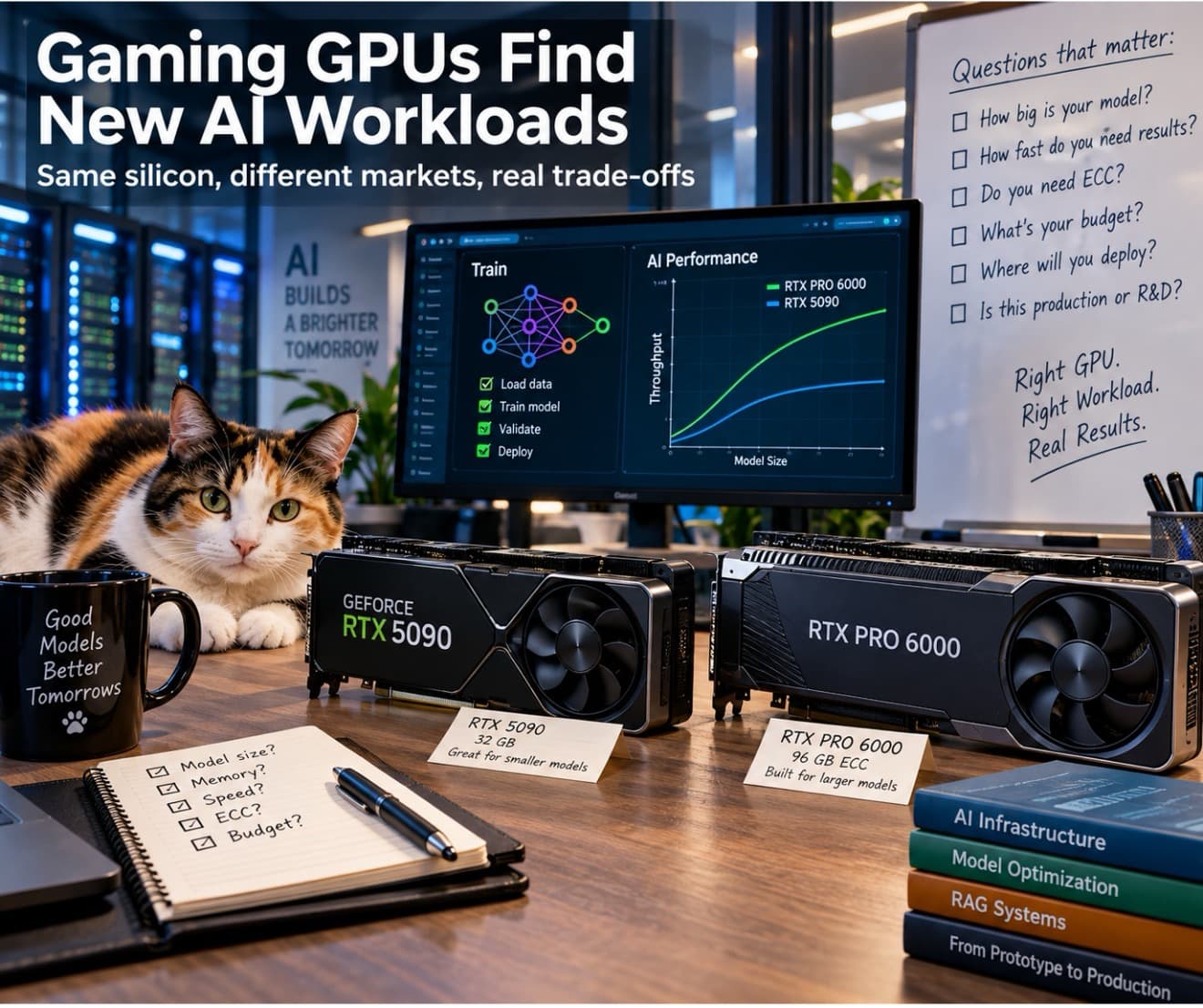
Jon Peddie Research analyzes the shifting role of Nvidia's Blackwell-based GPUs in AI workloads, highlighting how memory capacity and reliability features like ECC differentiate the GeForce RTX 5090 from the RTX Pro 6000. The report suggests that AI demand is increasingly forcing a reorganization of GPU product tiers based on specific workload requirements rather than traditional market labels.
Key Takeaways
- The GeForce RTX 5090 and RTX Pro 6000 share the same GB202 silicon foundation but differ significantly in memory capacity and ECC support.
- Memory capacity serves as the primary market boundary, with the Pro 6000 offering 96 GB compared to the 32 GB found on the 5090.
- Nvidia introduced the RTX Pro 5500 with 84 GB of memory to bridge the gap between consumer and high-end enterprise tiers.
- Modified RTX 5090 cards with 96 GB of memory have reportedly surfaced from Shenzhen Suqiao to bypass professional-grade pricing and export limits.
Why It Matters
The blurring line between gaming and professional silicon suggests that memory capacity, rather than raw arithmetic throughput, is now the primary lever for market segmentation. For streaming engineers and AI developers, this shift allows for cost-effective local model fine-tuning and RAG experimentation on consumer-grade hardware, provided the workload fits within 32 GB. However, the lack of Error Correction Code (ECC) on gaming cards remains a critical barrier for long-running production training where reliability is paramount. As AI demand continues to outpace enterprise supply, the industry should watch for further 'clamshell' memory modifications and custom firmware hacks that attempt to unlock professional-level capacity on consumer-priced boards.
Read full article at jonpeddie.com
Enjoy our coverage?
Add StreamingMeme as a preferred source on Google to see more of our streaming news at the top of your Search results.
Add as preferred source