

Meta launches AI Creator Assistant and expands Reels dubbing globally
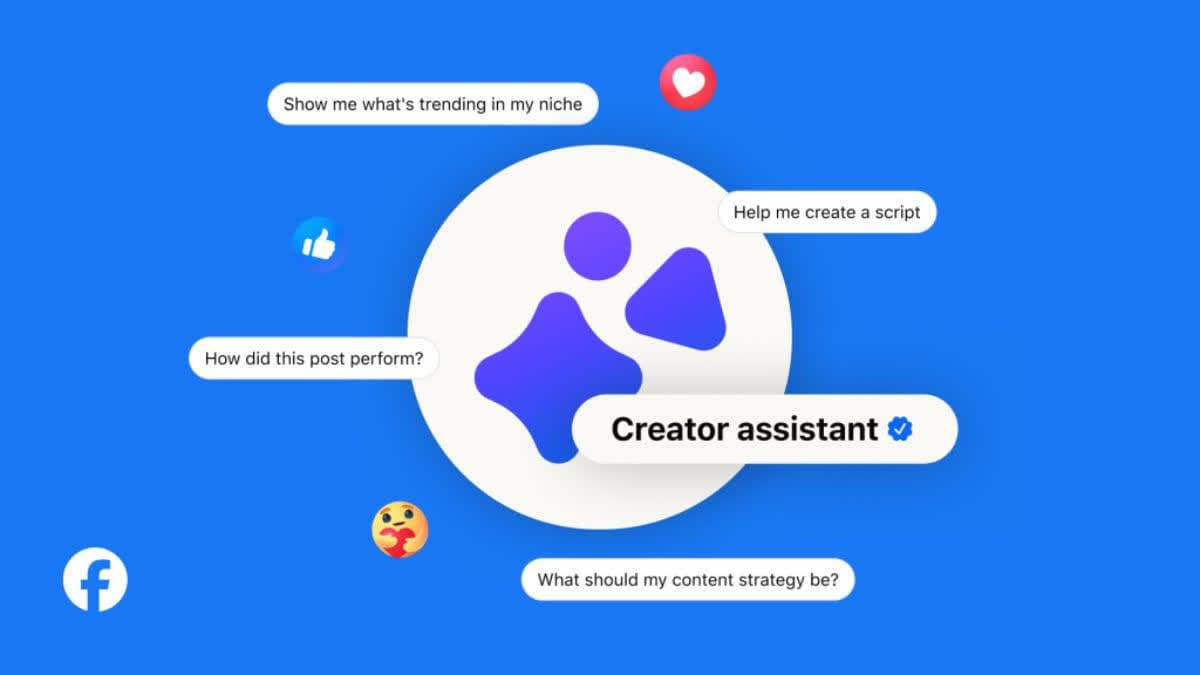
Meta has introduced an AI-powered Creator Assistant on Facebook to provide tailored insights and brainstorming tools for creators in the US, Canada, and India. Additionally, Meta is expanding its AI-powered Reels translations to five new languages: Arabic, Bahasa Indonesian, French, Thai, and Vietnamese. These updates are designed to help creators understand their audience better and reach global audiences through translated content.
Key Takeaways
- Creator Assistant allows users to ask conversational questions about engagement trends and audience shifts directly via the Facebook dashboard.
- Reels AI translation now supports 14 languages, including new additions like Arabic, French, and Vietnamese.
- The AI dubbing technology includes optional voice cloning and lip-syncing to preserve a creator's original tone and pacing.
- Meta reports that over 500 million users on Facebook already view AI-translated videos on a weekly basis.
Why It Matters
Meta is aggressively lowering the technical barrier for creators to optimize content and enter non-native markets. By integrating these tools directly into the dashboard, Meta aims to reduce reliance on third-party analytics and external dubbing services, fortifying its ecosystem against TikTok and YouTube. This move concretely shifts Reels' utility from a localized discovery format to a high-scale global distribution engine capable of voice-matched localization at zero marginal cost. Watch for Meta to refine the Assistant’s accuracy in regional slang and monitor if the tool expands to Instagram’s dashboard to unify the cross-platform creator experience.
Additional Context
The rollout follows Meta’s broader 'Andromeda' infrastructure update, which, per OnlyInsight (February 2026), leverages AI to control how every video is selected, ranked, and delivered. This shift has forced creators and advertisers to prioritize creative variety over manual audience targeting, as the AI now analyzes visual and audio cues directly to find viewers. By automating translation and performance analysis, Meta is effectively providing the manual inputs its recommendation engine needs to scale content across fragmented international regions.
Competition in the automated dubbing space accelerated throughout early 2026. Per Digital Today (April 2026), YouTube fully opened its AI dubbing service in February 2026, supporting 27 languages. Meanwhile, TikTok introduced its own AI Dubbing for shoppable videos in late 2025 to streamline e-commerce conversions across multilingual markets. Meta’s inclusion of lip-syncing and voice cloning is a direct response to these rival features, aiming to maintain engagement as short-form video becomes the primary driver for platform screen time.
Despite the rapid adoption, security and data privacy remain significant friction points. In June 2026, TechCrunch reported that hackers exploited Meta’s separate AI support chatbot to hijack high-profile accounts, a development that has raised questions regarding Creator Assistant's deep account access. Furthermore, regulatory hurdles in the UK and EU continue to delay parity between North American and European feature sets, as Meta navigates ongoing friction with the Irish Data Protection Commission regarding the training of AI models on regional user data, per The Next Web (June 2026).
Read full article at etvbharat.com
Enjoy our coverage?
Add StreamingMeme as a preferred source on Google to see more of our streaming news at the top of your Search results.
Add as preferred source