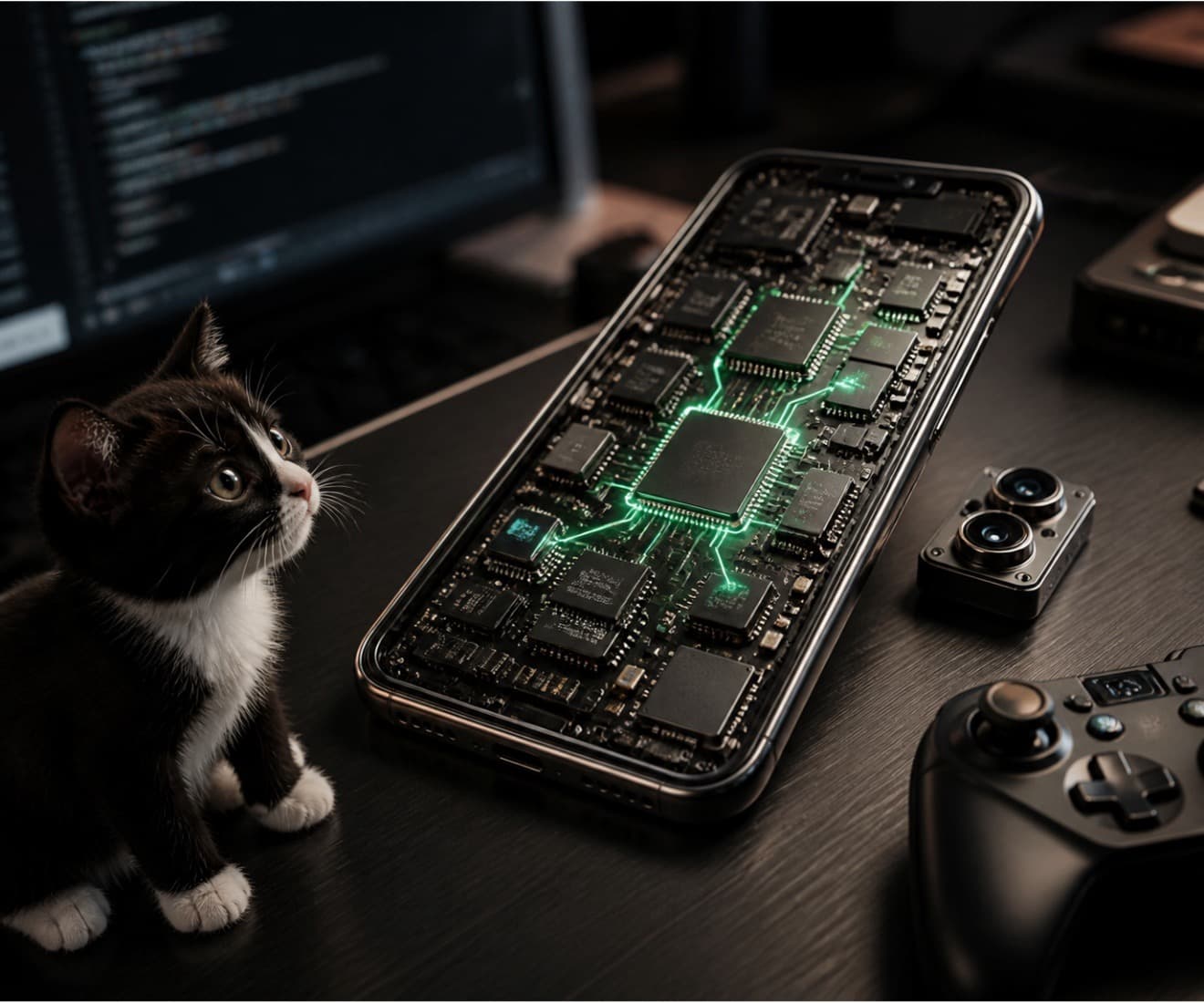
MediaTek has announced the Dimensity 9600 Pro, a 2nm smartphone SoC featuring dual-NPU architecture and native H.266 hardware decoding. The platform is designed to support persistent on-device agentic AI and advanced video processing, including 4K120 Cinematic Log recording.
The inclusion of native H.266 decoding in the MediaTek Dimensity 9600 Pro signals a critical hardware pivot toward next-generation compression standards for mobile video consumption and creation. By moving agentic AI workloads from the cloud to on-device dual NPUs, MediaTek reduces latency and bandwidth costs for streaming applications and interactive services. This shift forces a recalibration of the mobile ecosystem, as developers can now leverage local Mixture-of-Experts models for real-time video object removal and semantic processing without taxing the network. Watch for how quickly streaming platforms adopt H.266 encoding to take advantage of this new hardware-accelerated playback capability in premium handsets.
MediaTek's decision to embed native H.266 (VVC) hardware decoding in the Dimensity 9600 Pro places it among a small but growing group of silicon vendors betting on the codec's mobile readiness. Qualcomm's Snapdragon 8 Elite, announced in late 2024, was the first flagship mobile SoC to include hardware-accelerated VVC decoding, and Apple's A17 Pro and M4 chips added VVC decode support across iPhone and iPad lineups starting in 2023, giving content providers a widening installed base of VVC-capable endpoints. The Fraunhofer HHI, which co-developed the H.266/VVC standard, has maintained that mobile hardware decode is a prerequisite for mass-market adoption, and MediaTek's 2nm implementation with dedicated decode blocks addresses the power-efficiency concerns that previously limited VVC to desktop and set-top applications.
The licensing landscape for H.266 remains a key variable for streaming platforms considering VVC encoding pipelines. Access Advance administers the VVC/H.266 patent pool, which reached 50 licensors by mid-2025 and covers an estimated 70% of essential VVC patents, while Sisvel launched a competing pool in 2024 that has attracted holders including Dolby and Philips. For device makers like MediaTek, royalty obligations are typically capped per-unit under both pools, but the existence of two separate licensing vehicles has created uncertainty for content distributors weighing VVC against the royalty-free AV1 alternative. Netflix, YouTube, and Amazon Prime Video have all conducted VVC encoding trials, though none has announced a full-scale production deployment for mobile delivery as of September 2026.
On the agentic AI side, MediaTek's dual-NPU architecture in the Dimensity 9600 Pro reflects a broader industry move toward on-device inference for persistent AI workloads. Nokia's agentic AI framework for IP network operations, launched within its Network Services Platform in June 2026, demonstrates how agentic systems are proliferating across the network stack, from core to edge. MediaTek's approach differs by placing inference directly on the handset, reducing round-trip latency for real-time video tasks such as object removal and semantic scene analysis. Nokia separately reported that its autonomous networks portfolio is delivering automation rates above 90% and service interruption periods of one minute per year or fewer, illustrating the operational benchmarks that edge AI platforms will eventually need to match at the device level. The convergence of hardware VVC decode and on-device agentic AI positions the Dimensity 9600 Pro as a test case for whether premium handsets can absorb workloads that previously required cloud round-trips.
MediaTek has launched the Dimensity 9600 Pro, a 2nm smartphone chipset featuring native H.266 hardware decoding and a dual-NPU architecture. This release is significant because it enables efficient on-device agentic AI and high-resolution video workflows, reducing latency and bandwidth costs by shifting complex processing from the cloud to the handset.
The native H.266 hardware decoding improves video efficiency and supports high-resolution workflows like 4K120 Cinematic Log recording, while addressing power-efficiency concerns that previously limited the codec to desktop and set-top applications.
The architecture includes the NPU 1090 for heavy LLM tasks and the eNPU 2.0 for low-power persistent workloads, allowing the device to handle agentic AI tasks locally.
Access Advance administers a patent pool covering 70% of essential patents, while Sisvel operates a competing pool. This dual-licensing landscape creates uncertainty for content distributors choosing between VVC and royalty-free alternatives like AV1.
Built on TSMC's 2nm process, the chipset achieves a 61% reduction in multi-core power consumption compared to previous flagship models.
Add StreamingMeme as a preferred source on Google to see more of our streaming news at the top of your Search results.
Add as preferred source
