

Lenovo pivots to cloud handhelds with Tencent START integrated C700
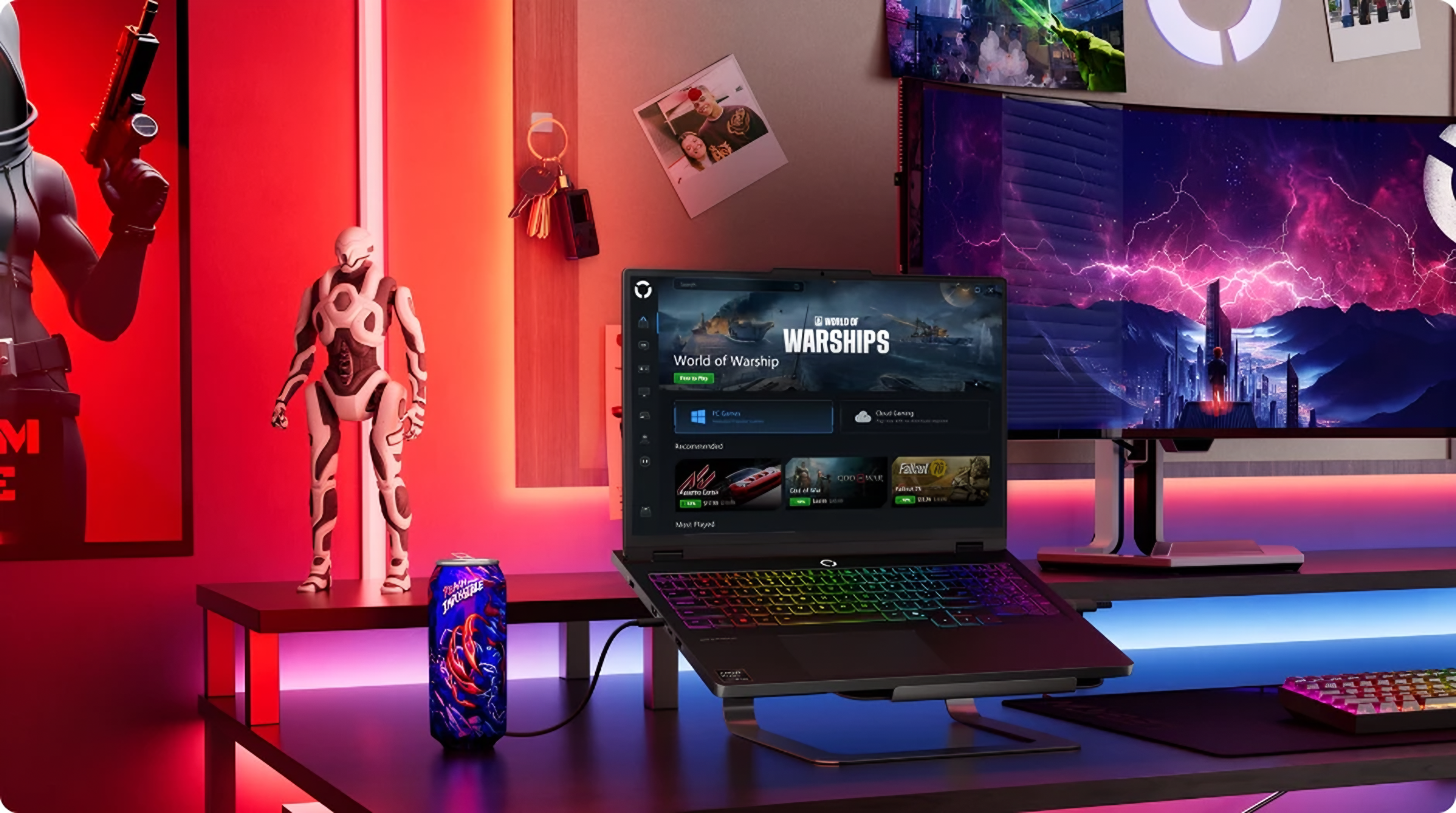
Lenovo has teased the Legion C700, a cloud-gaming handheld device designed to leverage Tencent's START infrastructure in China. The device replaces traditional local AMD silicon with a low-power architecture reliant on remote video encoding and low-latency edge delivery.
Key Takeaways
- Device architecture relies on remote video encoding (H.264/H.265/AV1) rather than local rendering via AMD APUs.
- Hardware target focused on sub-20ms round-trip latency enabled by China’s localized edge-node distribution.
- Physical design features an 8.8-inch display, offset analog sticks, and programmable rear paddle buttons.
- Strategic shift follows a 92% price surge for the Legion Go 2 due to the 2026 DRAM supply crisis.
Why It Matters
This move signals a strategic retreat from the high-cost handheld PC arms race toward a service-led hardware model. By offloading compute to Tencent START, Lenovo eliminates the thermal and battery constraints of mobile silicon while insulating its margins from volatile memory pricing. However, the device’s utility is strictly tethered to geographic infrastructure; without Tencent’s dense edge network, the liquid experience required for competitive gaming evaporates. This creates a bifurcated market where hardware specifications are secondary to regional CDN footprint. Watch for the August reveal to see if Lenovo announces partnerships with Xbox Cloud Gaming or NVIDIA GeForce NOW for a potential international rollout.
Additional Context
The shift toward cloud-first handhelds comes as the broader Chinese gaming market undergoes a significant infrastructure-led expansion. Per Mordor Intelligence in early 2026, the domestic cloud gaming sector is on track to reach $9.57 billion by 2031, with consumer subscriptions already representing 57.6% of the market. This growth is underpinned by China's aggressive 5G-Advanced deployment, which according to recent filings from China Mobile and Huawei, has prioritized ultra-low latency 'Slicing-as-a-Service' for interactive media. These network conditions allow cloud-native devices to achieve performance parity with local hardware in dense urban centers, a feat still challenging in many North American markets due to fragmented edge coverage. Competitively, Lenovo’s move mirrors previous collaborative efforts like the 2022 Logitech G Cloud, which utilized Qualcomm’s Snapdragon 720G specifically for streaming. However, the 2026 DRAM volatility cited by industry analysts at Gartner has fundamentally changed the math for manufacturers. While Windows-based handhelds like the Asus ROG Ally and Steam Deck dominated the early market, the rising cost of high-bandwidth memory (HBM) and LPDDR5X has pushed the entry price for performance-tier handhelds toward $1,500. By utilizing commodity low-power silicon for video decoding, Lenovo can theoretically undercut local-compute rivals by several hundred dollars, provided the end-user remains within the Tencent START ecosystem.
Read full article at techtimes.com
Get this in your inbox → Subscribe
Enjoy our coverage?
Add StreamingMeme as a preferred source on Google to see more of our streaming news at the top of your Search results.
Add as preferred source