

ITVX AI Colorizes 1966 World Cup Final, Targets Archival Content Revitalization
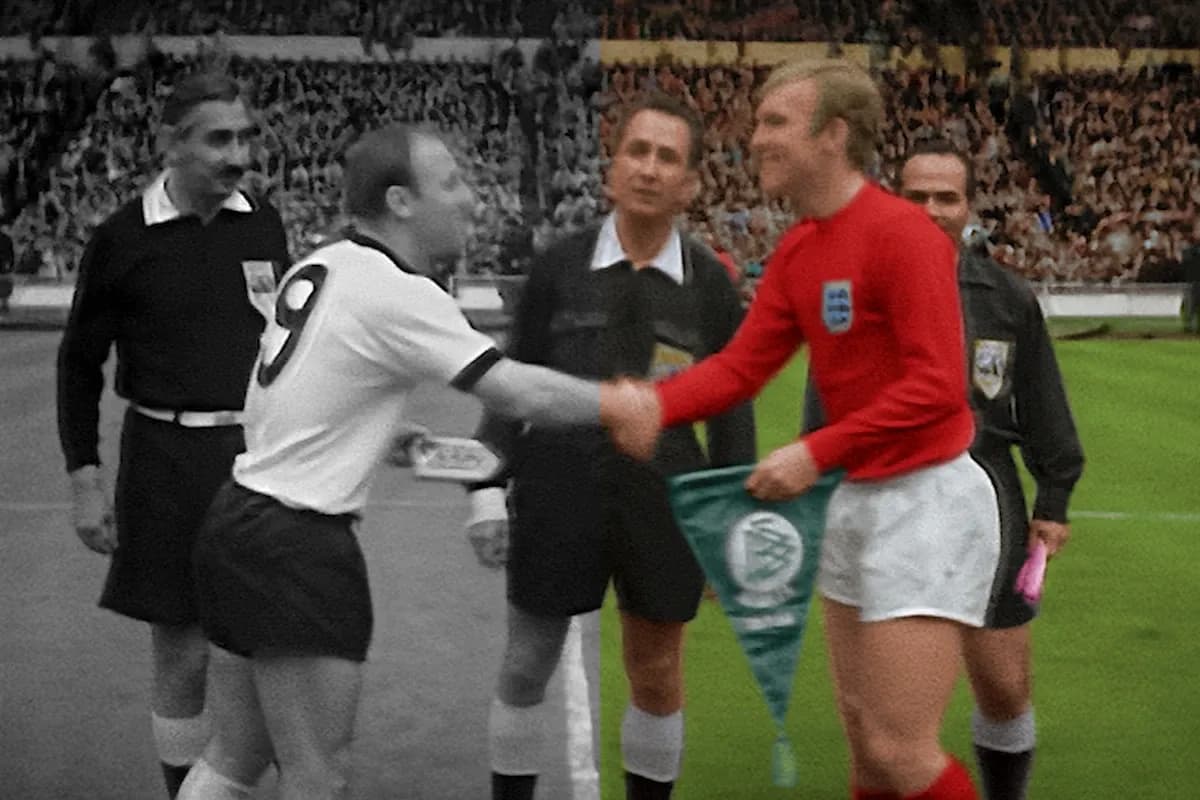
ITVX has made the 1966 World Cup Final available in color for free, leveraging AI-powered restoration technology to convert the original black and white footage. This initiative highlights the application of advanced AI film restoration and colorization techniques for content repurposing on streaming platforms. The article also mentions the use of VPNs to bypass geo-restrictions for viewing. The article focuses on the AI technology used for restoration, making it a relevant piece for StreamingMeme readers who deal with video technology workflows.
Key Takeaways
- ITVX made the 1966 World Cup Final available in color for free, restored from black and white footage.
- AI-powered advanced film restoration and colorization technology were used for the conversion.
- The remastered program was created for the tournament's 50th anniversary.
- Geo-blocking restrictions on ITVX can be bypassed using a VPN for international viewers.
Why It Matters
The use of AI to colorize historical footage signals a growing trend in content libraries looking to revitalize archival assets for modern audiences. This approach provides streamers with a cost-effective method to expand unique offerings without new production, potentially increasing engagement with legacy content. Watch for other platforms to invest in similar AI-driven restoration projects, particularly for culturally significant events or popular older series, as they seek to differentiate their catalogs and extend content shelf-life.
Additional Context
The application of AI in video restoration and colorization, as demonstrated by ITVX, reflects broader advancements in this technology. Researchers are continually refining AI models to produce more accurate and temporally consistent colorization for complex video sequences. For instance, a paper published in arXiv in February 2026 introduced "Uni-Animator," a Diffusion Transformer-based framework aimed at unified image and video sketch colorization, addressing issues like imprecise color transfer and temporal inconsistencies in large-motion scenes. This model, developed by Xinyuan Chen et al., focuses on visual reference enhancement and physical detail reinforcement to improve fidelity.
Further demonstrating this progress, "TimeColor," another model discussed in arXiv in January 2026 by B. Constantine et al., introduces a sketch-based video colorization model that supports heterogeneous, variable-count references. TimeColor aims to improve color fidelity, identity consistency, and temporal stability, particularly in multi-reference scenarios. These developments suggest a move towards more sophisticated AI capable of handling diverse and challenging archival content. Another notable development is "ChromaFlow," presented at SIGGRAPH Asia 2025, which focuses on efficient video colorization by directly predicting chrominance components in the YCbCr space, aiming for better color accuracy and temporal coherence (per ACM, 2025). This ongoing research underscores the technical momentum behind the capabilities ITVX is now deploying, pointing to wider industry adoption and increasingly refined results in the near future.
Read full article at techradar.com
Enjoy our coverage?
Add StreamingMeme as a preferred source on Google to see more of our streaming news at the top of your Search results.
Add as preferred source