

IMAX claims 16K per-color resolution for Christopher Nolan’s The Odyssey
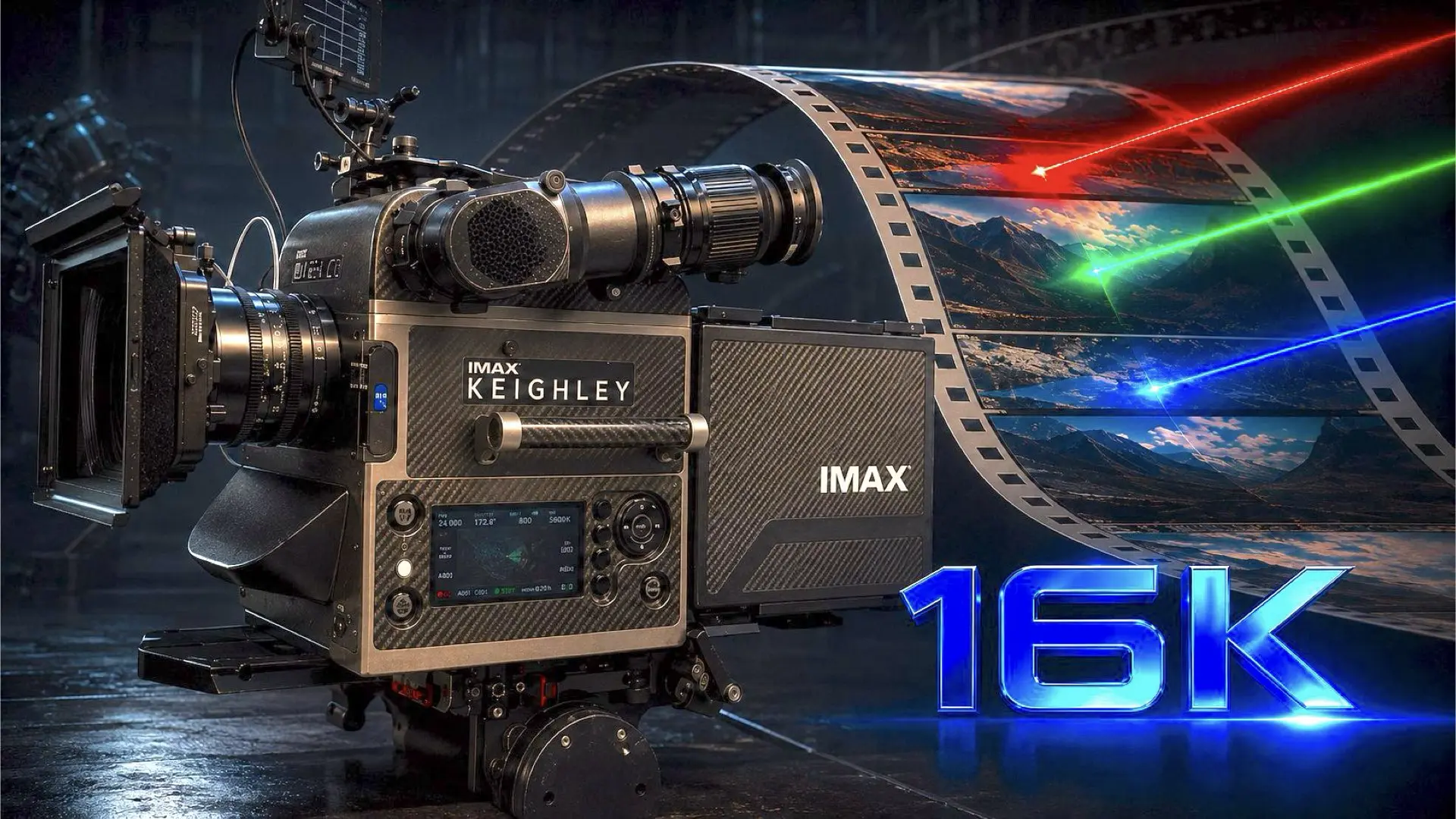
IMAX has disclosed that the film The Odyssey, shot using its proprietary Keighley 65mm camera system, contains 14K to 16K of resolution per color channel in its 15/70 film frames. The company is using this technical data to emphasize the potential capacity of analog large-format capture over modern digital sensor standards.
Key Takeaways
- The 15/70 IMAX film frame recorded for The Odyssey holds a potential 14K to 16K resolution for each individual color record.
- Filming utilized the new Keighley 65mm camera, which features a modern digital interface and quieter operation for narrative dialogue.
- Color negative film records data via light-sensitive emulsion layers, providing full-resolution sampling across the spectrum unlike digital demosaicing.
- The 15-perforation 70mm format moves film at 5.6 feet per second to capture these high-capacity large-format frames.
Why It Matters
IMAX is reasserting the technical superiority of analog large-format production to defend its premium theatrical moat against high-resolution digital cinema. While 8K digital capture is becoming a commercial standard, IMAX’s 16K claim suggests that analog film remains the highest-fidelity archive and capture format available for tentpole features. This shift toward entirely film-shot features, enabled by quieter camera bodies like the Keighley, allows directors to maintain ultra-high-resolution standards throughout intimate dialogue scenes previously restricted to digital or dubbed formats. Watch for whether other major studios adopt the Keighley system for full-length productions to justify higher premium large-format ticket pricing.
Additional Context
The Odyssey serves as the debut for IMAX’s second-generation 65mm film cameras, which were developed to address long-standing production hurdles like weight and mechanical noise. Per Fast Company in June 2026, director Christopher Nolan worked closely with IMAX to design the Keighley cameras specifically to allow for domestic dialogue recording without the need for massive soundproof housings. These new units reportedly feature carbon-fiber bodies to reduce weight and a digital telemetry interface that provides real-time feedback on film speed and exposure, bridging the gap between analog mechanics and digital production ergonomics.
Investment in analog hardware comes as IMAX experiences a significant financial resurgence driven by filmmakers like Nolan. According to the Los Angeles Times in December 2025, IMAX estimated a $1.2 billion box office take for 2025, representing a 50% market share growth since 2018. Despite accounting for only 1% of global screens, the format now averages 15% of North American box office revenue for films participating in the “Filmed for IMAX” program. To meet this demand, IMAX has been expanding its fleet in collaboration with Kodak and Panavision, aiming to grow its camera inventory by 50% to ensure multiple productions can shoot in the format simultaneously.
Technically, the 16K resolution claim remains a point of industry debate. While 15/70 film has a theoretical spatial capacity exceeding 12K, practical resolution is often limited by lens quality, film grain, and high-speed scanning systems. Per PetaPixel in July 2026, the Keighley camera’s ability to run 15-perf 70mm film horizontally at 5.6 feet per second provides a negative area roughly ten times larger than standard 35mm film. This massive physical surface area allows for the high-density color information that IMAX is now highlighting to differentiate its theatrical experience from home streaming and standard 4K digital projection.
Read full article at ymcinema.com
Enjoy our coverage?
Add StreamingMeme as a preferred source on Google to see more of our streaming news at the top of your Search results.
Add as preferred source