

HP and Adobe boost digital twin scale with AI-driven capture
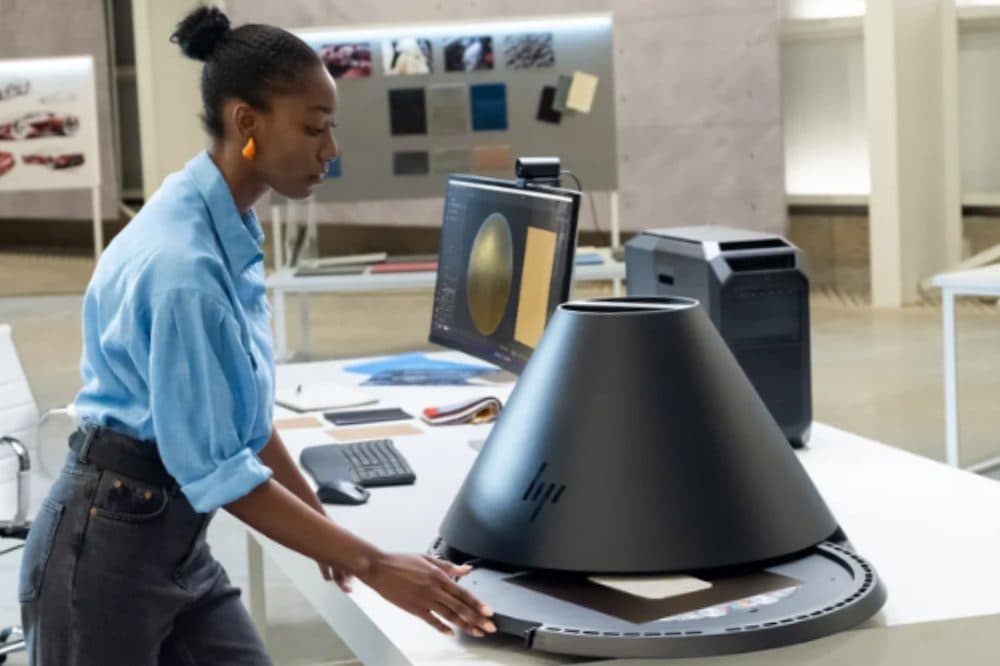
HP and Adobe have updated the HP Z Captis digital twin capture system to include Nvidia Jetson AGX-based hybrid AI inference for faster material processing. The release supports the OpenPBR standard and improves integration with Adobe Substance 3D Sampler to streamline professional 3D asset generation.
Key Takeaways
- HP Z Captis now uses Nvidia Jetson AGX-based hybrid AI inference to accelerate material digitization at the edge.
- The system natively supports the OpenPBR material model standard to ensure visual consistency across downstream content workflows.
- New software updates provide expanded frame-rate and resolution options for professional 3D asset generation.
- Adobe Research is evaluating a new specular reflectance model to improve the accuracy of notoriously difficult metallic material captures.
- Integration with Adobe Substance 3D Sampler now includes both Windows and Mac endpoint support for end-to-end material management.
Why It Matters
This update transitions digital twin creation from a bespoke specialty process to a scalable enterprise utility. By integrating edge AI inference and industry-standard protocols like OpenPBR, HP and Adobe are reducing the friction between physical sampling and digital deployment in industries like automotive and fashion. This move tightens the link between hardware capture and the 3D software ecosystem, addressing the long-standing challenge of metallic and specular material reproduction. As streaming environments and immersive commerce demand higher-fidelity 3D assets, this pipeline serves as a critical infrastructure layer. Watch for the production release of Adobe’s specular reflectance model as a benchmark for high-accuracy digital material standards.
Additional Context
The expansion of the HP Z Captis ecosystem aligns with a broader industry push toward standardized, physics-accurate digital twins. In mid-2024, Adobe and Autodesk released OpenPBR Surface V1.0, a unified shading model designed to ensure that materials look identical across different render engines and 3D applications. According to Adobe (July 2026), the company is currently converting all 23,000+ assets in its Substance 3D library to the OpenPBR standard to foster this interoperability. This hardware-software integration also leverages Nvidia’s expanding industrial AI footprint; per Nvidia (October 2025), the company has been deploying its 'Mega' Omniverse Blueprints to help partners like Siemens and Foxconn build factory-scale digital twins.
Market adoption of these systems is accelerating as enterprises seek to reduce capital expenditures through virtual prototyping. At CES 2026, PepsiCo announced a collaboration with Siemens and Nvidia to build plant digital twins, reporting that the technology had already helped identify 90% of potential production issues before physical modifications began (per StockTitan, January 2026). Similarly, SK hynix partnered with Nvidia in June 2026 to integrate OpenUSD and Jetson Thor platforms for autonomous semiconductor facility operations. HP’s latest Z Captis update positions the $19,999 device (MSRP per NotebookCheck, January 2025) as a primary entry point for capturing the raw material data required to power these increasingly complex industrial simulations.
Read full article at postperspective.com
Enjoy our coverage?
Add StreamingMeme as a preferred source on Google to see more of our streaming news at the top of your Search results.
Add as preferred source