

FilmLight launches GitHub repository to automate high-end color grading pipelines
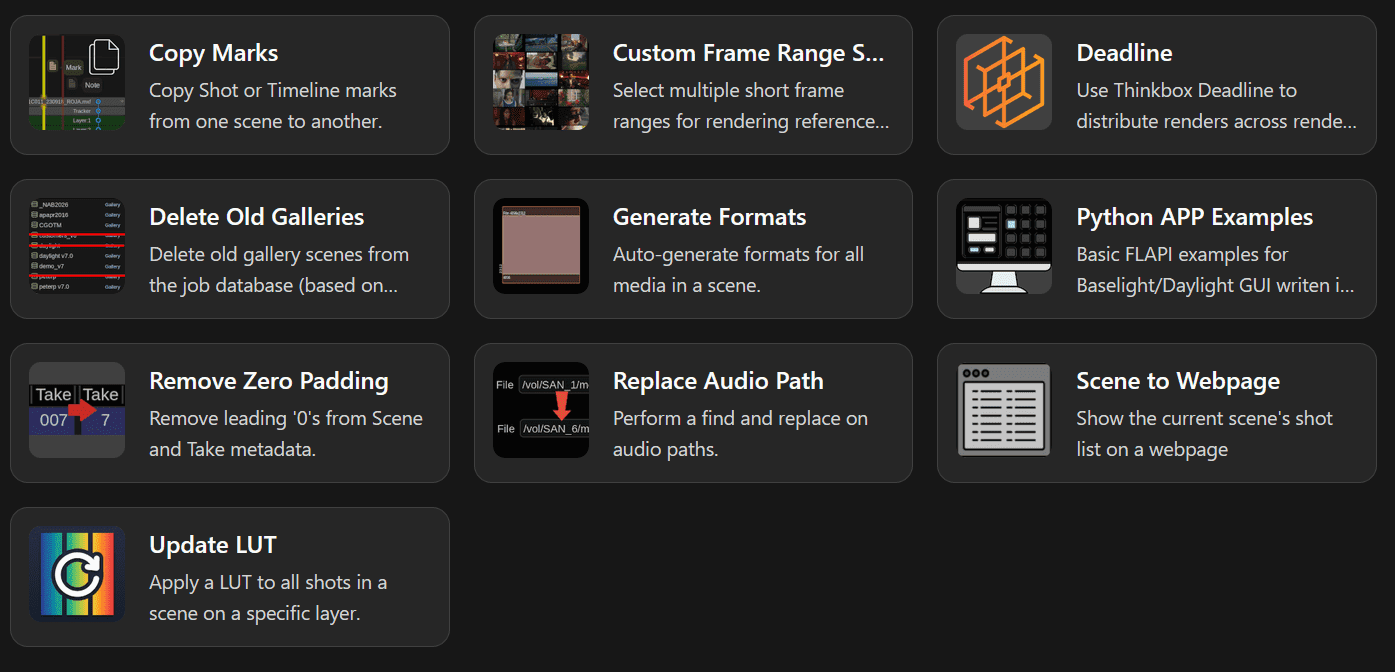
FilmLight has launched fl-enhance, a new GitHub repository providing scripts, shaders, and API tools to help developers integrate Baselight and Daylight workflows with programmatic languages like Python, Java, and NodeJS. The tools include utilities for LUT wrapping, ACES EXR transcoding, and specialized color transformations to assist post-production pipeline automation.
Key Takeaways
- Published programmatic bindings for Java, JavaScript, NodeJS, and Python to interface with Baselight systems.
- Integrated 'LUT to Look' utility to wrap 3D LUTs into native Baselight Look files for consistent scene-referred color handoffs.
- Launched 'Transcode to EXR' CLI tool that performs ACES conversions in temporary memory, avoiding Postgres database congestion.
- Released specialized tetrahedral shaders including TetraHSV and TetraRGB for neutral-preserving color transformations.
- Introduced YCbCr Clamp and PQ Clip tools for precise signal management in high-dynamic-range (HDR) workflows.
Why It Matters
By moving internal tools to a public repository, FilmLight is shifting Baselight from a closed 'black box' workstation toward an open, programmable infrastructure node. This allows VFX and post-production houses to build custom automation layers that reduce manual labor in repetitive tasks like render monitoring and scene output. For the broader ecosystem, this signals a need for interoperability as studios increasingly demand API-driven control over their color pipelines to maintain consistency across global production hubs. Watch for whether external developers contribute production-ready extensions that bridge the gap between Baselight and cloud-based asset managers.
Additional Context
The launch of fl-enhance follows a steady trend toward software-led accessibility for the historically hardware-intensive grading manufacturer. In March 2025, per postPerspective, FilmLight introduced Baselight S and Baselight M, offering subscription-based, software-only versions of its grading engine specifically for the Apple macOS platform. This shift was designed to lower the barrier to entry for smaller facilities and independent colorists who previously relied on expensive, dedicated Linux-based workstations. This software-first trajectory is further evidenced by the January 2026 release of Baselight v7, which, according to FilmLight's own announcements, emphasized deep machine-learning integration and reimagined matte workflows.
Modern post-production facilities are increasingly adopting hybrid grading environments. Per Post Magazine in May 2026, boutique studios like WeMakeColor are integrating Baselight alongside DaVinci Resolve to leverage specific precision tools for long-form series. This interoperability is critical as production scale grows; industry analysts at Omdia reported in late 2025 that high-volume episodic content now requires faster data-transfer methods and programmatic pipeline management. FilmLight’s Nara 2.0 platform, showcased in February 2026, further supports this by providing real-time media streaming and integrated storage analytics, bridging the gap between hardware suites and remote collaboration tools. The fl-enhance repository represents the final layer of this strategy: giving pipeline engineers the code-level access needed to link these disparate software and hardware components into a unified, automated studio workflow.
Read full article at digitalproduction.com
Enjoy our coverage?
Add StreamingMeme as a preferred source on Google to see more of our streaming news at the top of your Search results.
Add as preferred source