

FilmLight launches fl-enhance to bring Baselight automation scripts to Python
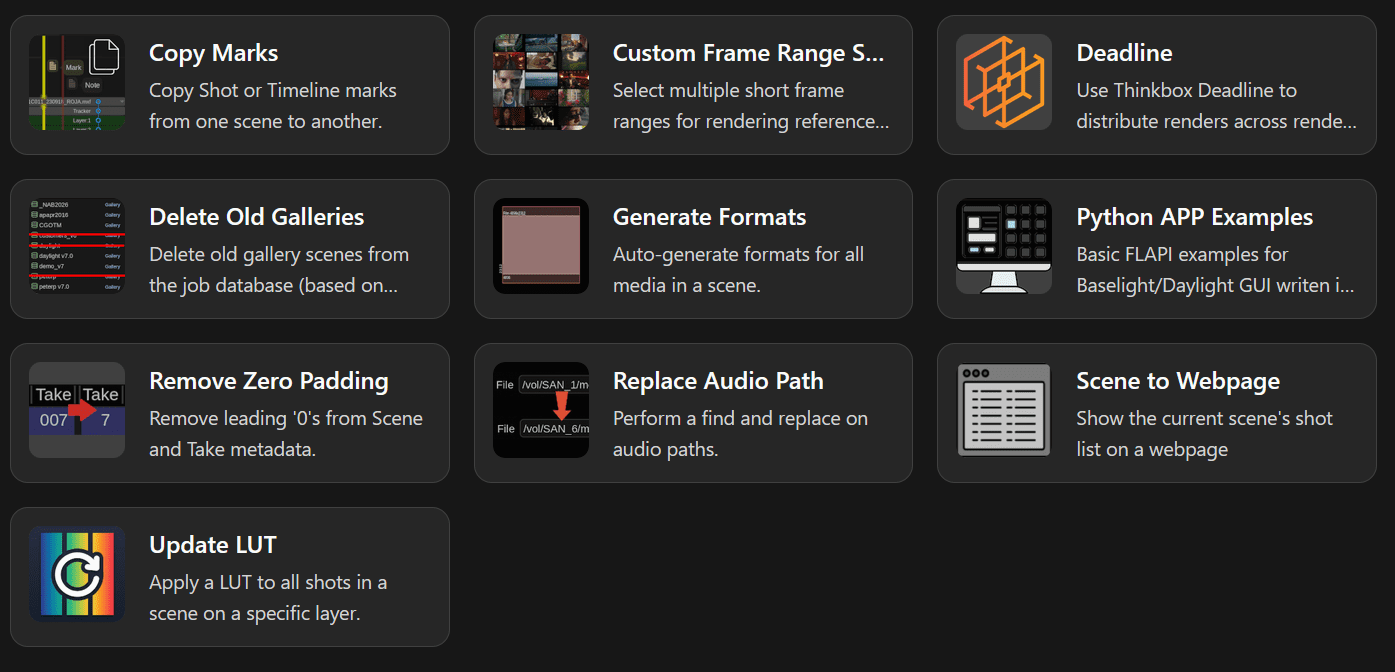
FilmLight has released fl-enhance, a collection of Python, Java, and NodeJS scripts and tools designed to help pipeline developers automate workflows for Baselight and Daylight systems. The repository provides inspectable code examples for tasks like render monitoring, LUT handling, and transcoding, offering facilities a modular approach to building custom production pipelines similar to those used by Netflix.
Key Takeaways
- New fl-enhance repository provides free, community-facing scripts and shaders for FilmLight’s API (FLAPI) without traditional support warranties.
- Specific utilities include LUT to Look for wrapping 3D LUTs and Transcode to EXR, which uses in-memory scenes to skip Postgres database creation.
- Advanced color shaders مثل TetraHSV and TetraRGB reference Steve Yedlin's methodology to manipulate color volumes while preserving neutrals.
- The release modularizes FilmLight’s high-end image science for integration into localized, high-scale VFX and post-production pipelines.
Why It Matters
By moving proprietary image-processing logic into an open-ish script repository, FilmLight is lower the technical barrier for mid-sized facilities to replicate the automation scale of major studios. This shift standardizes metadata and color handling across fragmented vendor ecosystems, a critical requirement as productions move toward CPU-based cloud rendering. For the market, it signals a transition from monolithic hardware-bound grading to software-defined pipelines where Python is the primary connective tissue. Watch for broader adoption of the FilmLight API in automated QC and VFX plate generation among non-enterprise post houses.
Additional Context
The release of fl-enhance aligns with a broader industry push toward software-defined, automated production pipelines. Per Netflix Technology Blog (April 2026), the streamer's Media Production Suite (MPS) already uses FLAPI as its core media engine to process terabytes of raw camera footage daily. By packaging FLAPI into Docker images and running them as stateless functions on the Cosmos compute platform, Netflix automates metadata extraction and debayering at a scale that exceeds traditional desktop-bound grading systems. This cloud-first approach allow studios to allocate CPU resources dynamically for thousands of parallel renders during peak VFX turnovers. In the wider post-production market, the importance of Python-driven automation has reached a tipping point. Reports from NewscastStudio (December 2025) note that the skills gap between traditional broadcast engineers and IT-based systems is closing as interoperability becomes an operational requirement. Furthermore, as Baselight v7 recently introduced support for ACES 2.0 and updated AMF handling (February 2026), the need for tools that can programmatically manage these complex color spaces has intensified. Industry experts, including those from Warner Bros. Discovery’s Water Tower Color, have highlighted that the future of high-end grading relies on the fusion of classical cinematography with automated machine vision and scriptable color science to meet the demands of immersive 16K environments and rapid-turnaround streaming content.
Read full article at digitalproduction.com
Get this in your inbox → Subscribe
Enjoy our coverage?
Add StreamingMeme as a preferred source on Google to see more of our streaming news at the top of your Search results.
Add as preferred source