
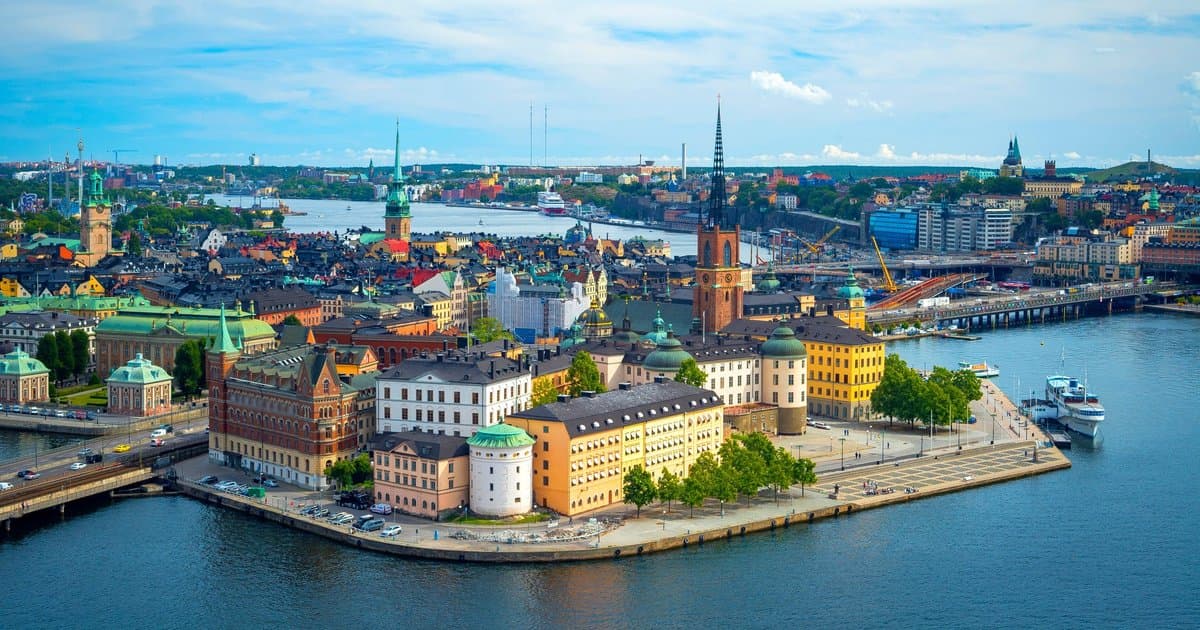
CoreWeave and Conapto have opened two high-density data centers in Stockholm, Sweden, designed for intensive AI training and inference workloads. The partnership utilizes NVIDIA Blackwell and Vera Rubin architectures and incorporates heat recovery systems to supply thermal energy to the local municipal district heating network.
The Stockholm expansion signals the rapid industrialization of AI-native infrastructure, transitioning from experimental labs to production-grade European hubs. By deploying NVIDIA’s Rubin architecture early, CoreWeave provides a significant performance buffer for enterprises seeking sovereign cloud capacity that bypasses traditional hyperscaler latencies. The partnership with Conapto also addresses a critical bottleneck: the power-density and sustainability paradox. Recycling waste heat into municipal grids converts a cooling liability into a community resource, setting a standard for how large-scale compute must integrate with urban infrastructure. Watch for regional competitors to adopt similar ‘Circular Economy’ cooling models to comply with tightening EU energy efficiency directives.
The Stockholm launch is part of a broader $2.2 billion European expansion strategy CoreWeave unveiled in June 2024, which includes additional planned sites in Norway and Spain by 2025. This aggressive scaling follows a transformative 2025 for the company, during which it became the fastest cloud platform in history to exceed $5 billion in annual revenue, per company reporting. Its market position is bolstered by high-stakes off-take agreements, including a $35 billion commitment from Meta spanning through 2032 and a $4 billion surge in contracted capacity from OpenAI, per regulatory filings in July 2026.
Technologically, the deployment of the Vera Rubin platform represents a major shift in the AI hardware lifecycle. According to NVIDIA roadmap updates from early 2026, the Rubin architecture introduces HBM4 memory support and the new Vera CPU, which offers twice the multi-threading capacity of the preceding Grace generation. These systems are specifically designed to handle ‘agentic AI’ workloads that require massive context windows and low-latency inference performance.
Energy sustainability remains the core of the Swedish strategy. Stockholm’s ‘Open District Heating’ initiative, which manages heat recovery for over 30 data centers in the city, allows operators to sell surplus thermal energy back to utility provider Stockholm Exergi. Per industry data from April 2026, this model can generate roughly SEK 2 million in revenue per megawatt annually while meeting the heating needs of over 30,000 apartments, making Northern Europe an increasingly attractive hub for high-density AI clusters facing regulatory pressure.
Add StreamingMeme as a preferred source on Google to see more of our streaming news at the top of your Search results.
Add as preferred source