

Computer Vision Powers Next-Gen Video Analysis and Content Understanding
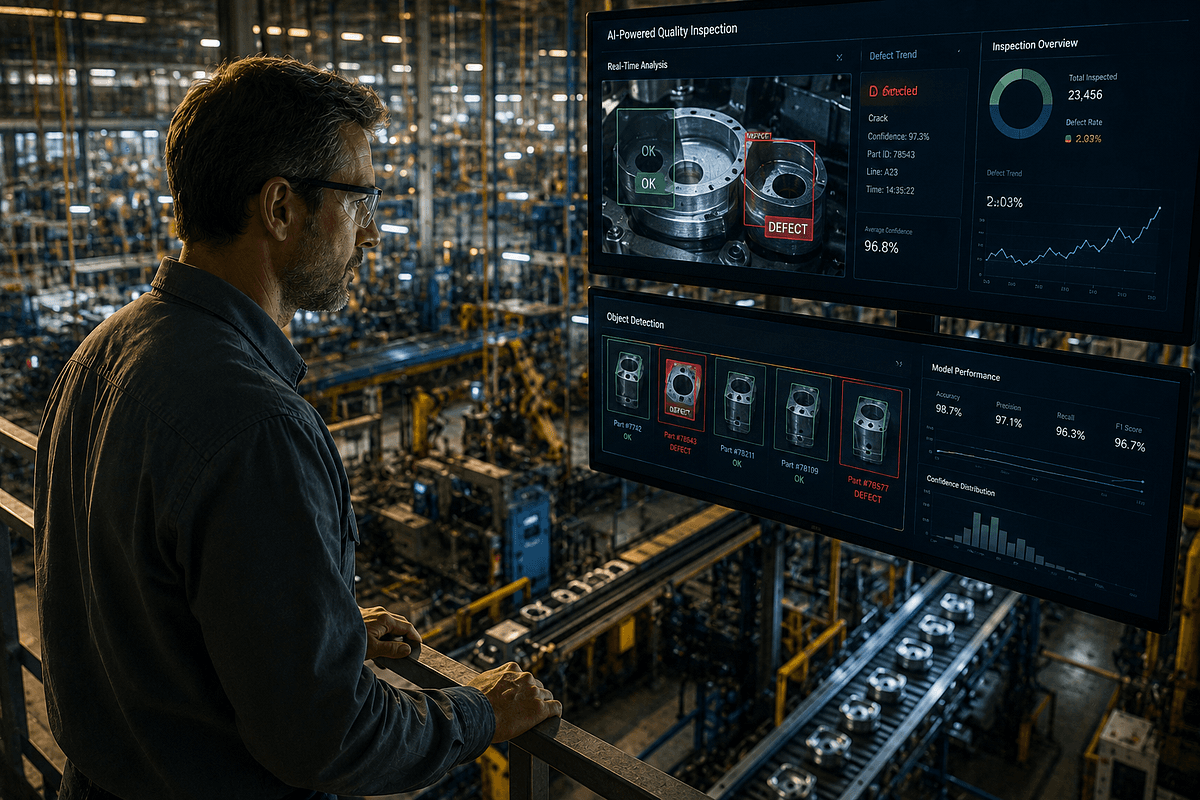
This article provides an overview of computer vision, a field of artificial intelligence that enables machines to understand and interpret visual information using cameras, sensors, and algorithms. It explains the core concept and highlights its growing importance across various industries, including its applicability to video analysis and content understanding.
Key Takeaways
- Computer vision allows machines to 'see' and understand visual information from images and videos.
- It uses cameras, sensors, and algorithms to analyze visual data, aiming to understand content, not just capture it.
- The modern world produces massive visual data from sources such as security cameras, increasing the importance of computer vision for analysis.
- Applications range from basic recognition tasks like identifying objects and reading text to advanced functions in medical imaging and manufacturing.
Why It Matters
The increasing volume of visual data necessitates advanced AI for efficient processing. Computer vision provides the capability to derive meaning from video streams, impacting content moderation, viewer analytics, and automated production. As streaming platforms manage vast libraries and integrate AI-driven features, the ability to understand visual content programmatically will be a core differentiator. We should monitor how computer vision integration leads to new monetization strategies and personalized content delivery at scale.
Additional Context
Recent advancements in computer vision are focusing on managing vast amounts of video data more efficiently, particularly in long-form content. Research from CVPR 2026 highlights systems like AVA and Symphony, which utilize Vision Language Models (VLMs) and multi-agent approaches to process lengthy video streams (USENIX, 2026; CVPR, 2026). These systems aim to overcome limitations of traditional VLMs, which struggle with extended context windows, by constructing Event Knowledge Graphs and implementing agentic retrieval-generation mechanisms. For instance, AVA can analyze videos hundreds of hours long, constructing indexes at over 1 frame per second. Another development, 'Tempo,' introduced an efficient, query-aware framework for compressing long videos for MLLMs, outperforming models like GPT-4o and Gemini 1.5 Pro on benchmarks like LVBench by dynamically allocating processing resources to relevant segments (arXiv, April 2026). The CASTLE 2026 Challenge also showcased frameworks for multi-view long-context video understanding, employing Video Knowledge Graphs and hierarchical retrieval to answer complex questions across 600 hours of synchronized footage (arXiv, June 2026). These innovations suggest a shift towards more scalable, intelligent video analysis capable of deep reasoning and contextual understanding, essential for evolving streaming platforms.
Read full article at medium.com
Enjoy our coverage?
Add StreamingMeme as a preferred source on Google to see more of our streaming news at the top of your Search results.
Add as preferred source