

Chyron PRIME 5 powers Telemundo’s record-breaking 2026 World Cup graphics
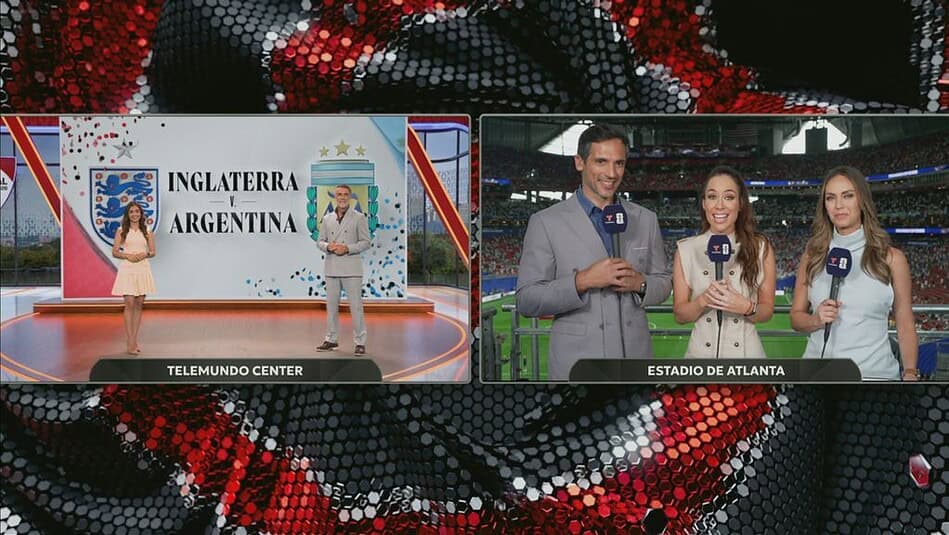
NBCUniversal Telemundo implemented Chyron's PRIME 5 graphics platform to manage live motion graphics for its 2026 FIFA World Cup coverage across broadcast and streaming platforms. The deployment supported over 700 hours of HDR programming, integrating live data feeds from SMT, SPORTSAPP, and FIFA to manage complex multi-match workflows.
Key Takeaways
- PRIME 5 managed HDR graphics workflows for 700+ hours of World Cup programming across broadcast and streaming.
- System integrated live data feeds from SMT, SPORTSAPP, and FIFA to support up to four simultaneous matches.
- Telemundo and Peacock averaged 6.3 million viewers per match, a 143% increase over the 2022 tournament.
- The final between Spain and Argentina drew 22.6 million viewers, setting a record for U.S. Spanish-language media.
- Platform used Adobe After Effects integration and template architecture to maintain creative consistency across three outlets.
Why It Matters
The successful deployment of PRIME 5 demonstrates the critical role of high-performance rendering and automated data integration in managing the logistics of expanded multi-match tournaments. As streaming continues to represent a growing share of total sports audience delivery — reaching nearly 50% for Telemundo this tournament — platforms must handle HDR and real-time data at low latency across varied distribution endpoints. This shift highlights a trend where back-end infrastructure scalability is now as vital as the rights acquisition itself to maximize engagement from 'super streamer' demographics. Watch for increased adoption of similar gRPC-based graphics APIs in upcoming major events like the 2028 Olympics to further unify remote production workflows.
Additional Context
The technical scale of the 2026 tournament coincided with a historic shift in U.S. soccer consumption. Per NBC Sports (July 2026), streaming accounted for 48% of Telemundo’s Total Audience Delivery, up from 30% in 2022. The digital engagement was led by the Spain vs. Argentina final, which attracted a streaming average minute audience of 13.9 million, a 370% increase over the 2022 final. This surge supported Telemundo’s broader strategy to capture the 'super streamer' segment — digitally mobile Hispanic consumers watching across multiple devices simultaneously. In total, the network delivered over 77 billion minutes of content throughout the 39-day competition.
Following the tournament’s success, NBCUniversal has moved to solidify its position as the primary Spanish-language soccer destination in the U.S. Per Sports Business Journal (July 2026), the network secured a three-year rights agreement for the Bundesliga, totaling roughly $10 million annually. This was followed by a landmark announcement via AS.com (July 2026) that Telemundo will become the exclusive Spanish-language home for UEFA men’s club competitions, including the Champions League, starting with the 2027-28 season. These acquisitions, combined with a U.S. Soccer media rights extension through 2030, position Telemundo’s technical infrastructure for sustained high-volume live production.
Chyron’s supporting technology has evolved in parallel with these production demands. Per TV Technology (September 2024), the PRIME 5 platform introduced a gRPC Playout API designed to enable secure, bidirectional communication between the graphics engine and custom in-house control applications. This capability was essential for matching the pace of the 2026 tournament, which featured 48 teams and 104 matches. The integration of advanced HDR LUT support and SRT protocol capabilities, as noted by Global Broadcast Industry News (April 2025), allowed broadcasters to maintain visual quality across linear and digital feeds despite the increased complexity of the expanded 16-city host format.
Read full article at sportsvideo.org
Enjoy our coverage?
Add StreamingMeme as a preferred source on Google to see more of our streaming news at the top of your Search results.
Add as preferred source