
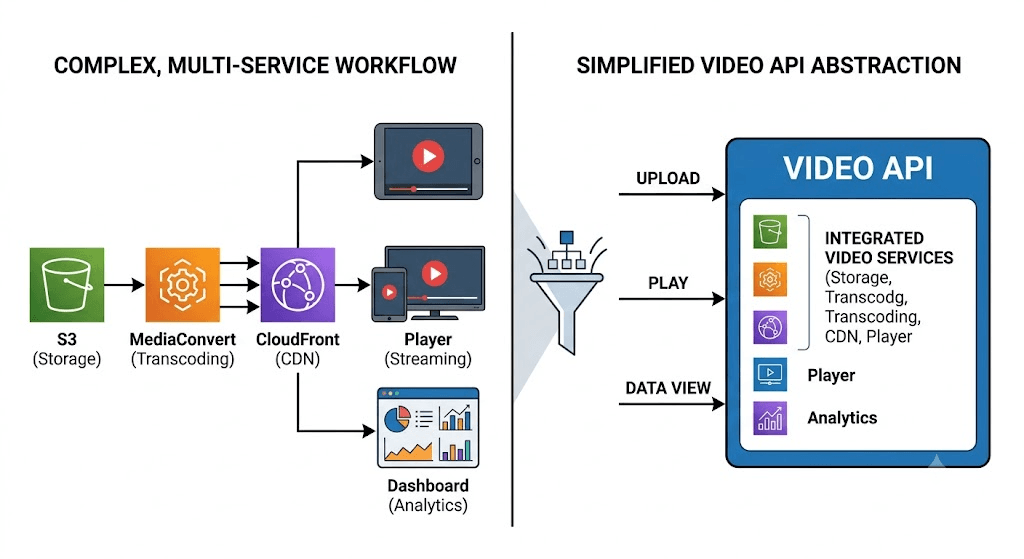
A developer recounts the process of migrating a video pipeline from a bespoke AWS architecture utilizing MediaConvert, S3, and CloudFront to a unified managed API. The article analyzes the shift in operational complexity, cost unpredictability, and quality-of-experience monitoring when moving from raw cloud primitives to specialized video SaaS.
The shift from 'primitives' to 'managed APIs' reflects a maturing streaming market where developer velocity takes precedence over micro-optimizing infrastructure. For most SaaS companies, building a custom pipeline on AWS creates a long-term maintenance burden that distracts from core product development. As specialized vendors like FastPix and Mux compete on price and bundled features like QoE data, the economic argument for DIY builds is increasingly restricted to hyper-scale providers who can amortize high engineering costs. Watch for a continued exodus of SMBs from raw cloud transcoding toward API-first abstractions in 2026.
The transition from assembling raw cloud components to utilizing managed video platforms aligns with broader market shifts toward 'Video-as-a-Service' (VaaS). Per Fortune Business Insights, June 2026, the global VaaS market reached a valuation of $7.53 billion, with a projected compound annual growth rate (CAGR) of over 15% through 2034. This growth is driven largely by enterprises seeking to reduce capital expenditures and avoid the technical debt associated with maintaining complex, multi-service streaming architectures. Recent industry analysis indicates that while AWS continues to dominate infrastructure, specialized providers are capturing the mid-market by offering superior developer ergonomics.
Competitive pressure has forced legacy and managed providers to differentiate on specific billing units. Per Dev.to, July 2026, the 'integration tax' remains the primary driver for platform migration; platforms like Cloudflare Stream and FastPix have gained traction by offering free encoding on standard plans—a sharp contrast to the MediaConvert model where every output rendition in an HLS ladder is billed separately. A 2026 benchmark reported that switching from a DIY AWS stack to a managed API allowed one short-form video creator to reduce total cost of ownership by 94% due to the elimination of egress and per-minute encoding overhead.
Furthermore, the focus has shifted from simple delivery to integrated intelligence. Per Market Research Future, April 2026, advanced analytics integration is now a baseline requirement for streaming services. High-growth sectors such as EdTech and hybrid corporate platforms are increasingly prioritizing vendors that bundle QoE monitoring and AI-driven content search, features that previously required manual integration of services like AWS Rekognition or expensive third-party data licenses like Mux Data’s $499 monthly entry tier.
Add StreamingMeme as a preferred source on Google to see more of our streaming news at the top of your Search results.
Add as preferred source