
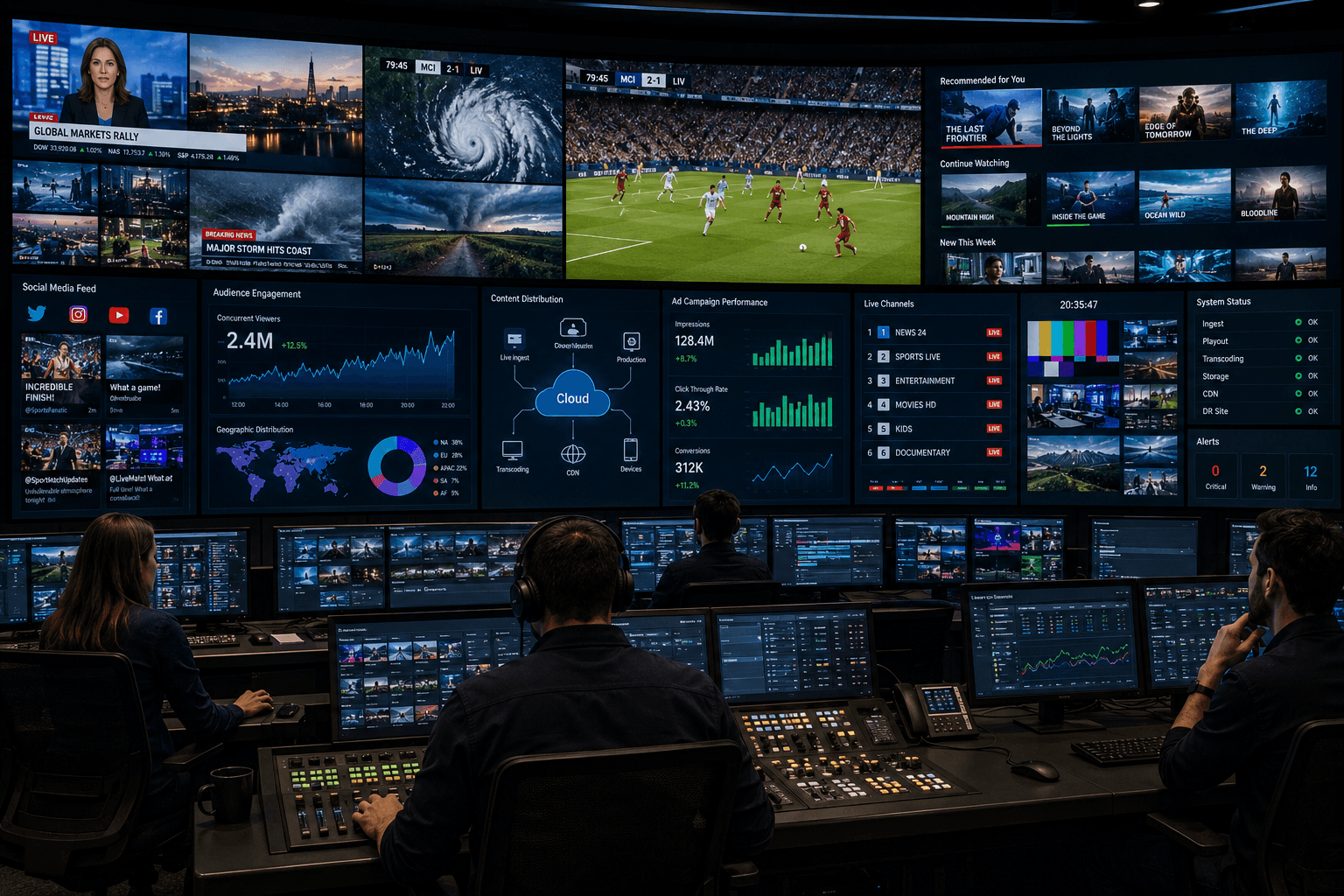
Broadcasters are being compelled to integrate linear and streaming operations, moving away from rigid models to build more flexible infrastructures to meet audience expectations for ubiquitous content. This trend is driven by vendors like Grass Valley, Lawo, and EVS, who are providing solutions for cloud production, software-defined infrastructure, and efficient content workflows. The convergence blurs the lines between OTT and broadcast, transforming the media ecosystem.
The operational wall between broadcast and OTT has effectively collapsed, forcing a fundamental shift from hardware-centric to software-defined production. For the technology stack, this means a migration toward hybrid cloud environments that support both rigid linear schedules and elastic streaming demands from a single orchestration layer. As legacy hardware enters refresh cycles, the industry is prioritizing interoperability over proprietary siloes to manage rising multi-platform distribution costs. This convergence is moving the battle from distribution dominance to operational flexibility. Watch for broadcasters to accelerate the rollout of IP-native infrastructures to replace aging SDI systems, as evidenced by major vendor shifts toward integrated media exchanges.
The transition to software-defined media is gathering pace as major vendors align their product roadmaps with cloud-native principles. Per Grass Valley and Lawo, June 2026, the two companies have launched a technology collaboration to validate orchestration and media exchange between their respective AMPP and HOME platforms. This initiative follows the EBU Dynamic Media Facility (DMF) guidelines, which promote open, hybrid production environments that reduce integration friction between on-premises and public cloud hardware. Furthermore, EVS announced a corporate rebrand in June 2026, dropping "Broadcast Equipment" from its name to reflect its broader mandate in software-driven live video production and AI-powered workflows across entertainment and corporate sectors.
Economic factors are also accelerating this shift. Per NewscastStudio, June 2026, major broadcasters are transitioning from conceptual testing of software-defined infrastructure to full implementation to avoid the costs of maintaining separate linear and streaming stacks. These moves come as market data shows a continued decline in traditional viewing; per Accio, May 2026, streaming reached a 47.5% share of total U.S. TV consumption by late 2025, while cable dropped to a record low of 20.2%. This structural change has made software-based scalability a baseline requirement rather than a premium feature.
Technological maturity at the edge is also playing a role. Per Streaming Media, December 2025, the industry anticipates that sub-3-second latency will become the standard for live streaming in 2026, enabling new commerce and interactivity models that were previously limited to broadcast. As broadcasters like the BBC move toward a "digital-first" infrastructure by 2027, the focus has shifted toward high-reach digital video and connected TV (CTV), which are projected by IAB to approach $30 billion in annual ad spend by late 2026.
Add StreamingMeme as a preferred source on Google to see more of our streaming news at the top of your Search results.
Add as preferred source