

Brightcove Enhances Video Cataloging with New Custom Metadata Fields
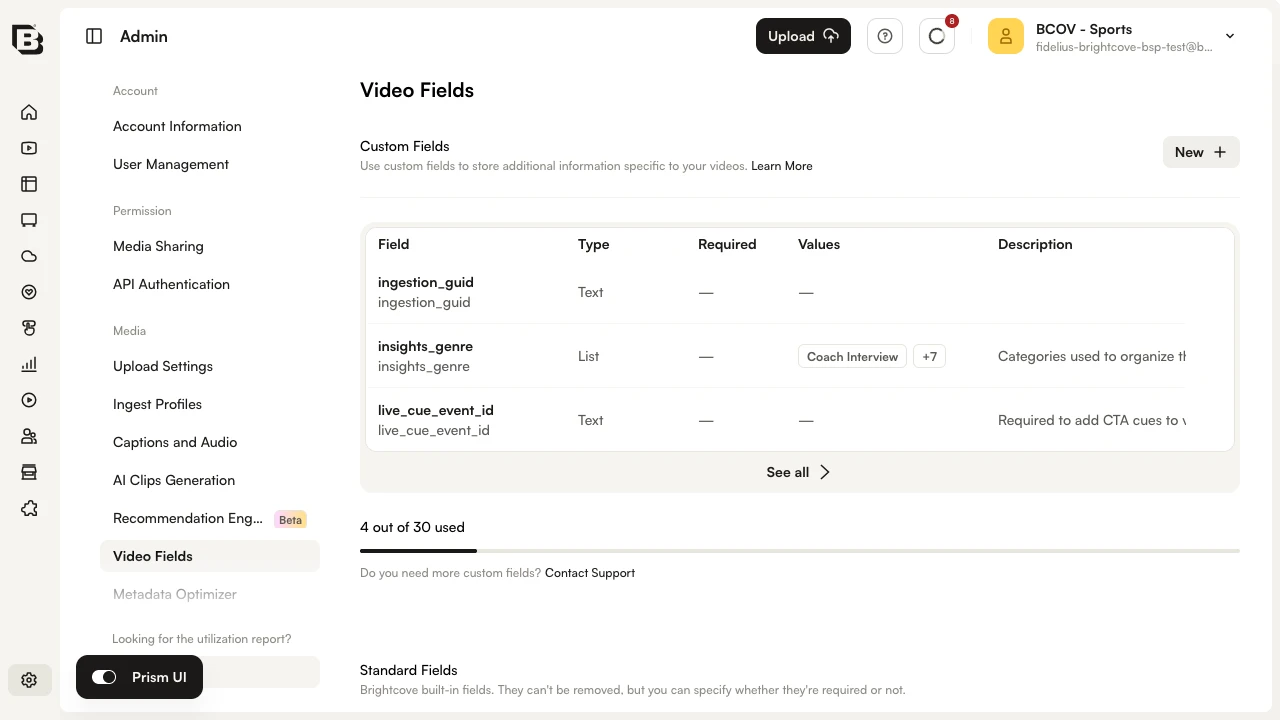
Brightcove has released documentation detailing how users can create and manage up to 30 custom metadata fields within its Video Cloud Studio. This functionality allows for enhanced video cataloging and organization within the Media module, with options for text or list-based fields and programmatic access via Brightcove APIs.
Key Takeaways
- Brightcove users can now create up to 30 custom metadata fields in Video Cloud Studio.
- Custom fields support both text (up to 1,024 single-byte characters) and list types (up to 150 values, 100 characters each).
- The functionality is accessible via the Admin module to account administrators and is programmatically available through Brightcove APIs.
- Users can define display names for Studio visibility and internal names for API access, with a list of reserved names to avoid.
Why It Matters
The ability to define custom metadata fields provides greater flexibility for content owners to categorize and manage their video libraries. This can improve content discoverability and operational efficiency, particularly for large or specialized catalogs within Brightcove's ecosystem. As platforms scale video offerings, robust metadata management becomes critical for both internal workflows and end-user search experiences. Moving forward, observe how this increased customization impacts search accuracy and content segmentation across Brightcove-powered platforms.
Additional Context
This update on custom metadata fields builds on Brightcove's recent focus on enhancing content management and discoverability. In late 2025, Brightcove introduced its Metadata Optimizer, an AI-powered assistant designed to auto-generate video metadata, including titles, descriptions, and tags (per Brightcove's blog, October 2025). This AI tool is integrated into Video Cloud Studio and aims to streamline workflows by providing smart suggestions for metadata, reducing manual tagging effort. The Metadata Optimizer leverages text tracks, audio, and visual analysis, with an advanced option for deeper analysis. It supports over 40 languages and allows for multi-language metadata generation. Users can review and approve AI suggestions in the Media module or integrate the functionality via API, and can also define custom tag rules to align generated metadata with specific organizational taxonomies (per Brightcove support documentation). The current detailed documentation for custom metadata fields offers the framework for structuring the data that these AI tools can populate, further empowering publishers to maintain consistent and searchable libraries.
Read full article at studio.support.brightcove.com
Enjoy our coverage?
Add StreamingMeme as a preferred source on Google to see more of our streaming news at the top of your Search results.
Add as preferred source