

2026 TTS benchmark compares quality, latency, pricing, and licensing
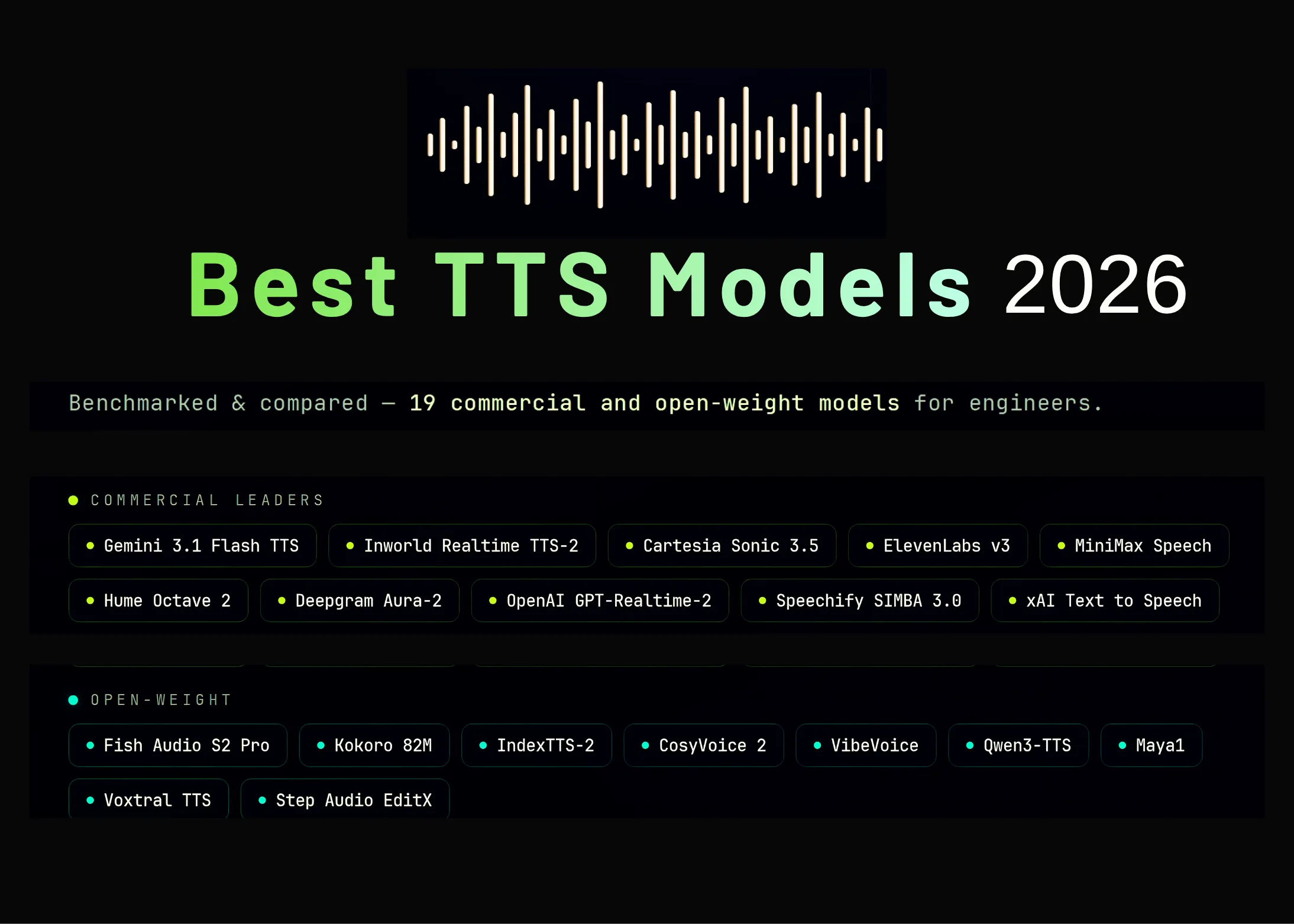
The article presents a benchmark-based comparison of text-to-speech (TTS) models expected to be available in 2026. The comparison evaluates models across criteria including quality, latency, pricing, language support, and open-weight licensing.
Key Takeaways
- The comparison covers text-to-speech models expected in 2026.
- Evaluation criteria include quality, latency, pricing, language support, and open-weight licensing.
- The article frames TTS selection as a benchmark-based decision, not a single-feature ranking.
Why It Matters
For streaming teams, the immediate takeaway is that TTS model selection in 2026 is being evaluated across multiple deployment constraints, not just voice quality. The comparison explicitly weighs latency, pricing, language coverage, and open-weight licensing, which are all practical filters for production video workflows. For the broader ecosystem, that signals TTS is maturing into a procurement decision with tradeoffs across performance and licensing, rather than a one-metric choice. The specific signal to watch next is how individual models score across those five criteria in the benchmark tables.
Read full article at marktechpost.com
Enjoy our coverage?
Add StreamingMeme as a preferred source on Google to see more of our streaming news at the top of your Search results.
Add as preferred source