

BBC Sport transitions World Cup studio tech to Match of the Day
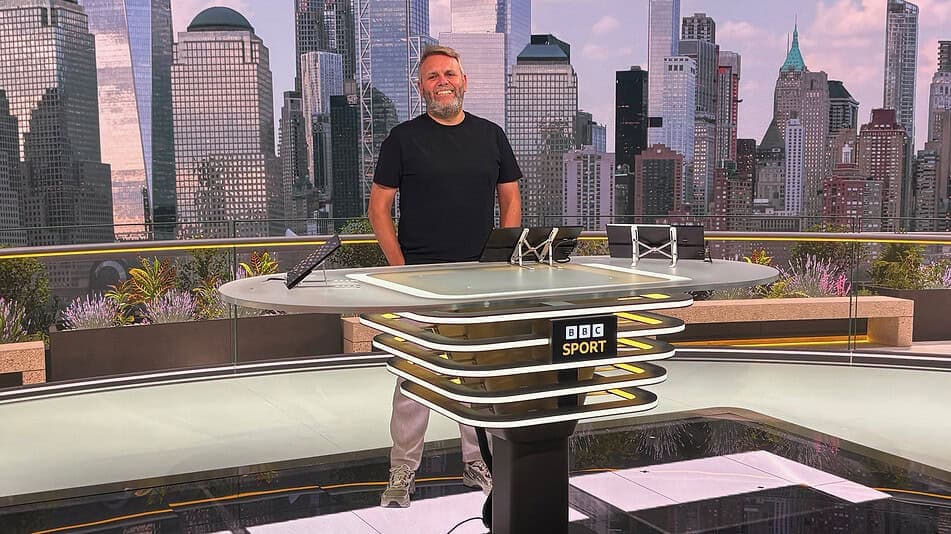
BBC Sport transitioned from traditional green-screen workflows to an advanced LED volume and XR setup for its FIFA World Cup 2026 coverage, utilizing a collaborative stack including ROE Visual, Pixotope, and Mo-Sys. The project serves as a technical blueprint for the studio's future production operations, specifically for Match of the Day, highlighting the industry's shift toward game-engine-driven virtual production.
Key Takeaways
- BBC Sport moved its World Cup 2026 coverage to an LED volume and XR setup after ten years of chroma-key production.
- The technical stack features ROE Visual LED panels, camera tracking from Mo-Sys, and real-time graphics via Pixotope and Unreal Engine.
- A hydraulic desk and LED floor enable pundits to switch between seated discussion and standing tactical analysis in a 3D environment.
- The studio recreates 16 North American host city skylines with dynamic lighting that adjusts for time-of-day and weather conditions.
- Post-tournament, the workflow will serve as the blueprint for Match of the Day, integrating modular LED walls and physical scenic elements into regular programming.
Why It Matters
The shift from chroma key to LED volumes marks a permanent change in how major sports broadcasters manage studio environments. By utilizing game-engine-driven production for the World Cup, the BBC has validated that virtual sets can offer higher talent comfort and editorial flexibility than traditional green screens. For the wider ecosystem, this demonstrates the feasibility of high-end remote production—broadcasting from Salford instead of North America—while significantly reducing the carbon footprint of on-site operations. Broadcasters should watch whether the BBC's move to a permanent LED-based Match of the Day set prompts similar hardware investments from domestic rivals like Sky Sports and ITV.
Additional Context
The BBC’s decision to center its World Cup 2026 coverage in Salford followed a strategic push for carbon reduction and cost efficiency. Per The Guardian in June 2026, the broadcaster estimated that keeping its main presentation team in the UK would yield a 19% cut in carbon emissions compared to the 2022 Qatar tournament. This remote model allowed the BBC to avoid the logistical complexity of the 16 host cities across three countries, even as competitors like Netflix and ITV opted for physical studios in New York City.
The technical foundation for the World Cup project was laid during UEFA Euro 2024. Per SVG Europe in July 2026, the Berlin-based mixed reality studio served as a testing ground for the ROE Visual LED floor and XR graphics integration. That project was the first time the BBC combined localized physical sets with virtual horizons on this scale, proving that talent could better interact with tactical data when it was rendered visually beneath them rather than added in post-production.
This technology pivot also addresses long-standing talent feedback regarding the 'green box' environment. Per Broadcast in June 2026, BBC Director of Sport Alex Kay-Jelski noted that the immersive LED backdrop allowed pundits to see their surroundings, eliminating the disorientation often associated with legacy chroma-key setups. The permanent move to HQ7 for weekly football coverage indicates that the BBC views virtual production not as a tournament-specific novelty, but as a sustainable long-term replacement for physical set builds.
Read full article at sportsvideo.org
Enjoy our coverage?
Add StreamingMeme as a preferred source on Google to see more of our streaming news at the top of your Search results.
Add as preferred source