
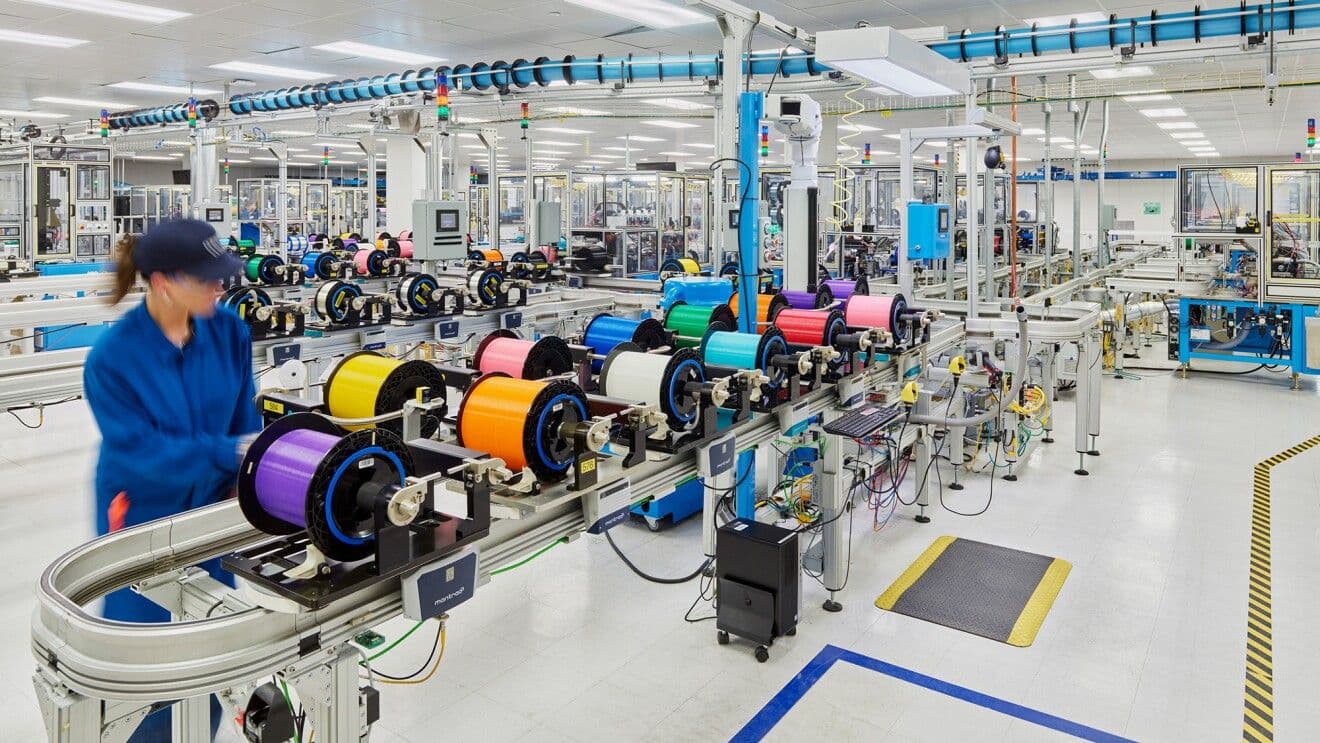
Amazon Web Services (AWS) has signed a multi-hundred-million-dollar deal with Corning to significantly expand its data center network with next-generation fiber optic cabling. This agreement aims to secure critical infrastructure to support the increasing demands of generative AI and large-scale cloud workloads, tackling the "bandwidth bottleneck." Corning will supply specialized optical connectivity solutions, including its SMF-28 Ultra 200 fiber, for this multiyear commitment.
The high-density fiber deal secures the physical layer required to link thousands of GPUs into functional AI clusters, moving past the industry's singular focus on chip supply. For the streaming and B2B video ecosystem, this ensures AWS has the throughput to support increasingly complex generative video workflows and cloud-based rendering at scale. As hyperscale rivals Microsoft and Google also scramble for connectivity components, this contract acts as a strategic hedge against a tightening global supply chain. Monitor Corning’s quarterly manufacturing capacity utilization to gauge how quickly AWS can translate this fiber into live server racks.
Corning has rapidly assembled a portfolio of hyperscaler fiber supply agreements that position it as the dominant optical connectivity vendor for AI data center buildouts. In May 2026, Corning announced a long-term partnership with Nvidia to expand its US-based optical manufacturing capacity, and the Amazon deal announced on June 8 marks the latest in that series. Corning's shares have more than doubled year-to-date in 2026 and are up almost sixfold since the end of 2023, as investors price in sustained demand from hyperscalers building AI infrastructure.
The Amazon-Corning agreement carries explicit domestic manufacturing and workforce implications. The deal creates 1,000 new jobs at Corning's North Carolina facilities and expands a Fiber Optic Technician Training Program with Catawba Valley Community College, adding to the more than $20 billion Amazon has invested in the state since 2010. AWS CEO Matt Garman framed the partnership as part of a broader commitment to onshoring critical supply chain components, a priority the Trump administration has pushed across Big Tech. Corning CEO Wendell Weeks noted that while the majority of the company's business remains overseas, hyperscalers are becoming its largest domestic customers.
From a market perspective, Corning's optical communications division is now its largest and fastest-growing business segment, surpassing the display glass unit that supplies Apple's iPhone. The company invented optical fiber for long-range communication in 1970 and has since provided millions of miles of cable connecting racks in AI data centers operated by all major hyperscalers. Reuters reported that Corning shares rose roughly 7% in early trading on the announcement, as the partnership offset weakness in the consumer electronics glass segment. For streaming and video workloads running on AWS, the deal signals that physical-layer bandwidth capacity is being treated as a strategic procurement priority rather than a commodity purchase.
Add StreamingMeme as a preferred source on Google to see more of our streaming news at the top of your Search results.
Add as preferred source