

ATSC 3.0 encryption filings reveal potential failure of emergency alerts
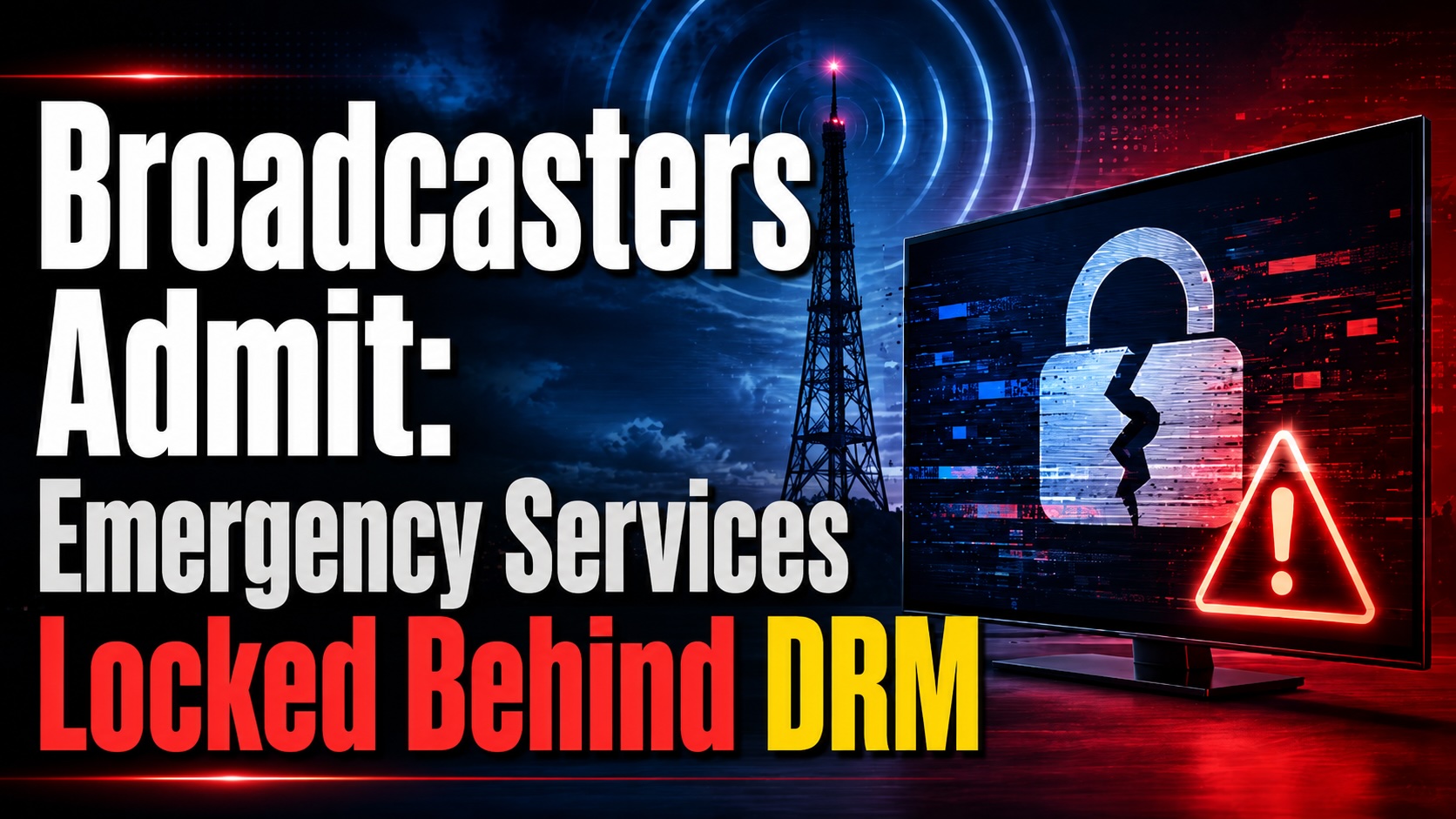
Recent industry filings reveal that the DRM implementation in ATSC 3.0 (NextGen TV) can block emergency alerts for viewers using non-approved hardware or those lacking internet connectivity. Critics and station engineers have raised concerns regarding hardware reliability and the potential for encryption to compromise the public safety mandate of broadcast television.
Key Takeaways
- Digital Alert Systems confirmed that emergency alert signals are embedded inside the protected ATSC 3.0 stream, preventing delivery if a device fails to decrypt.
- The A3SA admitted that certain converter boxes, including the ZapperBox, currently require an internet connection to decrypt signals and receive alerts.
- Station engineers at KSAT-TV in Texas warned that currently available NextGen TV converter boxes are often unreliable and fail to tune signals consistently.
- SiliconDust’s popular HDHomeRun tuner remains blocked from decrypting protected content due to a lack of approval from the A3SA private consortium.
Why It Matters
The integration of DRM into broadcast signals threatens the public safety mandate that justifies broadcaster use of free public spectrum. If emergency information is locked behind encryption layers, the reliability of the Emergency Alert System (EAS) becomes contingent on hardware certification and internet uptime, rather than signal reception alone. For the streaming ecosystem, this transition mirrors the walled-garden approach of SVOD platforms, potentially alienating cost-conscious cord-cutters who rely on over-the-air signals as a fail-safe. Watch for the FCC’s upcoming decision on GN Docket No. 16-142, which will likely address whether broadcasters must provide a non-encrypted physical layer for emergency messaging.
Additional Context
The debate intensified in mid-2026 following a formal test by Weigel Broadcasting across four major markets—Chicago, Charlotte, Green Bay, and South Bend. Per Antenna Land in June 2026, the test demonstrated that when internet connectivity dropped on encrypted ATSC 3.0 channels, EAS messages were entirely absent, whereas they appeared normally on the parallel ATSC 1.0 signals. This evidence led Digital Alert Systems to file with the FCC in July 2026, noting that while the results were specific to certain devices, they established a legitimate concern for public safety when broadband is disrupted during emergencies. Broadcasters are simultaneously facing pressure to accelerate the transition to free up more spectrum. In March 2026, a bipartisan group of 91 House lawmakers, led by Congressman Mark Alford, urged the FCC to set a firm deadline for the ATSC 1.0 sunset. According to house.gov reports from March 2026, these lawmakers argue that a 'date-certain' transition is necessary to unlock the standard's advanced features, including precise timing signals that could serve as a terrestrial complement to GPS. However, the discovery that encryption could interfere with basic alerts may complicate this push for a faster rollout. Hardware compatibility remains a primary hurdle for consumer adoption. While the A3SA claims over 18 million NextGen-ready devices are in the market, critics point out that most of these are high-end televisions. Per PCWorld in January 2026, SiliconDust has faced long-standing delays in certification for its HDHomeRun devices due to the A3SA's security requirements. Although SiliconDust became a Certificate Authority in late 2025, the company noted that gateway devices still fundamentally struggle with DRM requirements that were originally designed for direct-to-TV connections rather than home-networked distribution.
Read full article at blog.lon.tv
Get this in your inbox → Subscribe
Enjoy our coverage?
Add StreamingMeme as a preferred source on Google to see more of our streaming news at the top of your Search results.
Add as preferred source