

ASUS launches ProArt QD-OLED monitors featuring 240Hz refresh and 12G-SDI
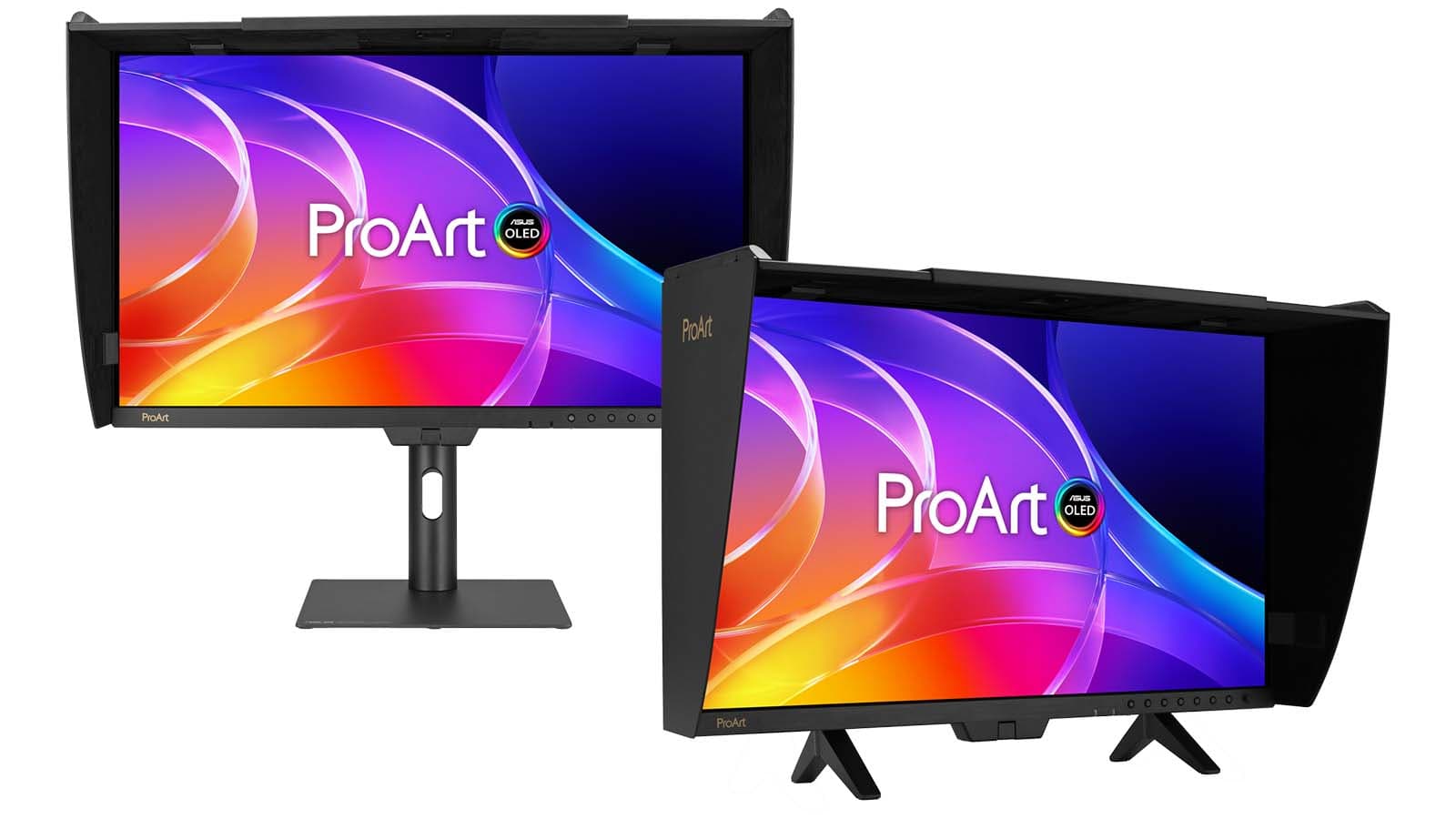
ASUS has released its ProArt OLED PA27USD and PA32USD monitors, which feature 4K QD-OLED displays and specialized connectivity including 12G-SDI. These monitors target professional video creators and production environments by integrating hardware-based calibration and high-speed motion support into a studio-grade package.
Key Takeaways
- The PA27USD (26.5-inch) and PA32USD (31.5-inch) feature 3840 x 2160 resolution with a 240Hz refresh rate and 0.1ms response time.
- Integrated motorized flip colorimeters support automated self-calibration and third-party software including Calman and ColourSpace.
- The PA32USD model is equipped with dual 12G-SDI inputs, allowing uncompressed 4K 60Hz video transmission for broadcast and on-set workflows.
- Both monitors deliver 1000-nit peak HDR brightness and support Dolby Vision, HLG, and HDR10 formats.
- Retail pricing starts at $2,199 for the 27-inch model, while the 32-inch version is rolling out globally for approximately $2,699.
Why It Matters
This launch signals a strategic shift to merge professional broadcast standards with high-performance panel technology. By including 12G-SDI—a feature typically reserved for dedicated field monitors—alongside a 240Hz QD-OLED panel, ASUS is targeting DITs and colorists who require both color accuracy and motion clarity for modern high-frame-rate production. For the broader industry, this reflects the commoditization of reference-grade features like built-in calibration into more versatile, desktop-friendly form factors. This consolidation challenges legacy reference monitor brands as high-end creator hardware increasingly meets rigorous broadcast specifications. Watch for whether competitors like Dell or LG integrate SDI natively to capture the growing on-set monitoring market.
Additional Context
The launch of the ProArt PA27USD and PA32USD comes as the premium monitor sector undergoes a rapid transition toward self-emissive technologies. Per Omdia data from April 2026, self-emissive panels are projected to account for 41% of the premium monitor market by revenue this year, nearly doubling their 22% share from 2024. This growth is largely fueled by Samsung Display, which reported reaching 5 million cumulative QD-OLED monitor panel shipments in March 2026, achieving an average annual growth rate of 320% since 2021. ASUS has utilized this supply to secure a 24% market share in the OLED monitor segment, according to TrendForce reporting from May 2026, positioning itself ahead of Samsung Electronics and MSI.
Simultaneously, the broadcast monitor market is evolving to meet the demands of HDR and 4K/8K content. Per Intel Market Research in early 2026, the global broadcast monitor market is expected to reach $489 million by 2032 as production houses phase out older HD infrastructure. Current trends show significant movement toward portable and field-ready solutions; Business Research Insights noted in May 2026 that 57% of broadcast monitor demand is now driven by portable field units, while 61% of studios utilize advanced calibration tools to maintain color consistency across distributed workflows. By integrating these specific professional tools—SDI and automated colorimeters—into hardware with a 240Hz refresh rate, ASUS is positioning its latest ProArt line to capitalize on the increasing crossover between traditional broadcast equipment and high-end post-production tools.
Read full article at thepcenthusiast.com
Enjoy our coverage?
Add StreamingMeme as a preferred source on Google to see more of our streaming news at the top of your Search results.
Add as preferred source