

ARUtility integrates Agora SDK to provide 3D x-ray safety vision
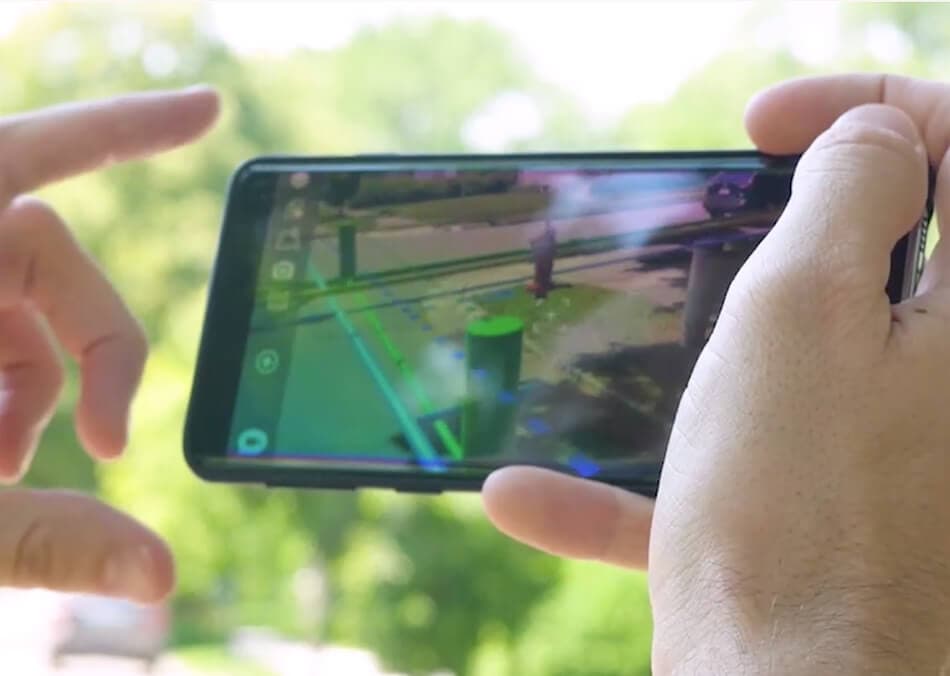
This article highlights how ARUtility leverages Agora's SDK, integrated with Unity, to provide real-time voice, video, and messaging with AR overlays for construction site safety and efficiency. The platform allows field staff to visualize underground utilities in 3D and remotely consult with office staff, reducing accidents and delays. Agora's turnkey platform allowed ARUtility to focus on its core AR innovations while relying on Agora for the real-time communication network.
Key Takeaways
- Agora's Unity SDK powers a shared 3D view enabling dual-sided AR drawing and annotations between field and office personnel.
- The '3D x-ray vision' feature uses geographical data to project buried assets like gas lines and water pipes directly onto high-accuracy mobile camera displays.
- Integration with Unity’s AR platform allows ARUtility to maintain focus on proprietary AR development by offloading RTE network management to Agora.
- The remote consultation model aim's to replace time-intensive 'truck rolls' with immediate, sub-second latency video feedback.
Why It Matters
This deployment marks a shift in the real-time engagement (RTE) market from consumer entertainment toward high-stakes industrial applications. By embedding sub-second latency video into AR workflows, Agora is positioning its PaaS infrastructure as a critical safety layer for the architecture, engineering, and construction (AEC) sectors. This bridge between BIM data and live streaming reduces operational downtime caused by accidental utility strikes, which historically cost the industry billions annually. For the broader ecosystem, this signals a demand for low-latency communication that can handle 3D spatial data without local processing bottlenecks. Watch for Agora's growth in the AEC-specific software segment as Unity’s industrial expansion continues through 2026.
Additional Context
The industrial AR sector is experiencing a period of significant commercial maturation. According to market data from Intel Market Research published in January 2026, the global AR and VR market is projected to grow from $1.93 billion in 2026 to $3.73 billion by 2034, with industrial and manufacturing segments currently dominating the application share. This growth is mirrored by Unity Technologies’ recent strategic shift; per Unity's Q1 2026 earnings report in May 2026, the company recorded a 17% year-over-year revenue increase to $508 million, driven largely by its 'Grow Solutions' segment and a refocusing on core engine and enterprise AI tools.
Agora’s position as a low-latency infrastructure provider has been further strengthened by its recent financial and technical milestones. In May 2026, Agora reported its sixth consecutive quarter of GAAP profitability with $37.7 million in revenue, a 13.5% increase year-over-year. The company has aggressively expanded its developer tools, launching its Conversational AI Engine v2.5 in March 2026 and updating its RTC Native SDK to version 4.6.2 to improve performance across Flutter, React Native, and Unity frameworks. These updates target the exact low-latency requirements—often cited by Agora as ranging between 400ms and 800ms for premium interactive streaming—needed to sync digital twins and BIM overlays with live site footage without visual drift.
Read full article at prod.agora.io
Enjoy our coverage?
Add StreamingMeme as a preferred source on Google to see more of our streaming news at the top of your Search results.
Add as preferred source